CROWN / Art

Nenad Bach and Darko Žubrinić

Caricaturists

Oto Reisinger 1927-2016 distinguished Croatian caricaturist

By Nenad N. Bach and Darko Žubrinić
Published  07/9/2024

Except in Croatia, he published his caricatures abroad: in Germany, Switzerland, the Netherlands, and Great Britain


Oto Reisinger

Although an architect by profession, Oto's main vocation in life was drawing. During his rich career, which lasted over half a century, in addition to primarily single panel cartoons, he also created comic books, portrait caricatures, book illustrations, scenography and animated movies. A humorist as quick on the tongue as he is with the pen.


The people of Zagreb remember him as a well-known and charismatic face of the city, who came up with his ideas every day, absorbing the city's atmosphere by transferring them to paper, he gained world fame. His departure created a void that is impossible to fill, but the goal of the House of Cartoons is to make Oto's spirit live forever.

Except in Croatia, he published his caricatures abroad (in Germany, Switzerland, the Netherlands, and Great Britain): in Quick, Nebelsparter, Panorama, Punch.

Source: otoreisinger.com


Mister director, they're saying that the stock market has the tendancy of becoming stable by 2030!

He says he'll add another million if we keep her!

Until the last crumb, please! Nobody should say that we are harming the environment!

Some of the books containing Resinger's caricatures.

It seems that this morning the world very much sympathises with us...
(apropos of Serbian 1991 aggression on Croatia)

A European diplomat is just expressing his concern about a hotel
in which he used to spend many pleasant vacations with his wife.
(apropos of Serbian and Montenegrin shelling and bombing of the city of Dubrovnik, protected by UNESCO)
Standards of EU

What the hell do we look - like tourists?!


2 CELLOS


Naive Art

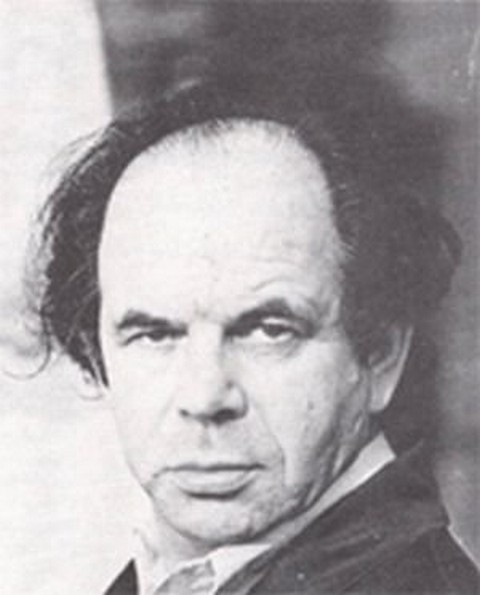
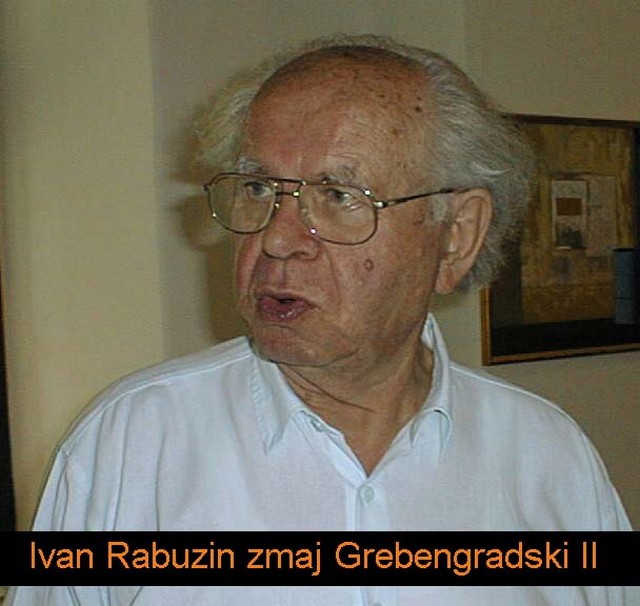
Ivan Rabuzin 1921-2008 outstanding Croatian painter died

By Nenad N. Bach and Darko Žubrinić
Published  12/22/2008

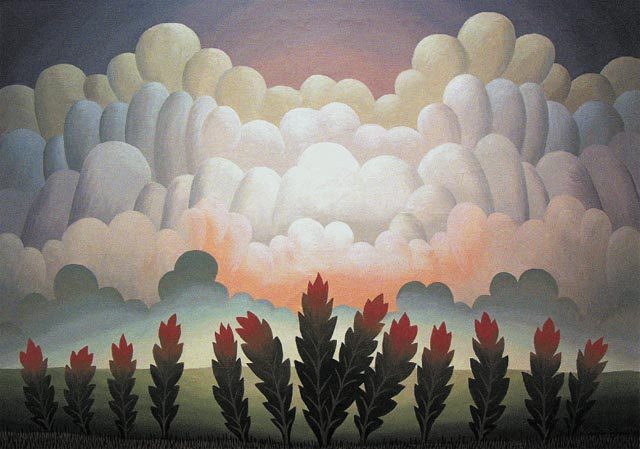
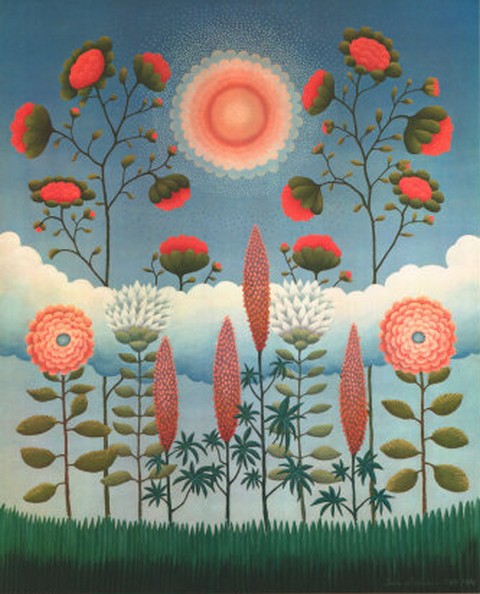
Rabuzin's flowers on solemn curtains of Japanese theatres


Ivan Rabuzin 1921-2008


Ivan Rabuzin (1921-2008) designed a curtain decorating the stage of one of the best Kyoto theaters (Japan), as well as the Takarazuka theatre in Tokyo (10.5 x 24 m, 1980), and several other museums in Japan: Sategaya Art Museum in Tokyo, Saitama Museum of Modern Art in Urawa, Isetan. He also had exhibitions at Daimaru and Shinsabashi in Osaka. Since 1976 his designs are used by "Rosenthal", renowned producer of porcelain ware. He is also a member of the Croatian Parliament (Sabor). It is interesting that Rabuzin's father was a miner, while his mother was blind.

His art was exhibited throughout the world: Zagreb, Paris, Antibes, Zurich, Milano, USA (Louisiana, Smithsonian Institution, Carnegie Institute Museum of Art, Scottsdale Center for the Arts, Milwaukee Museum Art Center, Chicago Public Library, C.W. Post Art Galery/Long Island University, Pittsburgh), Oslo, Munich, Dusseldorf, Amsterdam, Verona, Brescia, Florence, Tokyo, Osaka, Geneva, Cologne, London, etc. As many as 10 films have been made about Rabuzin's work, including one in Japan (Moritani Shiro, Kyoto). Among numerous monographs devoted to his work we mention only the following one: Masayoshi Honme, Ivan Rabuzin / Taiji Harada, 1990, published by Kodanasha, Japan.

Source: www.croatianhistory.net

For more information see www.rabuzin.com


Ivan Rabuzin was a member of the Croatian Dragon Fraternity.


Source: www.rabuzin.com


As many as 10 films have been shot dealing with the art life of Ivan Rabuzin, including one in Japan (Moritani Shiro, Kyoto).


One of 13 monographs about the art of Ivan Rabuzin.

Painting

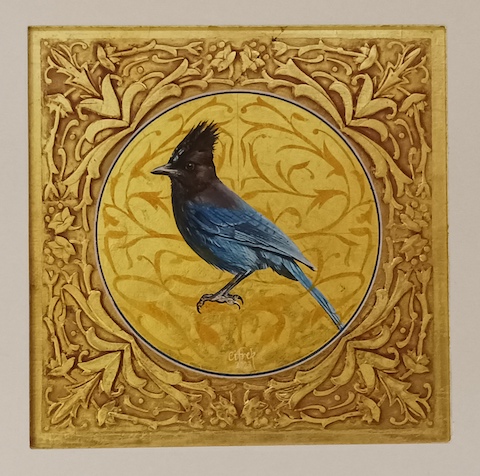
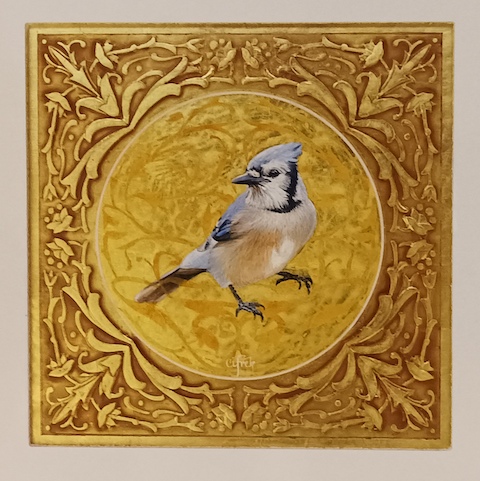
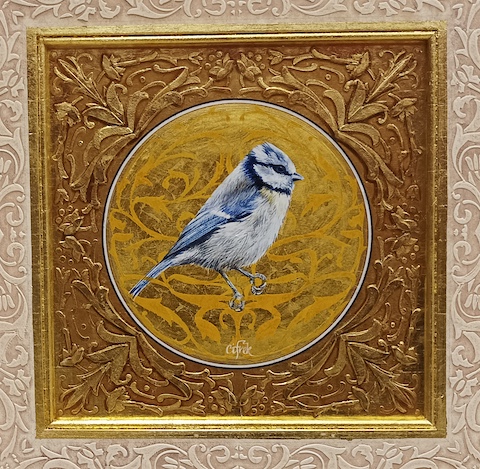
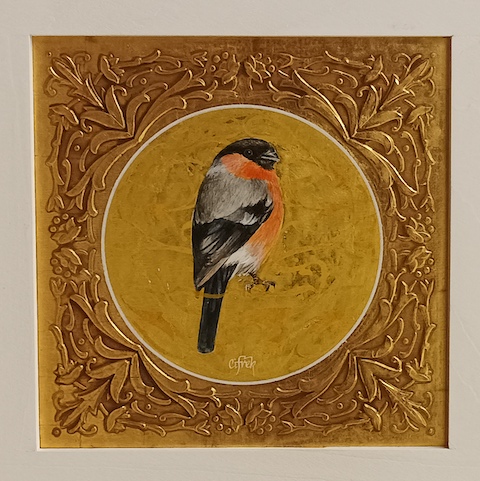
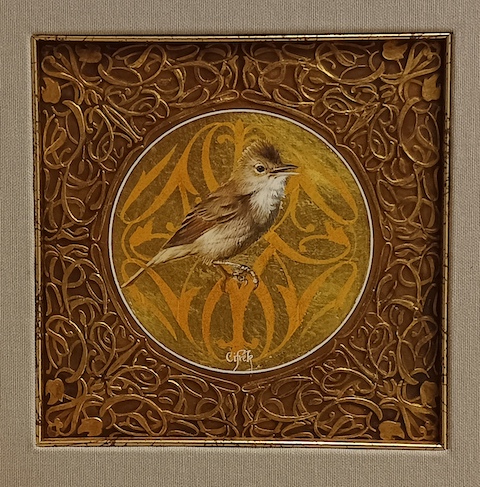
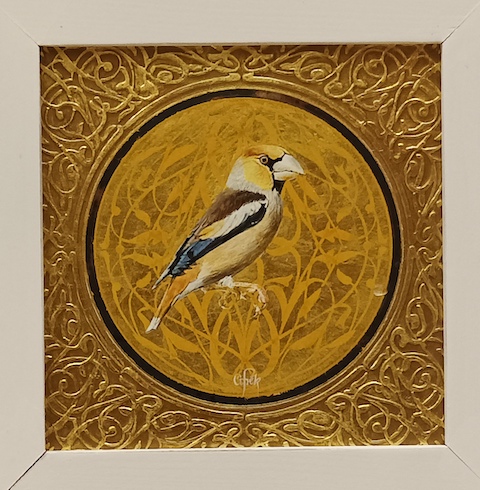
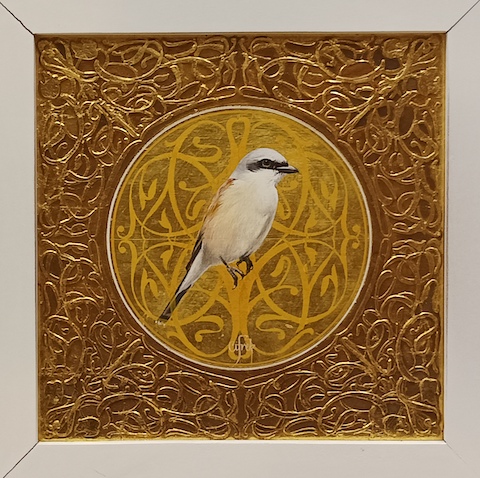
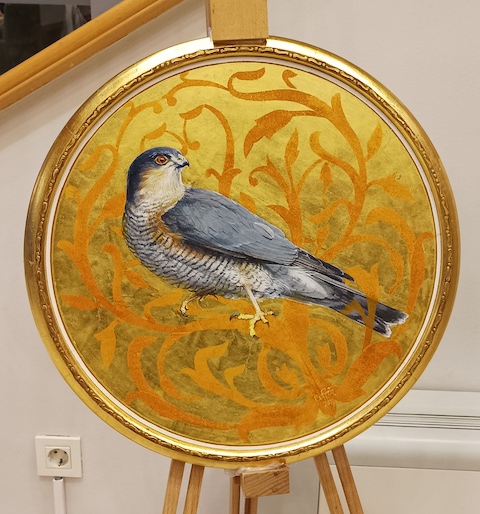
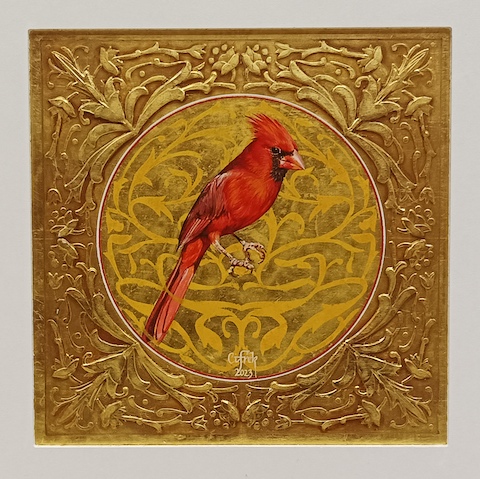
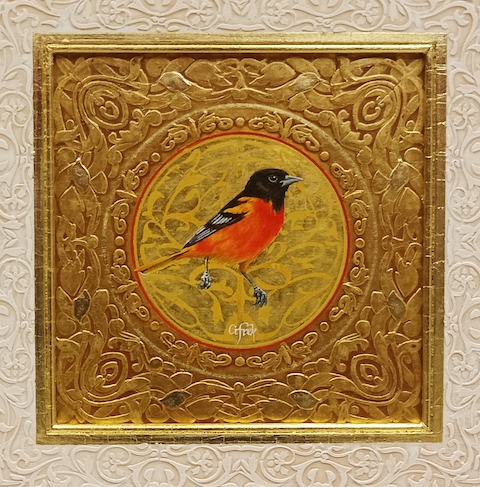
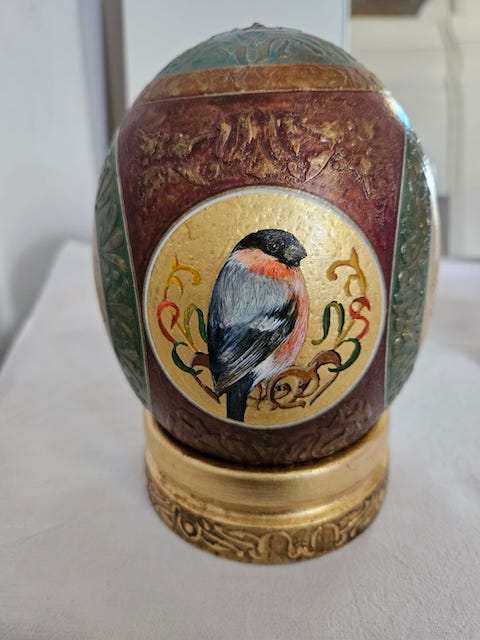
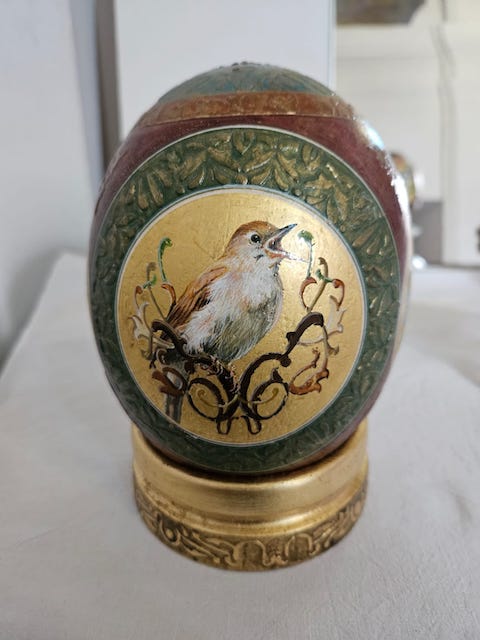
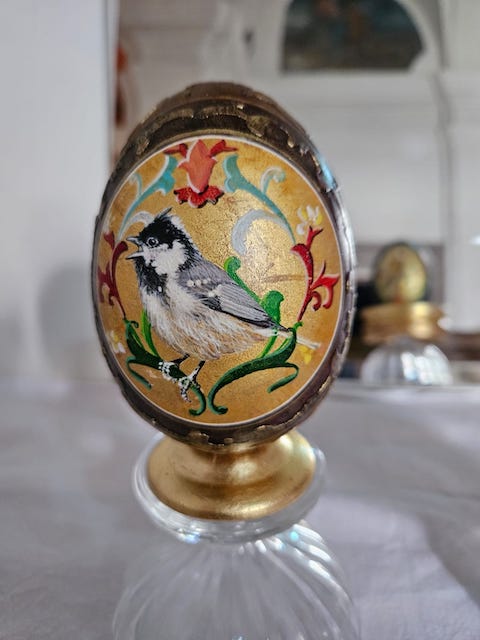
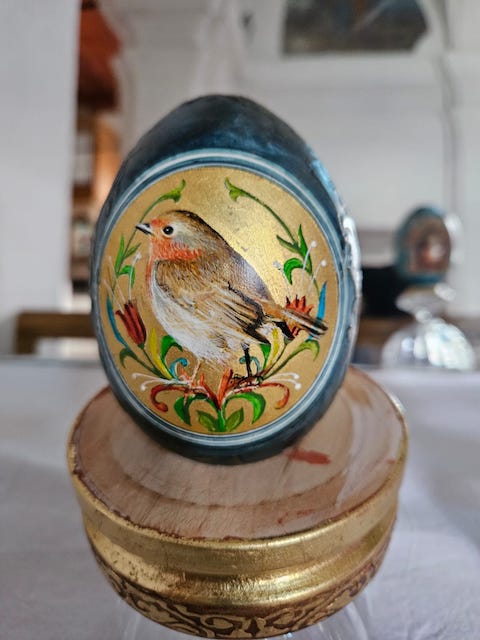
Dragutin Cifrek painting small birds - Tičeki

By Nenad N. Bach and Darko Žubrinić
Published  02/17/2025


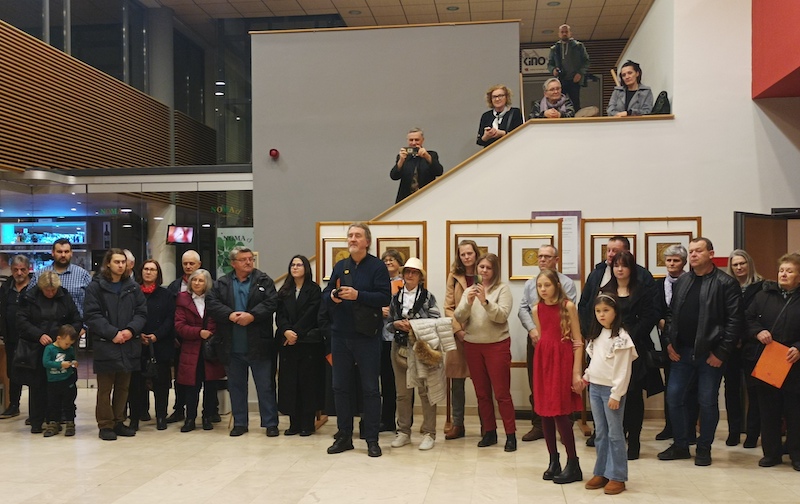
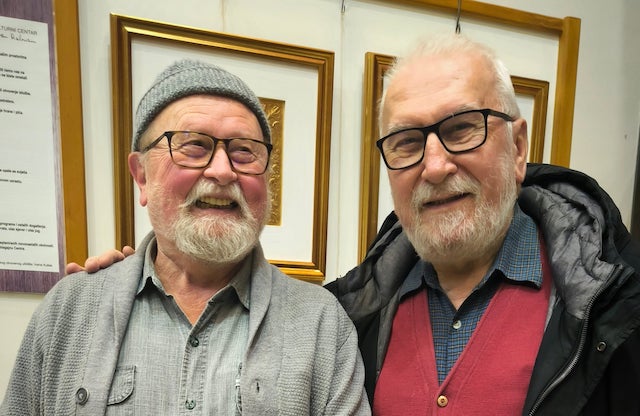
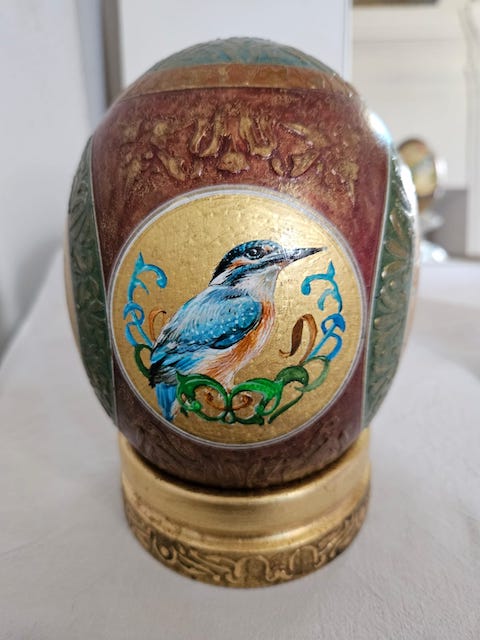
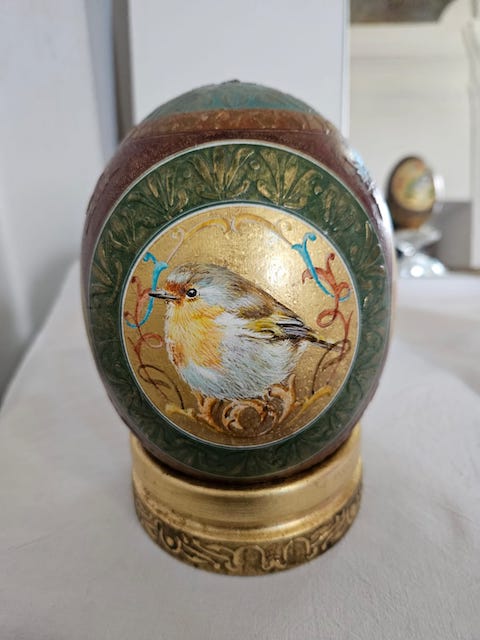
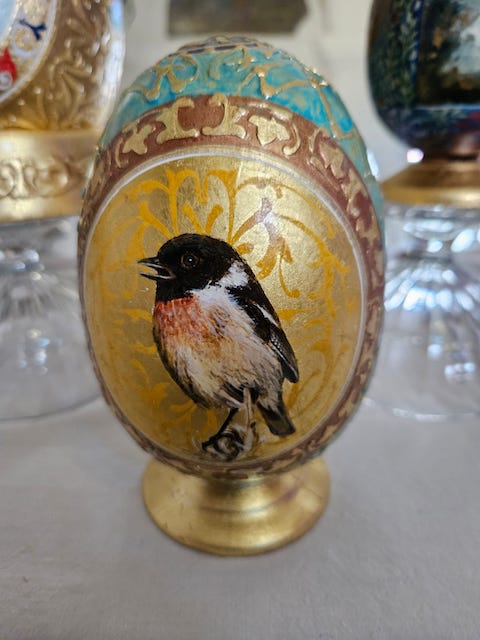
Dragutin Cifrek was born in 1951 in the village of Gornje Makojišće near the town of Novi Marof on the north of the city of Zagreb, Croatia. He is a top Croatian painter and graphic artist, educated at the at the Academy of Arts of the University of Zagreb. He lives in Slovenia. In 2025, he exhibited his fascinating portraits of small birds (tičeki) in the Cultural Center of "Ivan Rabuzin" in Novi Marof.

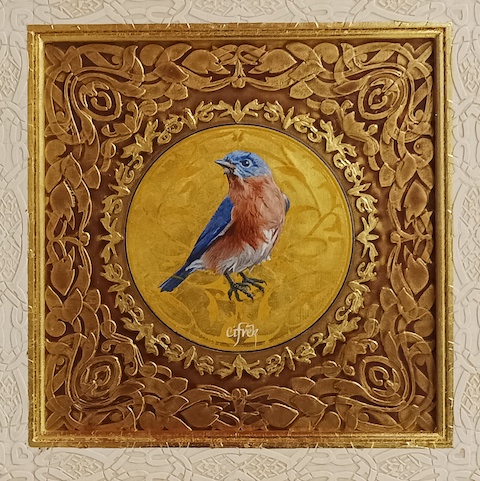
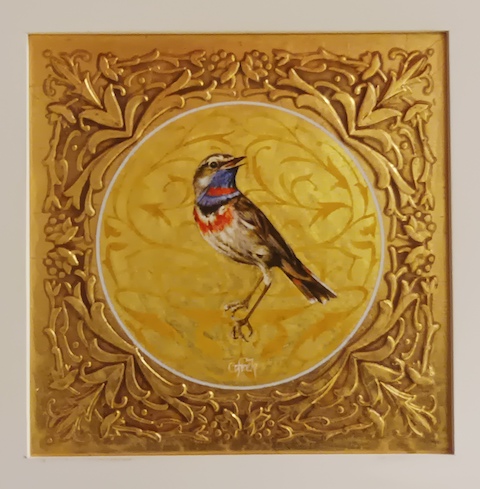
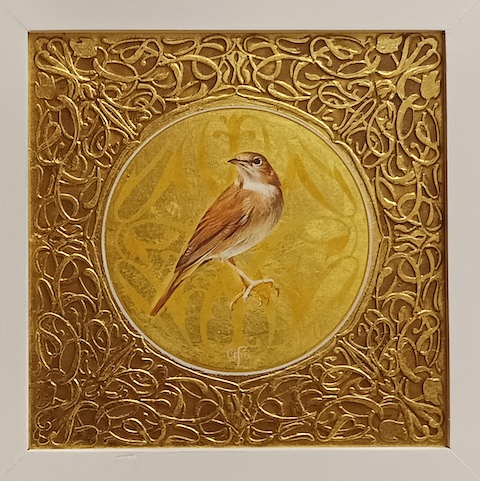
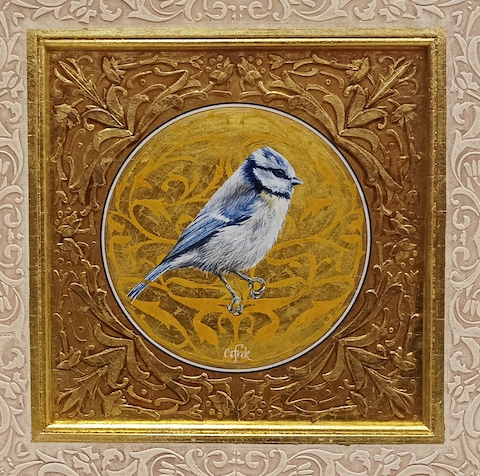
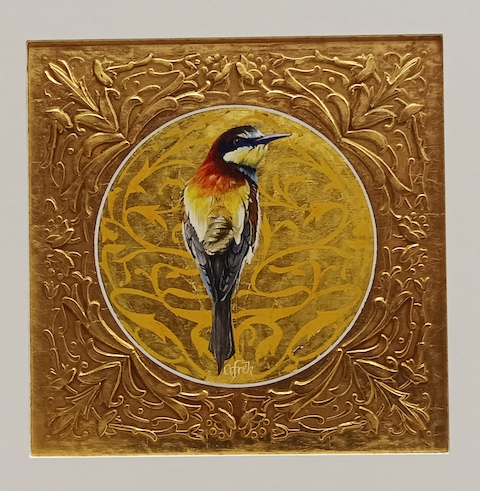
An amazing world of small birds - tičeki, viewed by Dragutin Cifrek,
who is a top Croatian painter


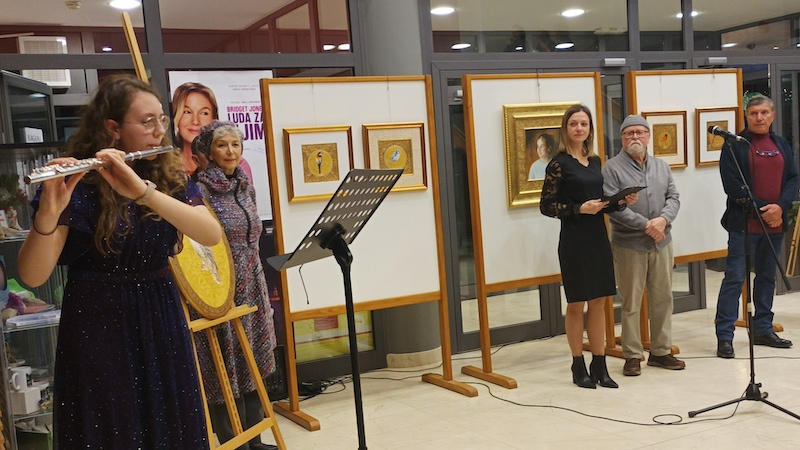
Opening of the exhibition - music and small birds - tičeki. Mr. Dragutin Cifrek is the second from the right, wearing a funny cap.


Tiček is Croatian deminutive of tič (one male bird).
Tičeki is the plural of tiček (two or more of them).

Tičica is a female small bird.


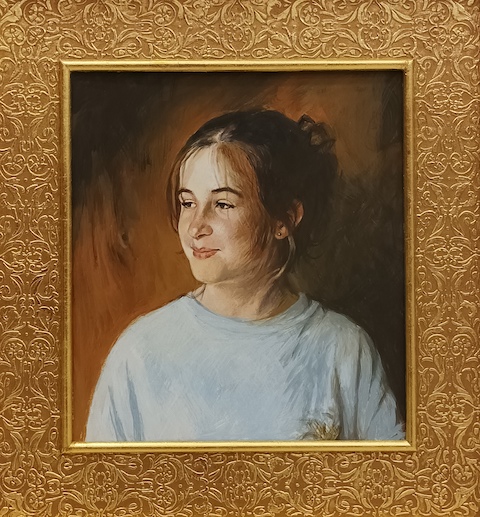
Portrait of a young girl - tičica...

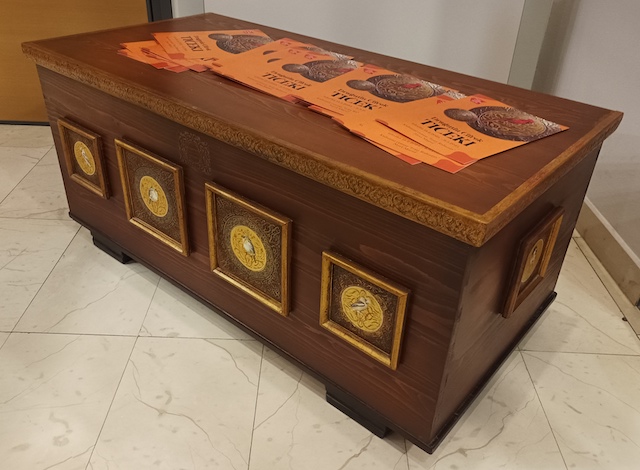
A chest, wooden work of art, prepared by a 90-years old friend of Dragutin Cifrek,
with tičeki added by the artist...


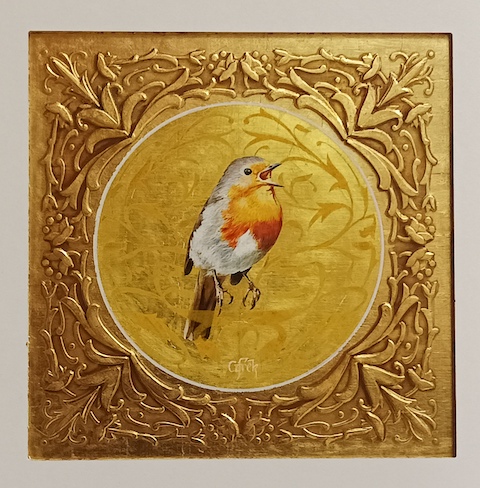
Singing tiček... Can you hear me?


Please, go to the next page below.


Tičeki - part 2


Each tiček is a personality...


The exhibition TIČEKI was organized within the Cultural Center of "Ivan Rabuzin" in the town Novi Marof,
on the north of the city of Zagreb, Croatia


Mario Cifrek (tenured full professor at the Faculty of Electrical Engineering and Computing of the University of Zagreb)
with his close relative and distinguished Croatian artist Mr. Dragutin Cifrek


Please go to the next page below.


Tičeki - part 3


Two tičeki:
Dragutin Cifrek (painter and graphic artist) with his very good friend Tihomir Petrović (music teacher)


This is the third and the last page.


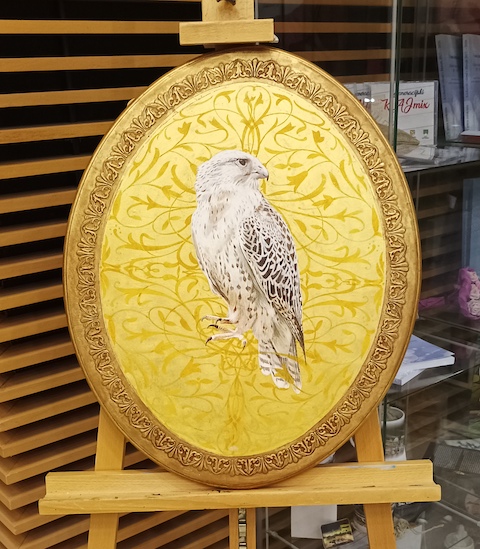
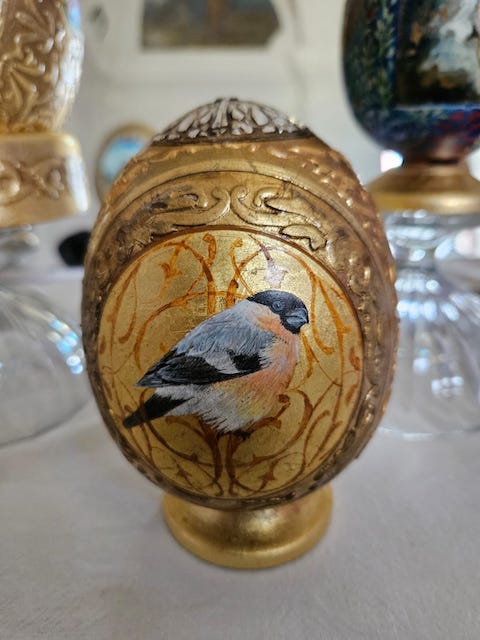
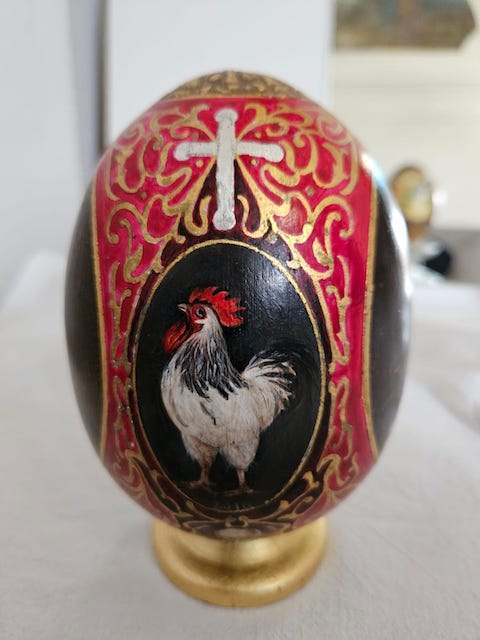
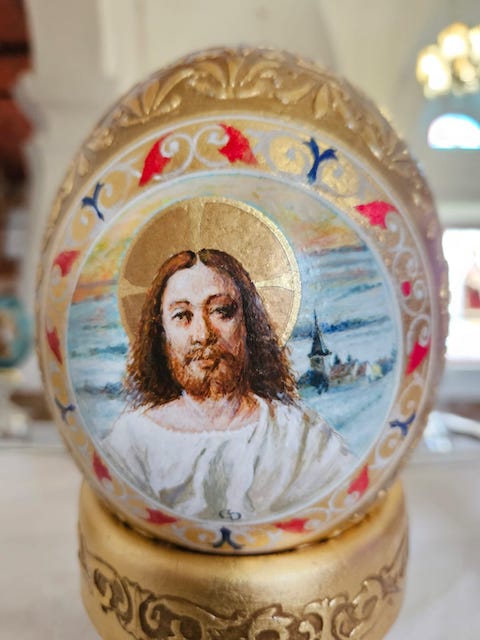
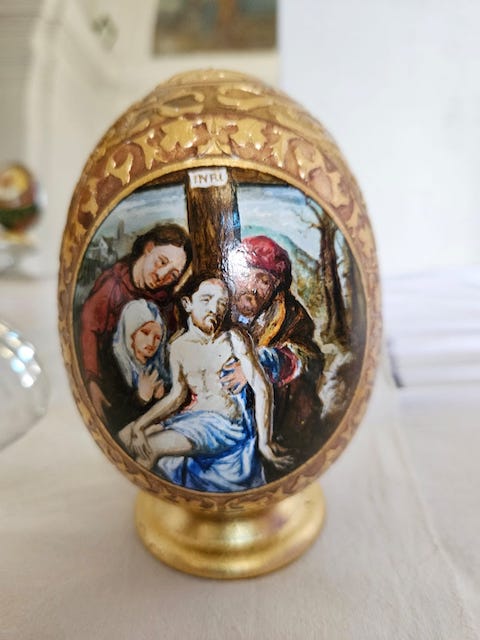
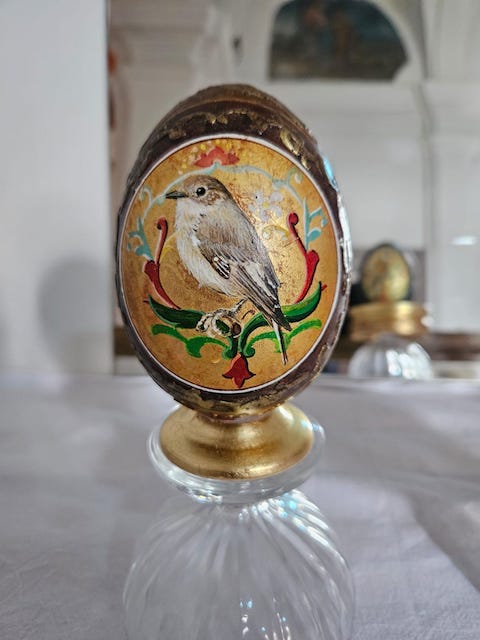
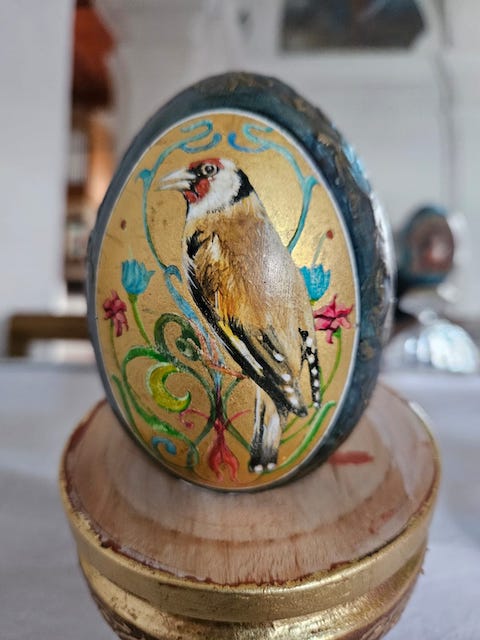
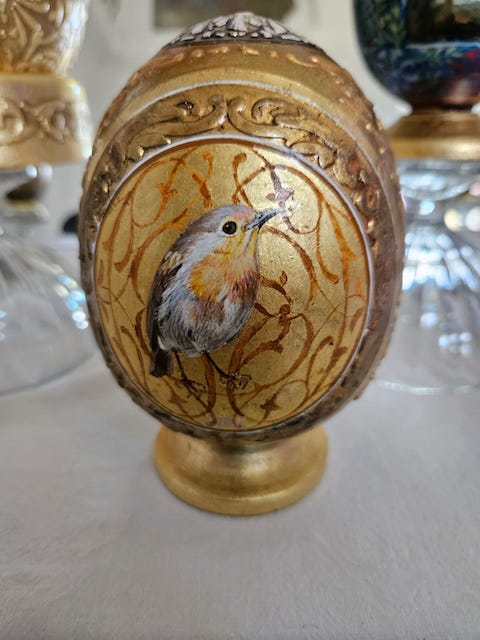
Dragutin Cifrek distinguished Croatian miniature painter and calligrapher

By Nenad N. Bach and Darko Žubrinić
Published  12/22/2024


Dragutin Cifrek was born in 1951 in the village of Gornje Makojišće near the town of Novi Marof on the north of the city of Zagreb, Croatia. He is a top Croatian painter and graphic artist, educated at the at the Academy of Arts of the University of Zagreb. He lives in Slovenia. In 2025, he exhibited his fascinating portraits of small birds (tičeki) in the Cultural Center of "Ivan Rabuzin" in Novi Marof.

Part 1 Dragutin Cifrek completed his studies of Art at the University of Zagreb


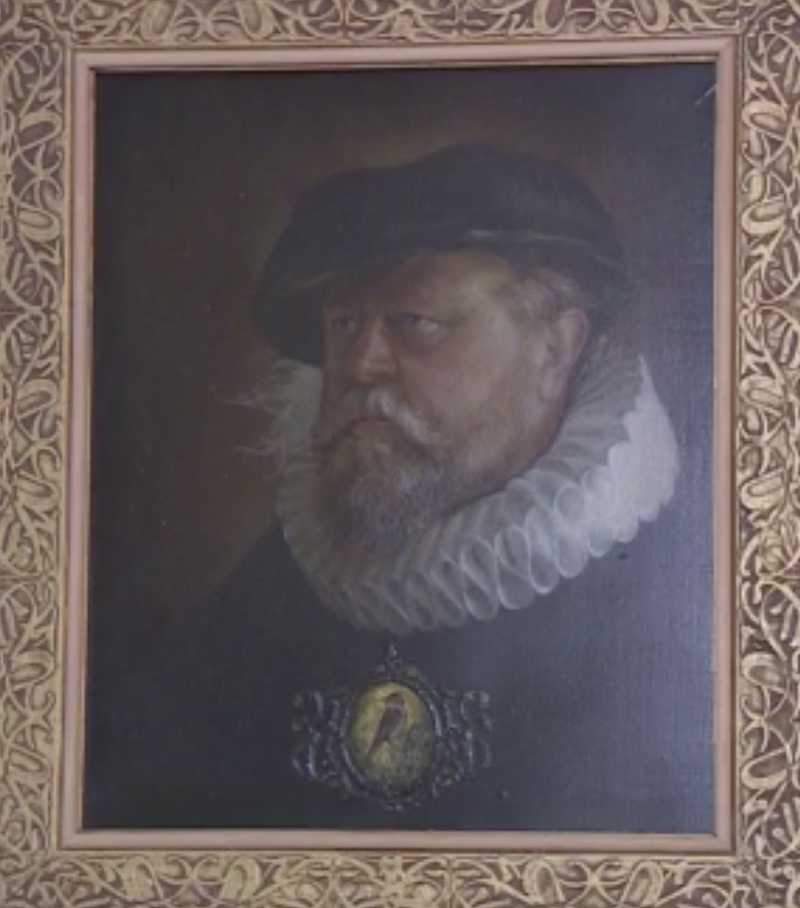
Self-portrait of Mr. Dragutin Cifrek from 2005. He also created the frame.
His self-portrait appears in a postage stamp in Finland (sic!).


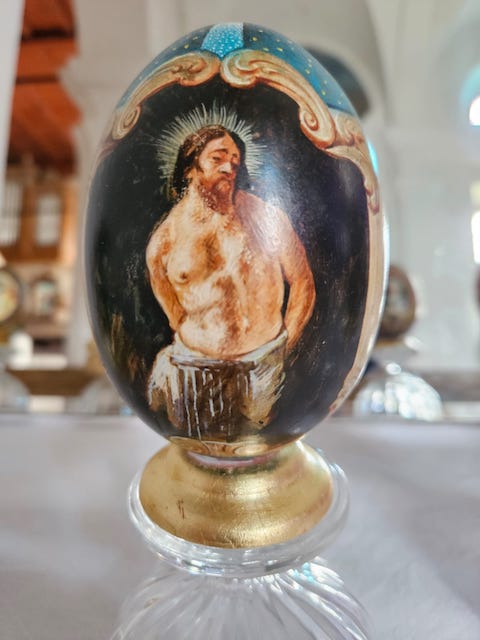
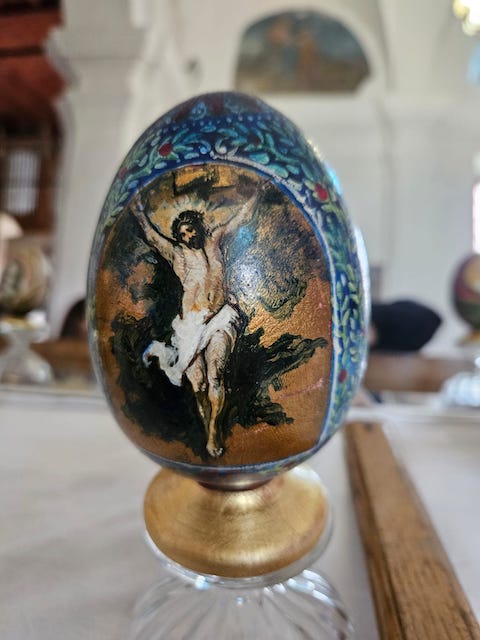
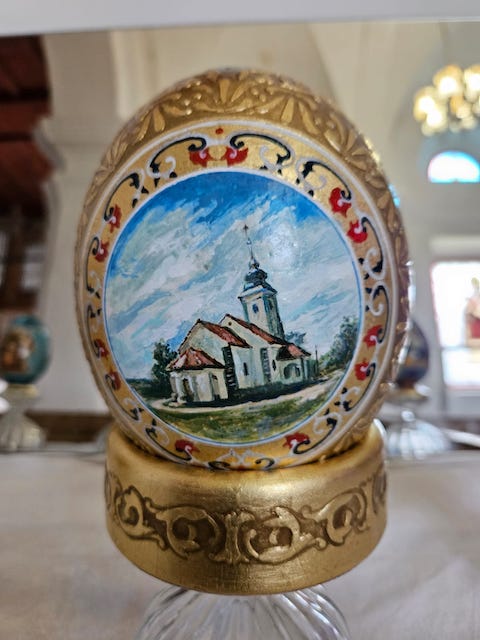
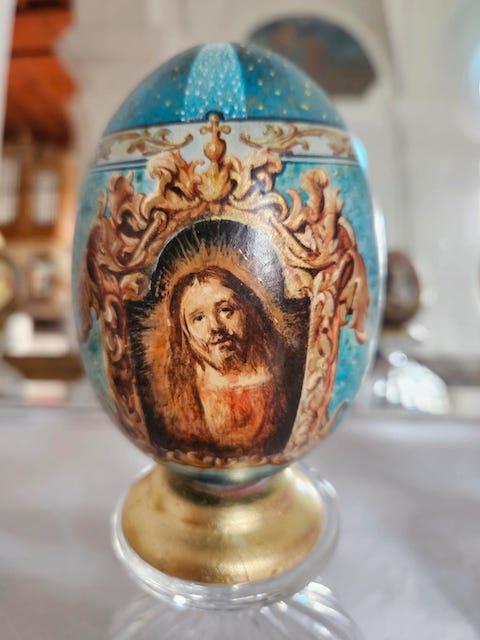
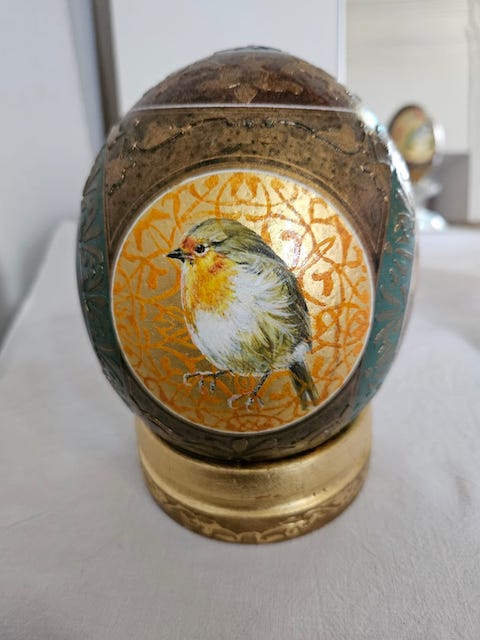
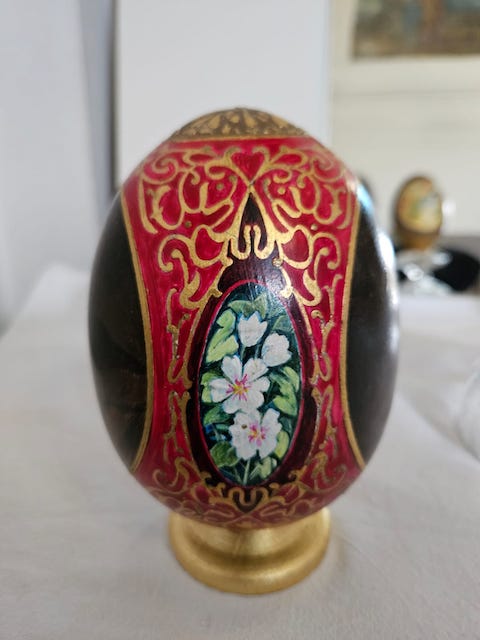
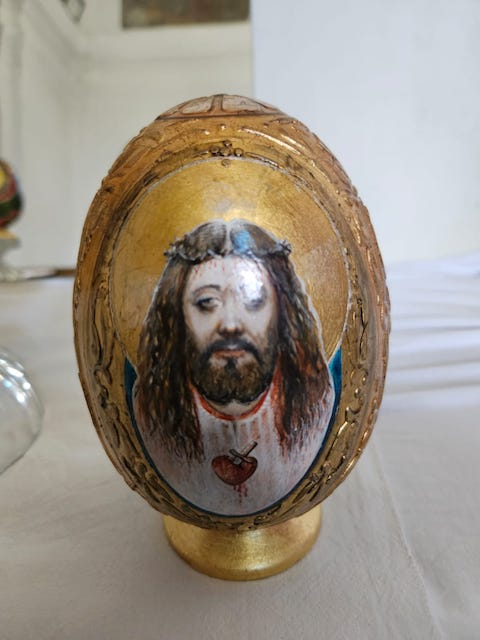
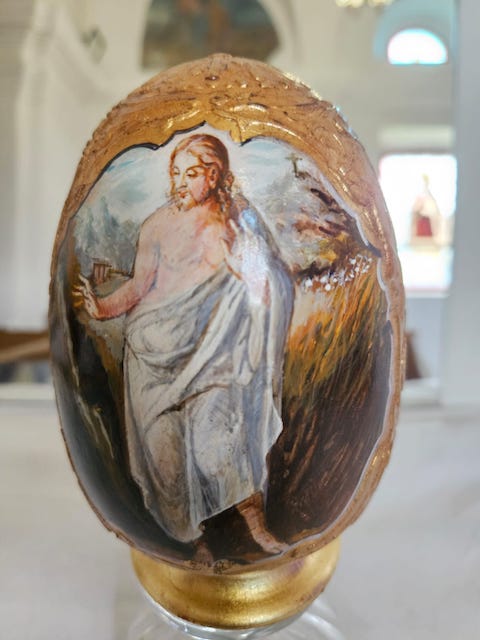
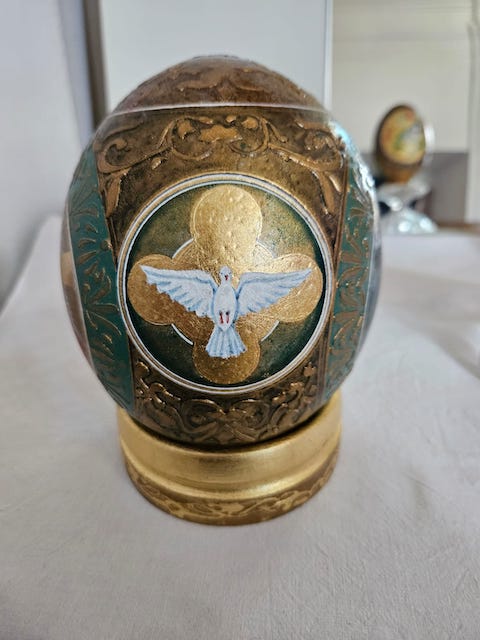
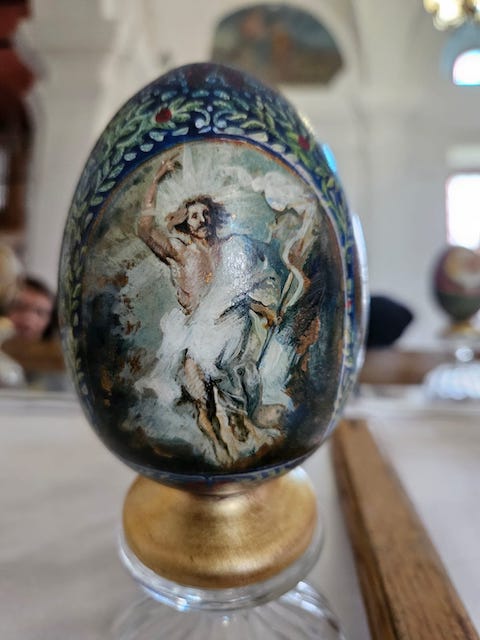
Summary. Dragutin Cifrek is distinguished Croatian painter, calligrapher and miniaturist, living in Slovenia. He completed his studies at the Academy of Arts of the University of Zagreb. In 2005, his self-portrait was awarded the first prize during an international competition organized in Finland. It was even chosen to appear on a postage stamp in Finland (on the photo)! Here we provide his very beautiful miniatures inspired by the rich tradition of Croatian Easter eggs painting. Mr. Cifrek was born in a village of Makoišće gornje (near Novi Marof) on the north of the city of Zagreb.

Mario Cifrek and Darko Žubrinić


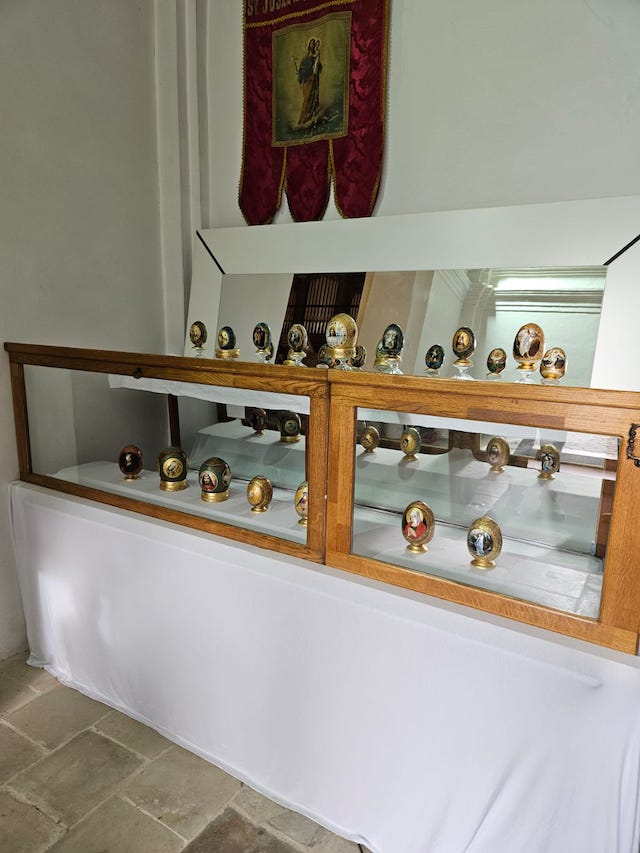
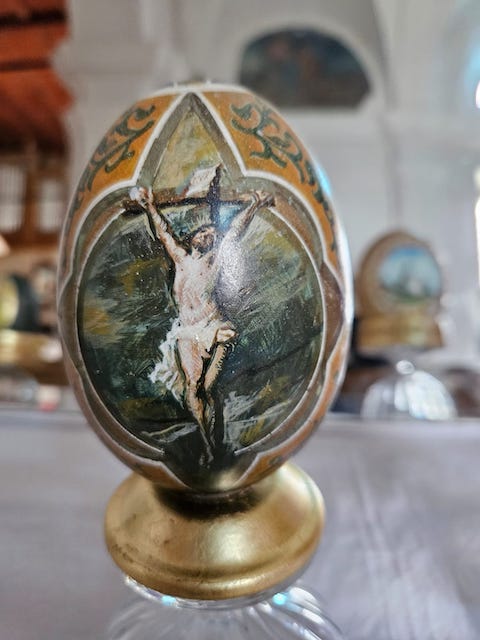
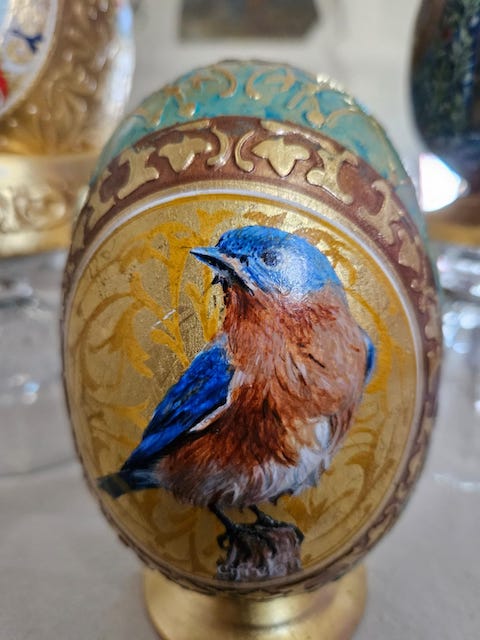
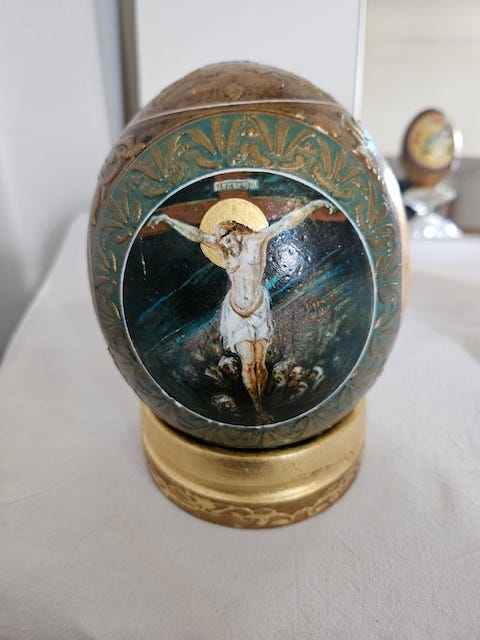
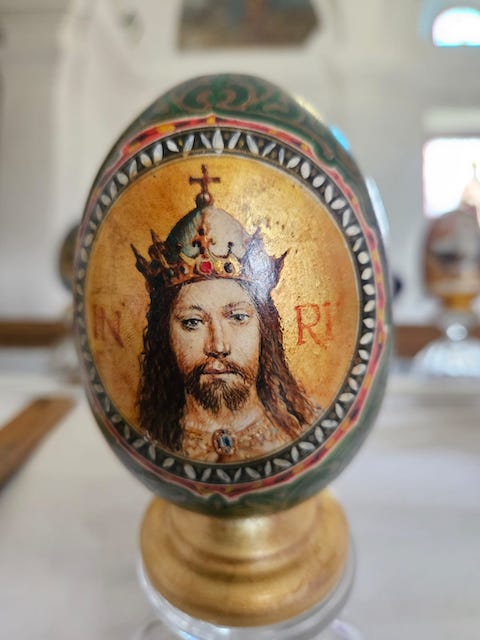
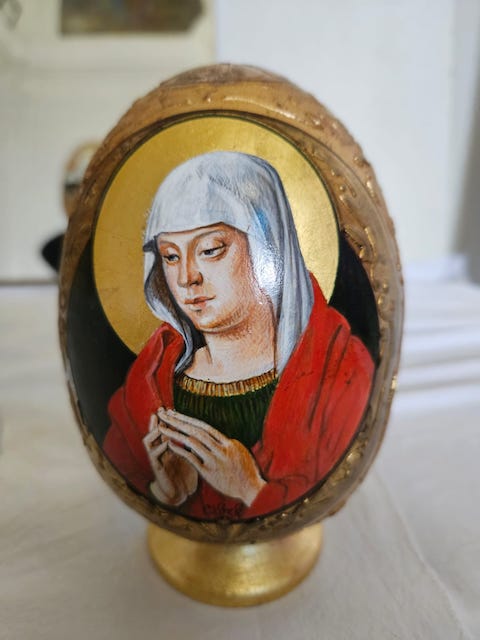
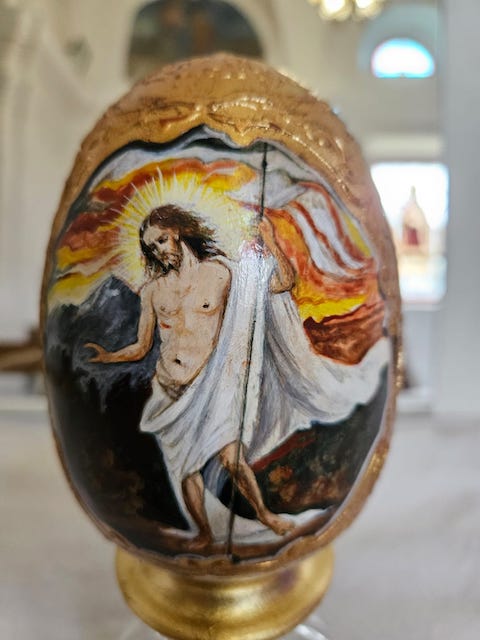
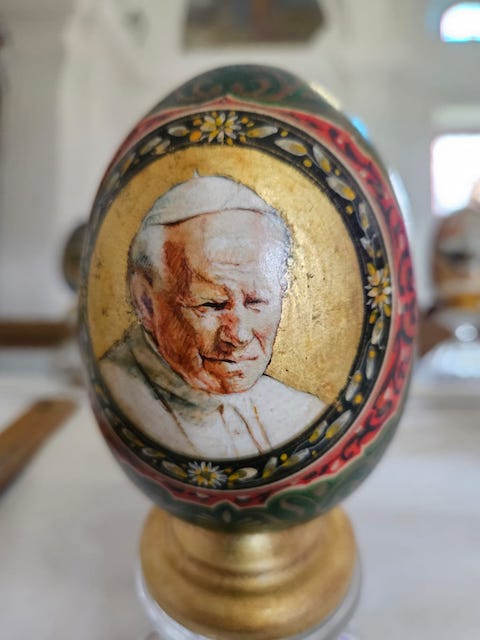
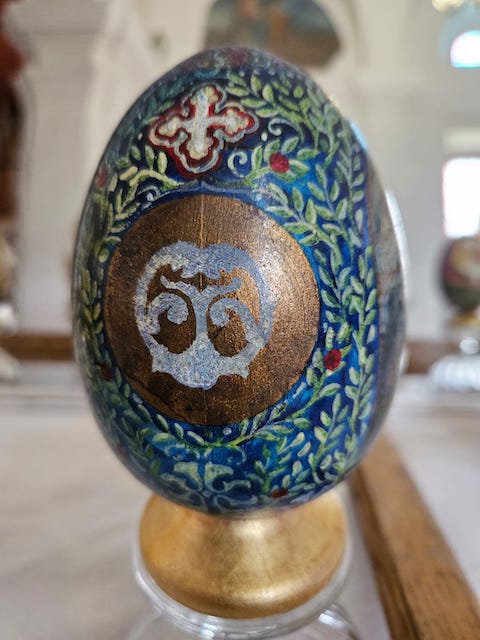
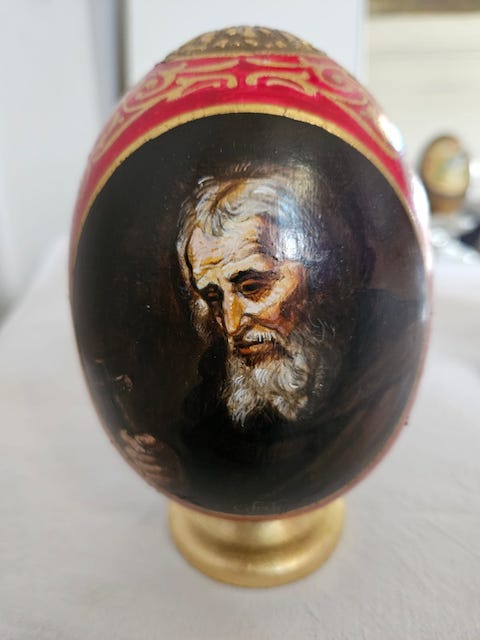
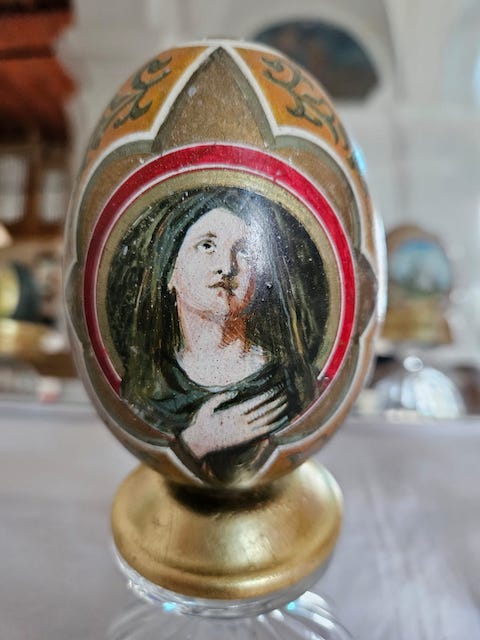
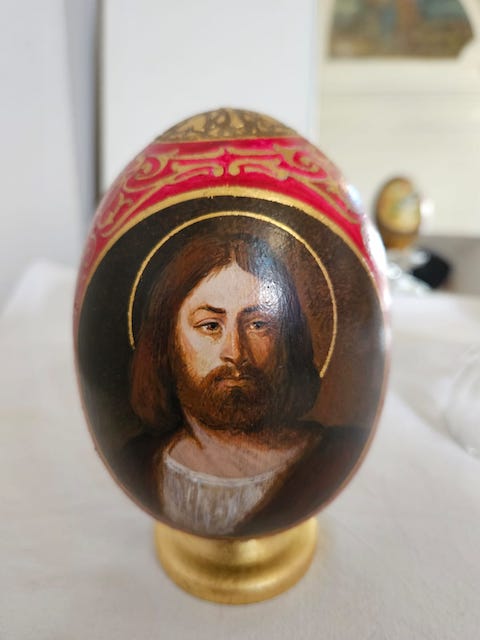
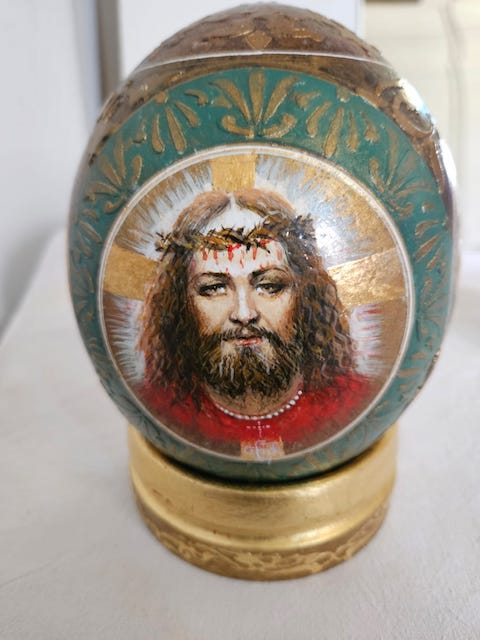
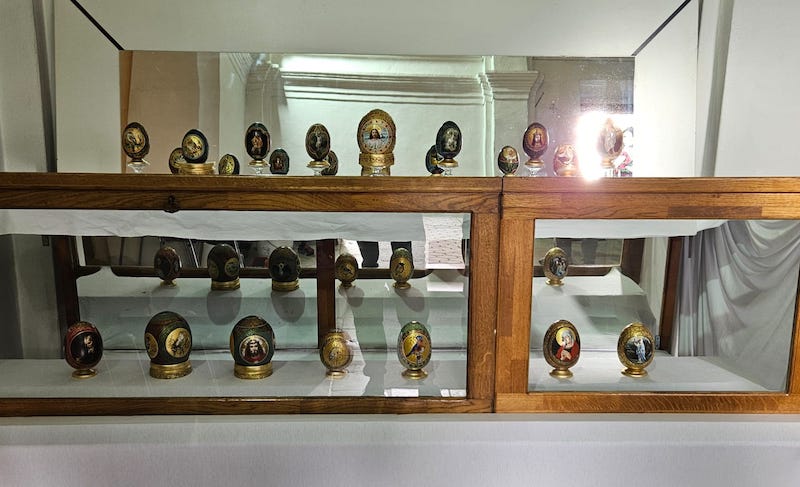
Župna crkva Uznesenja bl. Djevice Marije u mjestu Zajezda (u sastavu Općine Budinščina, Krapinsko-zagorska županija) nudi jedinstvenu izložbu tridesetak oslikanih jaja, s liturgijskim i svjetovnim motivima. Oslikao ih je Dragutin Cifrek, slikar i kaligrafist, podjednako vješt u minijaturama kao i u oslikavanju površina od pedesetak ili više kvadrata, zasigurno najbolji svjetski portretist.

Slikao je Dragec životinje tiskane na prvim hrvatskim poštanskim markama devedesetih, pisao zlatom posvetu u bibliji darovanoj Papi, slagao mozaike, slikao i izrađivao kipove i kulise za kazališne predstave u Ljubljani... Dragecov je autoportret prije petnaestak godina izabran kao najbolji na međunarodnom natječaju koji je raspisala Finska, a za nagradu bio je tiskan na finskoj poštanskoj marki pa su mnogi Finci te godine lizali Dragecovu sliku 🙂. Zašto je sve to slabo poznato hrvatskoj javnosti?

Čini se po ne znam koji put da smo premala zemlja za velike ljude, a naročito kad su toliko skromni i samozatajni kao što je to moj prijatelj Dragec iz Gornjeg Makoišća kod Novog Marofa, niska rasta no golemog umijeća! Izložba se zatvara u ponedjeljak, 1. travnja 2024., nakon jutarnje mise. Stoga, požurite se!

Tihomir Petrović


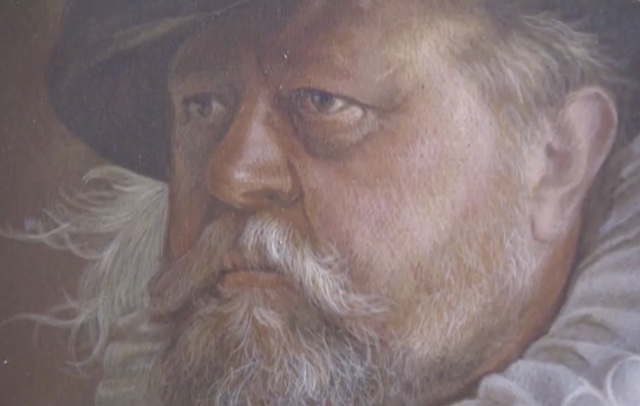
Self-portrait of Mr. Dragutin Cifrek, distinguished Croatian painter living in Slovenia; a detail.
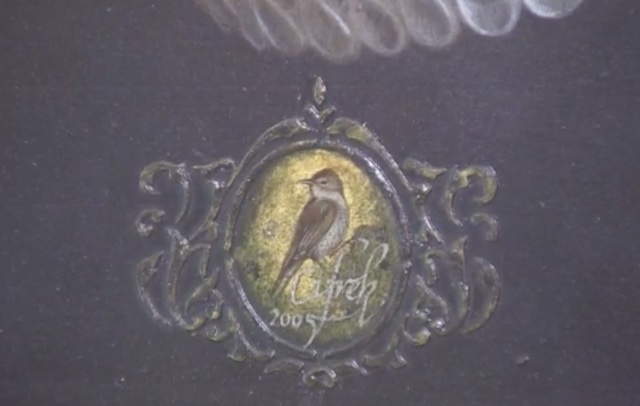
Signature "Cifrek 2005" appearing in the self-portrait.

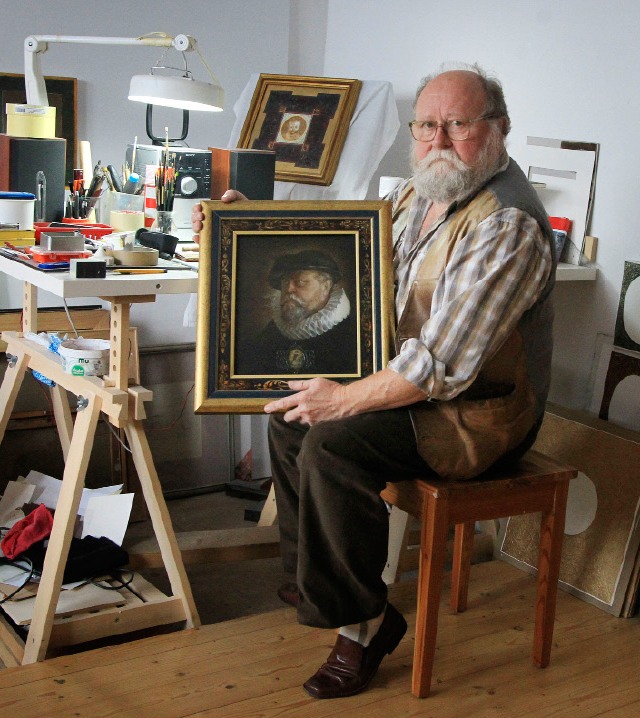
Dragutin Cifrek with his self-portrait (photo by Leon Vidic)

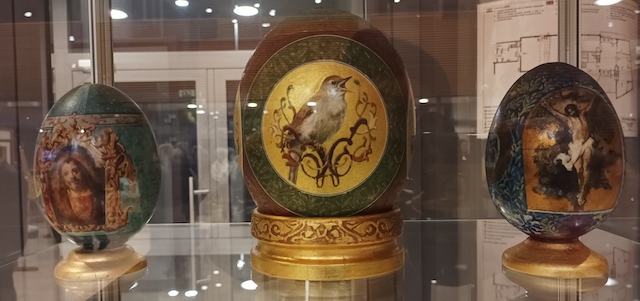
Exhibition of Easter-eggs, painted by Mr. Dragutin Cifrek,
exhibited in the parish church of the town of Zajezda, north of Zagreb.
Župna crkva Uznesenja bl. Djevice Marije u mjestu Zajezda (u sastavu Općine Budinščina, Krapinsko-zagorska županija).


Župna crkva Uznesenja bl. Djevice Marije u mjestu Zajezda
(u sastavu Općine Budinščina, Krapinsko-zagorska županija).


Please, go to the next page below.


Part 2 Painting saints and birds


St. John Paul the IInd


Please, go to the next page below.


Part 3 Painting Easter eggs


Holy Spirit


Croatian Art


This is the third and the final page.


Giulio Clovio Croata 1498–1578 the greatest miniaturist of the Renaissance

By Nenad N. Bach and Darko Žubrinić
Published  12/22/2012

His masterpieces are kept in Florence, Naples, Venice, Torino, Paris, London, Vienna, New York


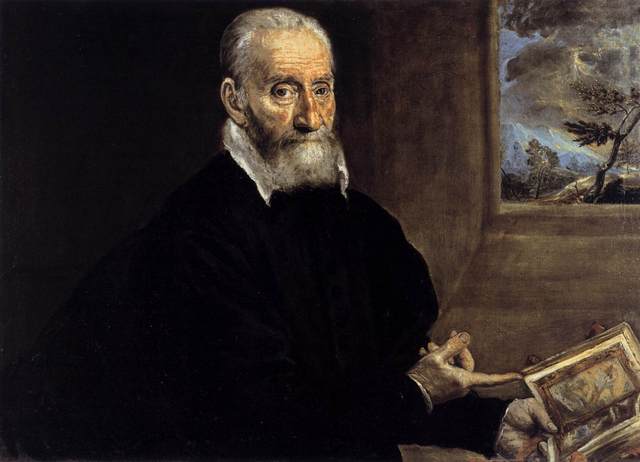
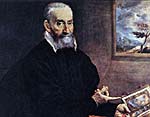
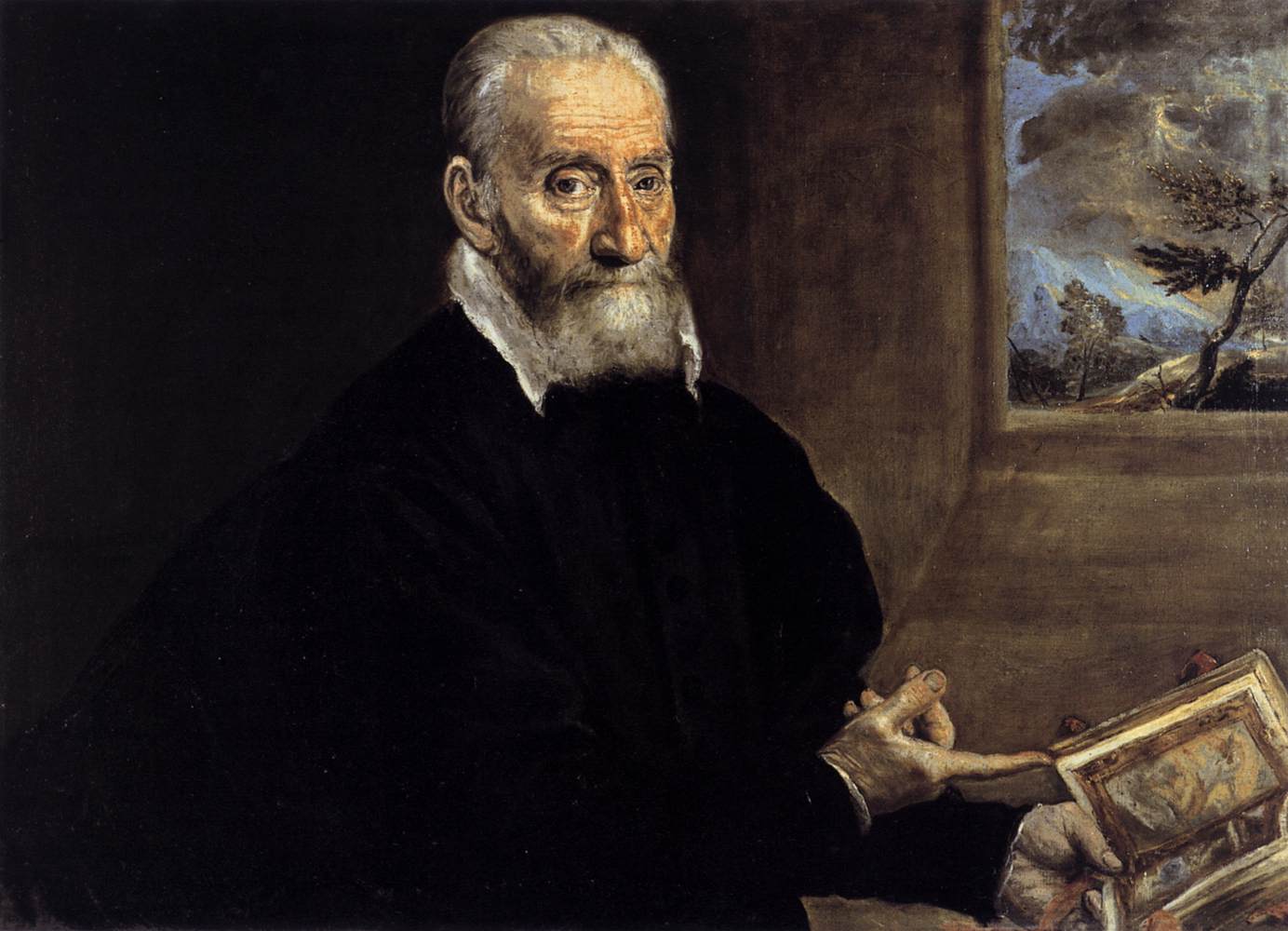
El Greco, portrait of don Giulio Clovio Croata, 1570-1571, kept in Naples, Italy, in Museo di Capodimonte. Dimensions: 84x62 cm
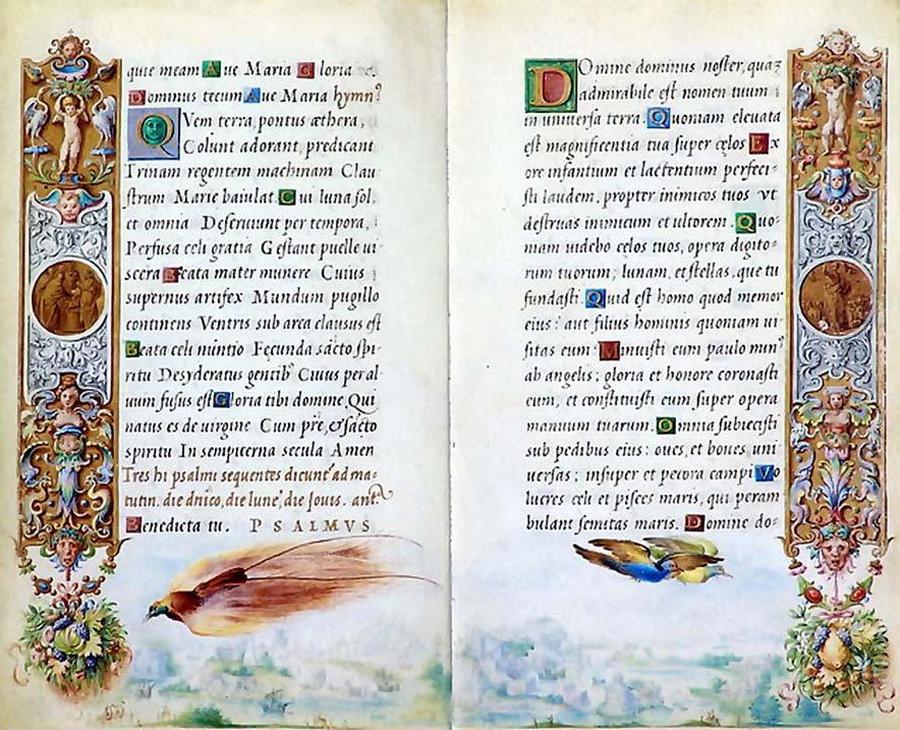
In his hands is his most favorite book, "Officium Virginis", decorated by himself,
now kept in the Pierpon Morgan Library in New York.


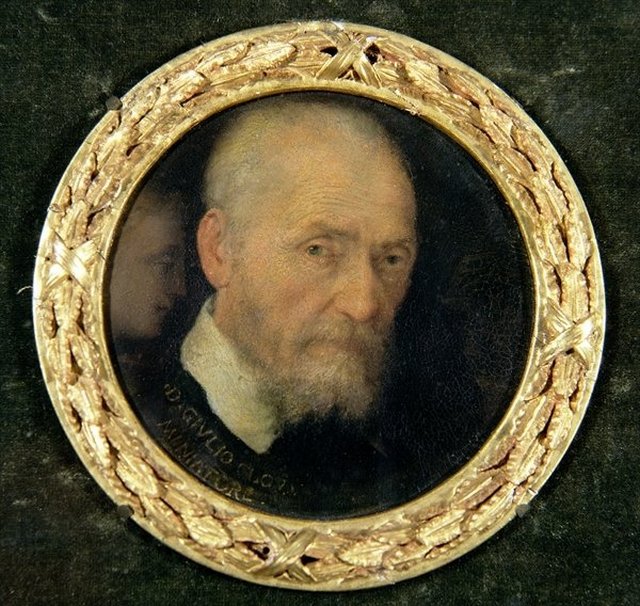
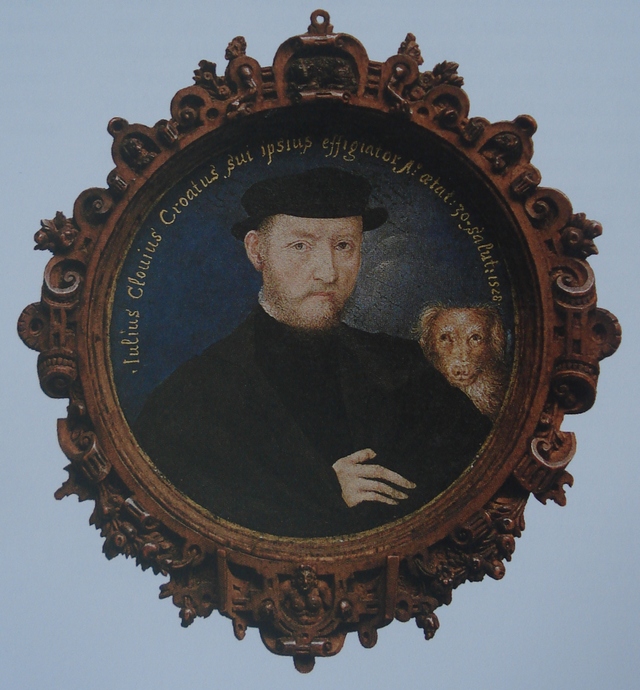
Julije Klović - Giulio Clovio, selfportrait, arround 1573, Florence, Uffizi Gallery
Diameter of the selfportrait: 11.5 cm!


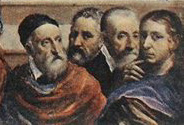
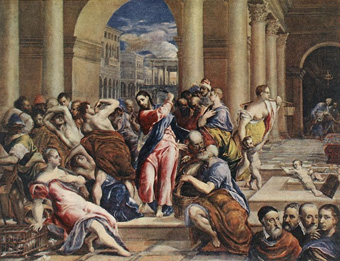
Julije Klović, or Don Giulio Clovio de Croatia (1498-1578), is regarded as the last great representative of the classical European miniature. His works decorate many famous galleries: Uffizi in Florence, Museo di Capodimonte in Naples, Biblioteca Marciana in Venice, Galleria Sabanda in Torino, Bibliothek der Albertina in Vienna, Louvre in Paris, Towneley Public Library and Pierpont Morgan Library in New York (which is in possession of "Officium Virginis", 228 pages, his most famous and the best masterpiece, containing 30 valuable miniatures by his hand), the British Museum and Soane's Museum in London, Windsor Castle (Royal Library). His pupil was El Greco, who portrayed him in his work "Expelling merchants from the temple" (together with figures of Rafael, Michelangelo and Tizian, appearing on the bottom left of that work), now kept in The Minneapolis Institute of Arts (The Willam Hood Dunwoody Fund).

Tizian, Michelangelo, Julije Klovic, and Rafael; portrait by El Greco (detail) (The Minneapolis Institute of Arts)

Expelling merchants from the temple, El Greco (Klovic with Tizian, Michelangelo and Rafael at the bottom left), The Minneapolis Institute of Arts

Julije Klovic (Giulio Clovio de Croatia), portrait by El Greco

Among his friends let us mention Michelangelo. Klovic used to sign himself as

GEORGIVS JVLIVS CLOVIVS CROATA

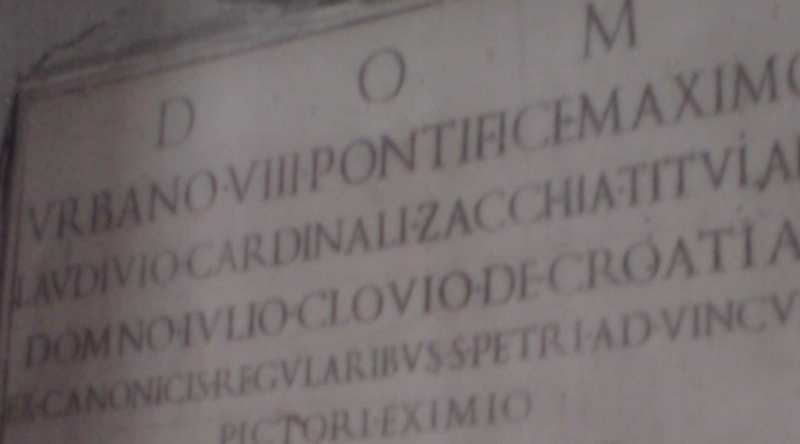
His grave is situated near Michelangelo's Moses in the the church of S. Pietro in Vincoli, Rome, and bears an inscription "Pictor de Croatia".

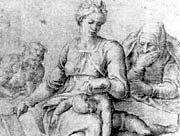
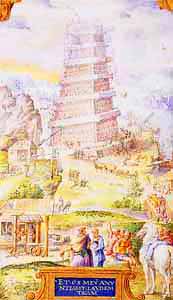
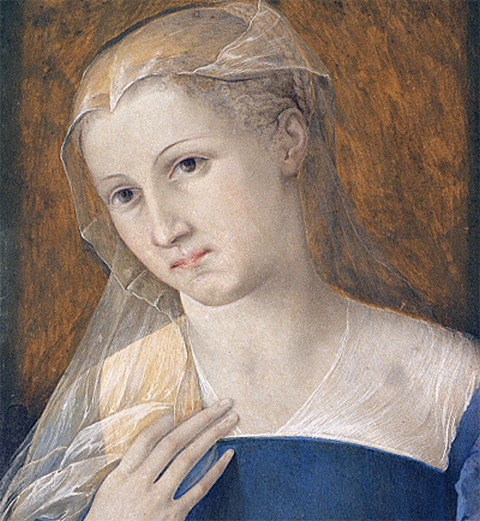
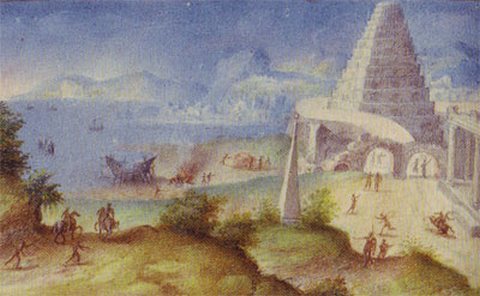
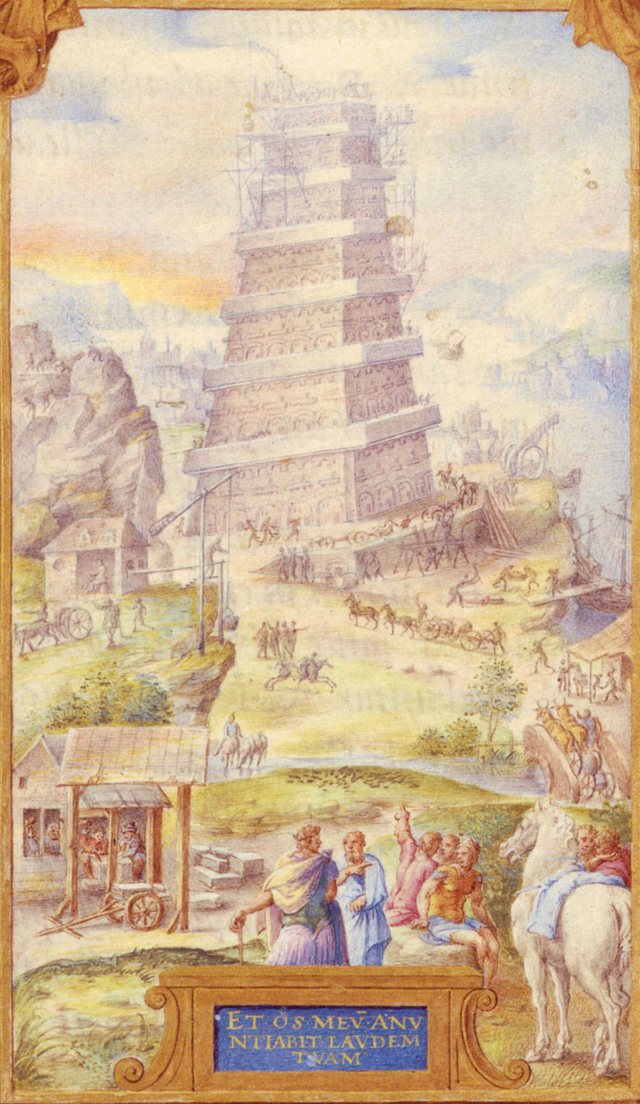
Julije Klovic: Madona del Silenzio (National Library, Zagreb, Croatia) Julije Klovic: Babel's tower (1550)

For more information see Julio Clovio Croata, protector del Greco Foven by Branko Kadic, an article by Marjana Vucic published in American Croatian Review, [Julije Klovic], and [Fontes Clovianae]

Source www.croatianhistory.net


Fantastic exhibition in Klovićevi Dvori, Zagreb, Croatia
of works of art of
Julije Klović - Giulio Clovio Croata
November 8, 2012 - January 20, 2013


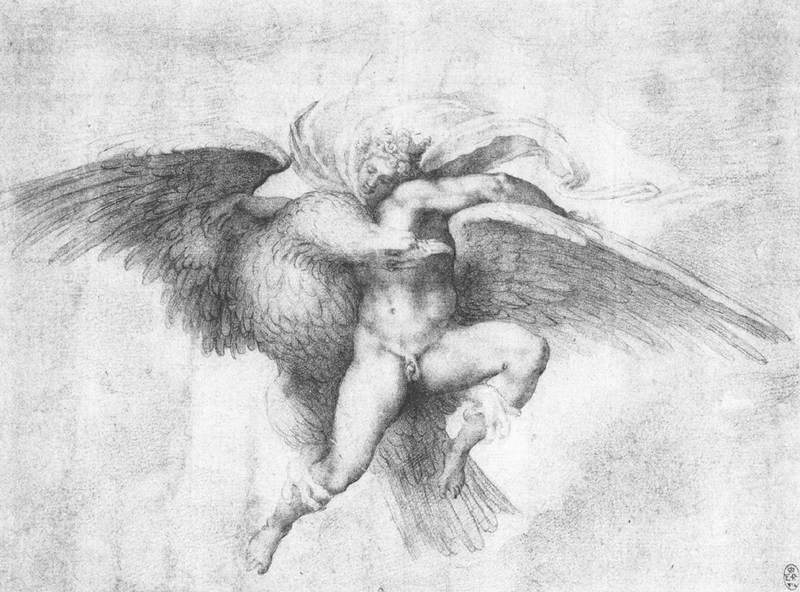
Guilio Clovio: The Rape of Ganymede (drawn after Michelangelo)
Black chalk, 192 x 260 mm
Royal Collection, Windsor

Inscription above the grave of don Julije Klović: DOMNO IVLIO CLOVIO DE CROATIA


Julije Klović - Giulio Clovio Croata

Najveći minijaturist renesansnoga razdoblja Juraj Julije Klović (1498.–1578.) u svoje je doba stekao glas i poštovanje najvrsnijeg umjetnika. Ta slava, s kojom je neraskidivo povezano i ime njegove domovine, traje stoljećima. Što više, često se spominje kao jedan od najvećih sitnoslikara svih vremena. Prema predaji, toliko je bio vrstan minijaturist da je na noktu palca mogao naslikati cijelu Posljednju večeru. Taj najpoznatiji svjetski umjetnik iz Hrvatske, koji se na nekoliko svojih minijatura potpisao Julio Clovio de Croazia, u Hrvatskoj je prisutan s tek tri djela iako su njegovom rukom iluminirani brojni molitvenici, lekcionari i časoslovi koje su naručivali najugledniji ljudi njegova doba. Tada, a i danas oni se čuvaju kao najveće dragocjenosti. Nekoć su nad njima bdjeli naručitelji, a danas se ljubomorno čuvaju u trezorima najpoznatijih svjetskih knjižnica i muzeja. Javnosti, zapravo, nisu dostupni danas kao ni onda kad su nastali. Njihovo posuđivanje izvan mjesta na kojima se čuvaju nije uobičajeno.

Stoga je izložba Jurja Julija Klovića, koju uz tridesetu obljetnicu svog uspješnoga djelovanja priređuje Galerija Klovićevi dvori, pravi pothvat. Za posudbu Klovićevih djela iz europskih i svjetskih riznica, Klovićevi dvori su morali osigurati specijalne i vrlo rigorozne uvjete izlaganja i čuvanja. Jer je riječ o dragocjenostima koje se čuvaju u trezorima. Udovoljivši tim najstrožim kriterijima Galerija Klovićevi dvori, koja u svom nazivu nosi ime tog proslavljenog minijaturista, prvi put će hrvatskoj, ali i svjetskoj javnosti, podastrti sitnoslikarski opus Jurja Julija Klovića. Naime, upravo je Zagrebu i Hrvatskoj pripala čast da po prvi puta na jednom mjestu objedini veliki dio opusa ovog slavnog slikara manirizna.

Rođen u Grižanama u Hrvatskom primorju, Juraj Julije Klović još je kao osamnaestogodišnji mladić otišao u Italiju gdje stupa u službu kardinala Domenica, a potom kardinala Grimanija. No, život će ga za kratko odvesti u Mađarsku gdje radi za kralja Ljudevita II. Slijedit će zatim njegova kraća svećenička životna epizoda tijekom koje ime Juraj mijenja u Julije. Naposljetku će se vratiti u okrilje novoga mecene i stupiti u službu kardinala Alessandra Farnesea u Rimu. Kod njega dolazi u dodir s vodećim umjetnicima toga doba – Michelangelom, Vasarijem i Brueghelom koji su također uživali u kardinalovoj mecenatskoj naklonosti. Sâm Klović Farneseu je preporučio mladoga El Greca koji mu se istinski divio te izradio dva Klovićeva portreta.

Na žalost mnoga su Klovićeva djela izgubljena. Rani mu radovi nisu poznati, a na prva zabilježena djela nailazi se poslije 1526. godine. Jedno od najvažnijih iz toga razdoblja je kodeks „Evangeliarium Grimani“ čije iluminacije s likovima evanđelista i prizorima iz Kristova života te nizom inicijala i raskošno ukrašenih frizova ukazuju na mletačke i rimske utjecaje, ali u nekim detaljima i na Dürerove. Danas se čuva u glasovitoj biblioteci Marciani u Veneciji, a biti će prezentiran na izložbi u Klovićevim dvorima isto kao i kodeks „Libro d'Ore“ koji se danas čuva u British Library u Londonu. Ovaj je kodeks Klović iluminirao za Stuarta de Rothesayja i s njim započinje briljantni niz iluminacija koji će svoj vrhunac doživjeti u remek-djelu „Officium Virginis“ rađenom za kardinala Farnesea (danas u Pierpont Morgan Library u New Yorku). Taj kodeks kod nas je poznat kao Časoslov Farnese i u obliku faksimila pohranjen je u HAZU, a prigodom ove izložbe ugledati će svjetlo galerije. U njemu se nalazi 28 većih minijatura s prizorima iz Staroga i Novoga zavjeta, dvije minijature liturgijske tematike te bogata dekoracija margina i okvira. Riječ je o kodeksu, iluminacije kojeg su ogledalo slikarstva Klovićeva vremena. Treći kodeks, “Rylands Latin“, na izložbu stiže iz The John Rylands Library of Manchester, a Klovićeva djela na papiru, originalni crteži, posuđeni su iz čuvenih europskih institucija: Musée du Louvre, The British Museum, Royal Collection Windsor Castel te Galleria degli Uffizi.

Juraj Julije Klović – Michelangelo minijature, hrvatski sin i svjetski umjetnik, dolazi svojim djelima u Galeriju Klovićevi dvori koja će prigodom izložbe ponuditi i neka otkrića, Klovićeve sitnoslike koje se još uvijek ponekad pojavljuju na svjetskom tržištu umjetnina. Klovićeva izložba bit će jedinstven, neponovljivi umjetnički doživljaj i kulturni događaj, kojim će Galerija Klovićevi dvori slavljenički obilježiti tridesetu obljetnicu svoga djelovanja.

Source www.galerijaklovic.hr


Julije Klović - Giulio Clovio Croata

The greatest miniaturist and illuminator of the Renaissance period, Juraj Julije Klović (1498-1578), won in his time the reputation of and the respect due to a consummate artist. This fame, with which the name of the country of his birth is inseparably connected, has lasted for centuries. Indeed, he is often mentioned as one of the greatest painters of miniatures of all times. According to tradition, his dexterity in the miniature was so great that he was able to paint the whole of the Last Supper on a fingernail. The Croatian artist who is best known in the world, who signed some of his miniatures Julio Clovio de Croazia, is physically present in Croatia with only three works, although many prayer books, lectionaries and breviaries commissioned by the greatest dignitaries of his age were illuminated by his hand. As they were then, so they are today cherished as some of the greatest of treasures. Once they were watched over by those who had commissioned them, and today are jealously guarded in the vaults of the best known museums and libraries of the world. In fact, the public has just as little access to them today as it did when the works were created. It is most unusual for them to be sent out on loan from the places in which they are kept.

Accordingly the exhibition of Juraj Julije Klović, which is being prepared by the Klovićevi dvori Gallery to mark the thirtieth anniversary of its successful activity, is a remarkable enterprise indeed. For the loan of Klović’s works from the treasuries of Europe, Klovićevi dvori had to provide special and very rigorous conditions of exhibition and safekeeping. These are in fact precious items that are kept in safes and vaults. Having met these extremely stringent criteria, Klovićevi dvori Gallery, which bears the name of the famed miniaturist in its title, is able to put before the Croatian – and indeed world – public the miniature painting oeuvre of Juraj Julije Klović for the first time. For it is to Zagreb and Croatia that goes the honour of showing, for the first time, a large part of this famed painter of Mannerism assembled in a single place.

Born in Grižane, in the Hrvatsko primorje region of the northern Adriatic, Juraj Julije Klović went while still only eighteen to Italy, where he entered the service of Cardinal Domenico, and later of Cardinal Grimani. But life took him briefly to Hungary where he worked for King Ludovic II. Then came a short period as a cleric, during which he changed his name from Juraj to Julije. Finally he was to return under the protection of a new patron, and entered the service of Cardinal Alessandro Farnese in Rome. At the cardinal’s court he came into contact with the leading artists of the time – with Michelangelo, Vasari and Brueghel, who also enjoyed the cardinal’s favour. Klović himself recommended to Farnese’s attention the young El Greco, a sincere admirer of his, who did two portraits of the miniaturist.

Unluckily, many of Klović’s works have been lost. His early works are not known, and the first works recorded are met with after 1526. One of the most important of the period is the Evangelarium Grimani, the illuminations of which with the figures of the evangelists and scenes from the life of Christ as well as a series of initials and opulently decorated friezes reveal the influence of Venice and Rome, but in some details of Dürer also. Today it is kept in the famed Marciana Library in Venice, and will be shown at the exhibition in Klovićevi dvori just like the codex Libro d’Ore / Book of Hours, today held in the British Library in London. Klović illuminated this codex for Stuart de Rothesay, starting with it a brilliant series of illuminations that reached their peak in the masterpiece Officium Virginis, created for Cardinal Farnese (today in the Pierpoint Morgan Library in New York. This codex, known in this country as the Farnese Breviary, is kept in the Croatian Academy of Sciences and Arts in facsimile form, and will see gallery light in this exhibition. It contains 28 large miniatures with scenes from the Old and the New Testament, two miniatures of liturgical subjects and opulent decoration of the margins and frames. This is a codex the illuminations of which are an epitome of the painting of Klović’s period. The third codex, the Rylands Latin, comes to the exhibition from the John Rylands Library of Manchester. Klović’s works on paper, original drawings, are borrowed from leading European institutions: the Louvre, the British Museum, the Royal Collection of Windsor Castle and the Galleria degli Uffizi.

Juraj Julije Klović – the Michelangelo of the Miniature, a native son of Croatia yet artist of the world, is coming with his works to Klovićevi dvori Gallery, which, during the exhibition, will offer some discoveries as well, Klović miniatures that are still occasionally to be found on the world art market. The Klović exhibition will be a unique, unrepeatable artistic experience and cultural event, with which Klovićevi dvori Gallery will triumphantly mark the thirtieth anniversary of its work.

Source www.galerijaklovic.hr


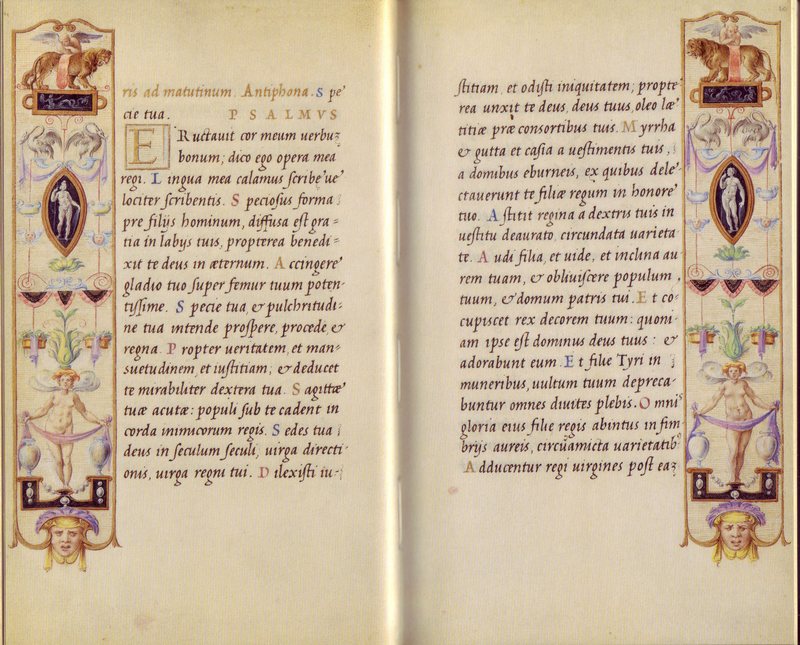
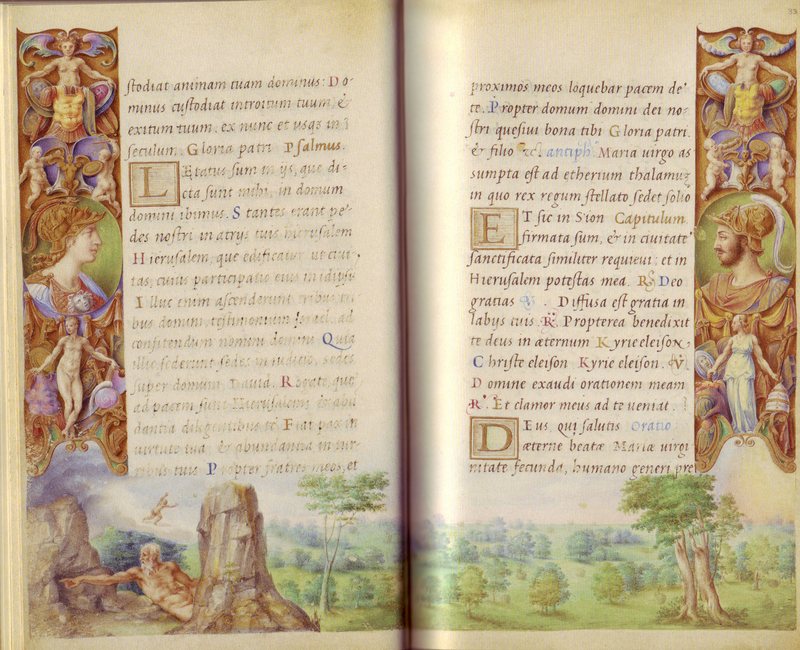
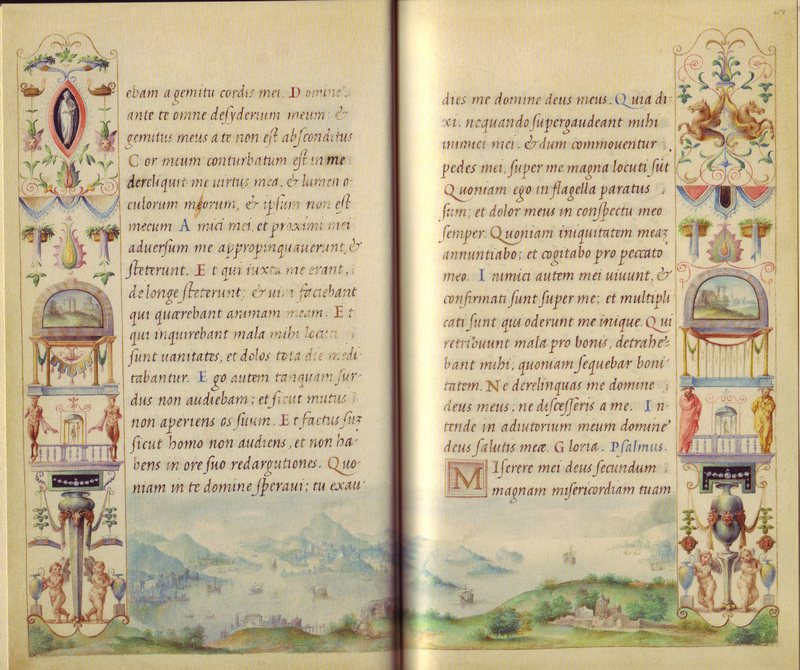
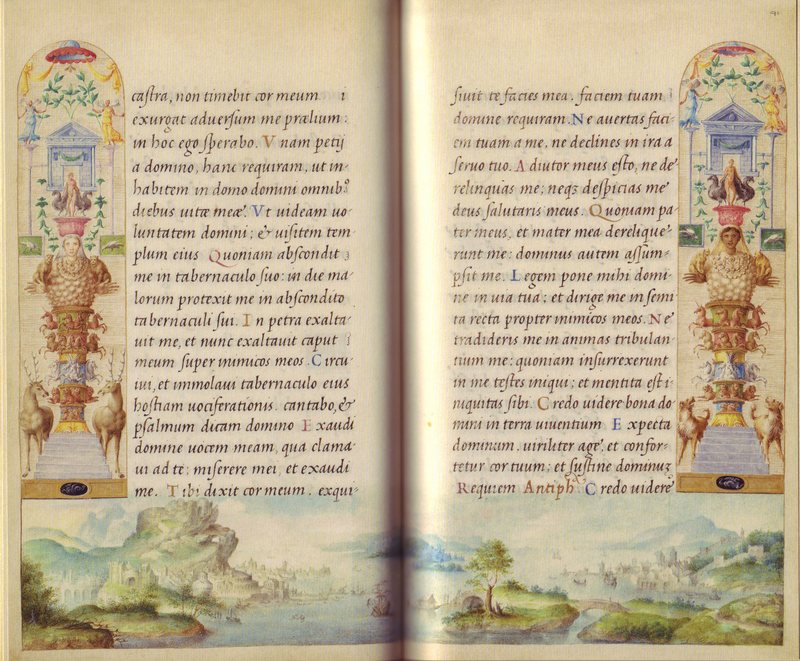
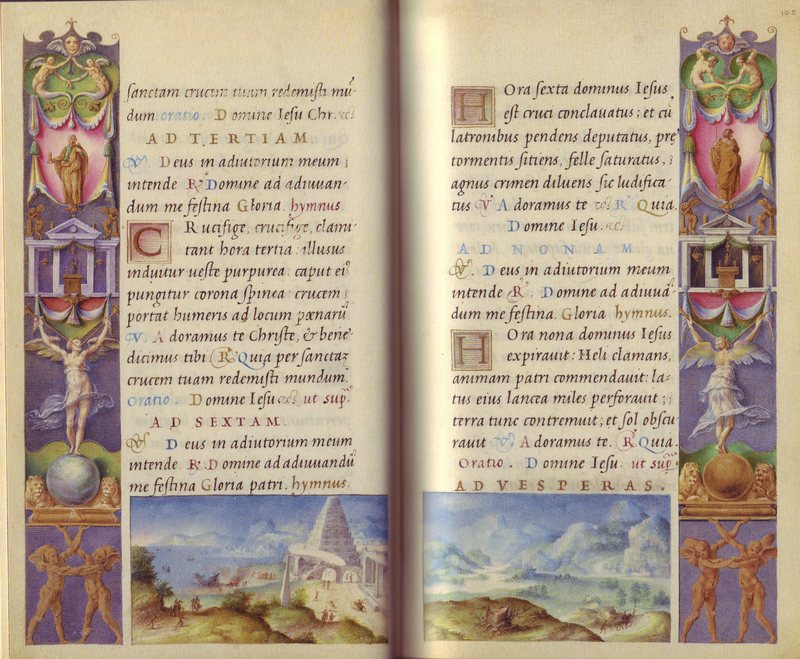
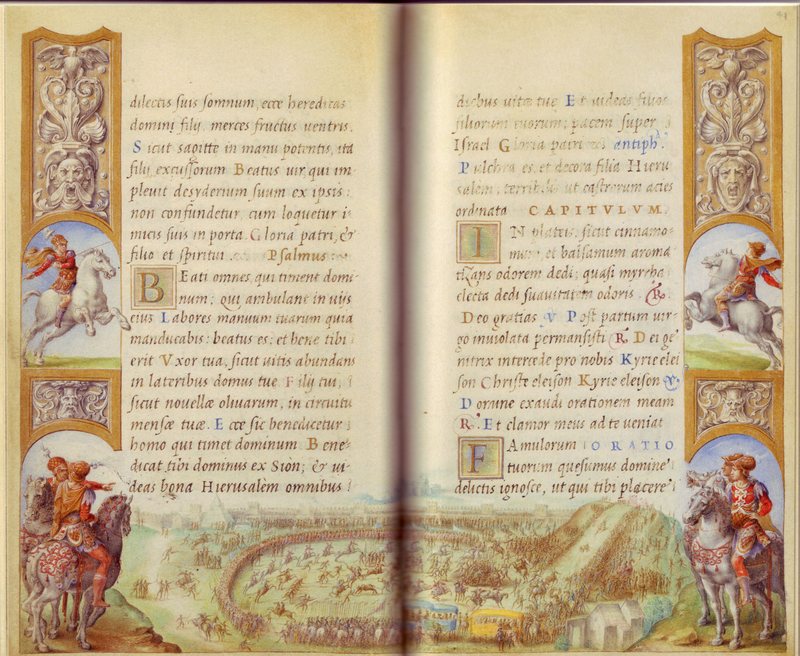
Don Guilio Clovio Croata decorated the Farense Hours with his miniatures, painted in the period of 1537-1546:


Clovio, and the Farnese Hours

Although the painter Giorgio Giulio Clovio (1498–1578) spent most of his life in Italy, he was born in Croatia: his given name has not been recorded, but was probably Juraj Julije Klović. Clovio first came to Italy at the age of 18, arriving at Venice, where he spent several years in the service of Cardinal Domenico Grimani and the Cardinal’s nephew Marino Grimani. During this period, he visited Rome for the first time, where he met (and studied with) the renowned Giulio Romano. In 1523, Clovio left Venice for Buda, to work at the court of Louis II, the king of Bohemia and Hungary-Croatia. After Louis’s death at the battle of Mohács in 1526, Clovio returned to Rome, where he entered the service of Cardinal Lorenzo Campeggio, and where he resumed contact with Giulio Romano, and studied the work of Michelangelo.

During the 1527 sack of Rome, Clovio had the misfortune to be captured and imprisoned by the ‘the Constable Bourbon’s banditti’ and apparently vowed to devote his life to religion should he be allowed to escape. Later that year he moved to Mantua, where he entered the Benedictine Abbey of St. Ruffino. Not long afterwards, he was released from his vows, owing to the intervention of his former patron Marino Grimani, who had become a Cardinal in 1527: even so, Clovio apparently continued to follow a somewhat monastic lifestyle. He remained in Grimani’s service until about 1538, after which he was lured back once again to Rome, where he is supposed to have spent nine years completing his masterpiece, the paintings that decorate the so-called Farnese Hours.

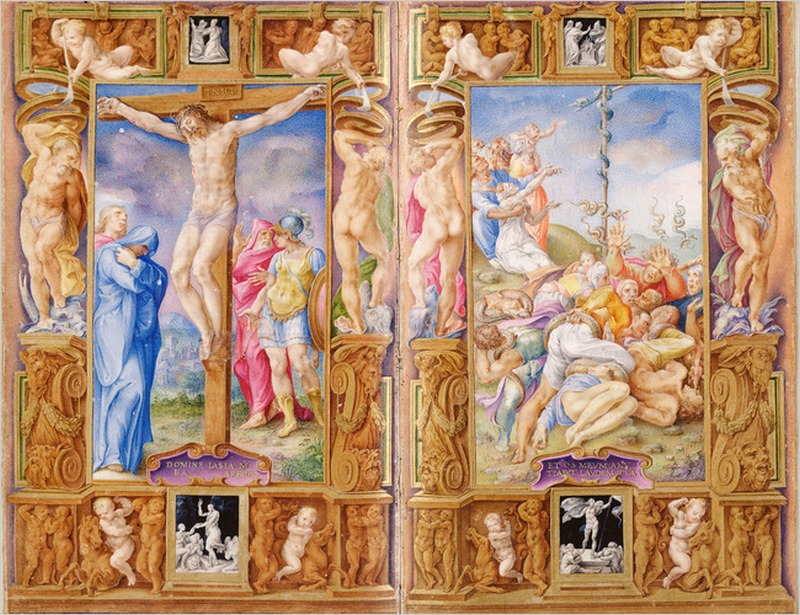
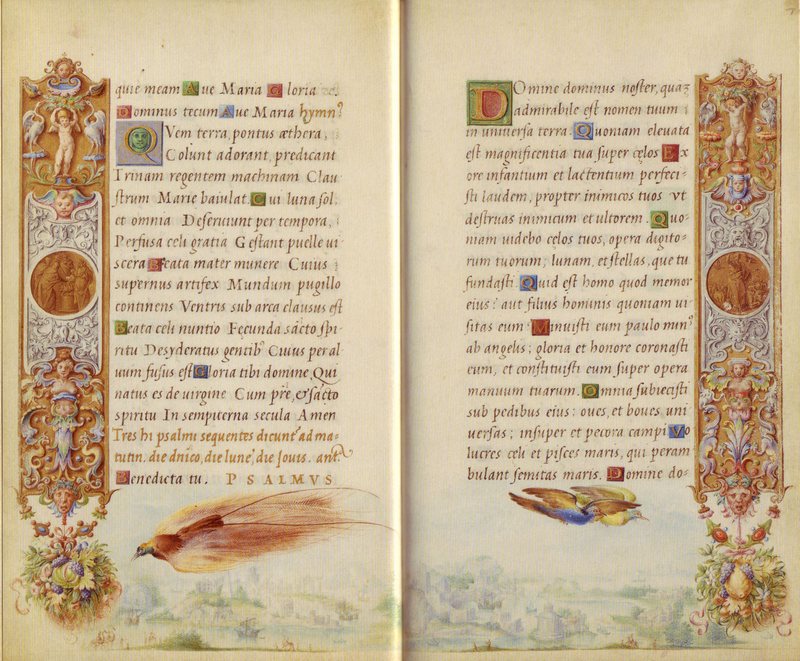
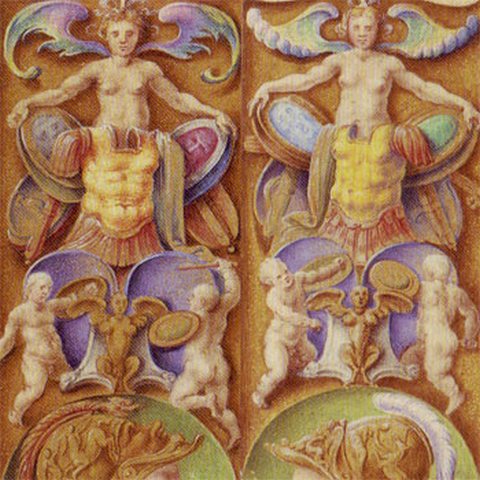
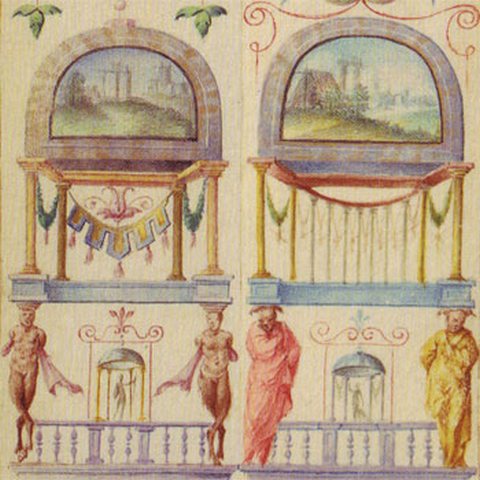
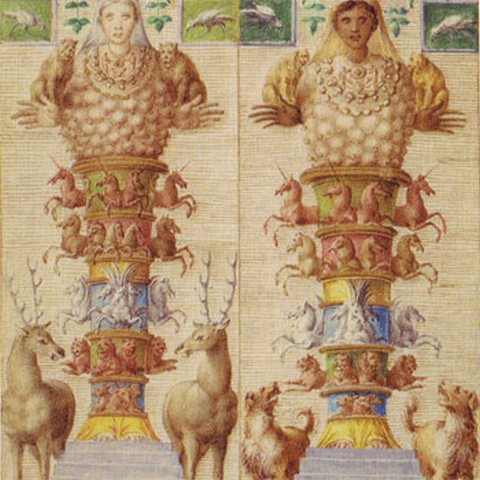
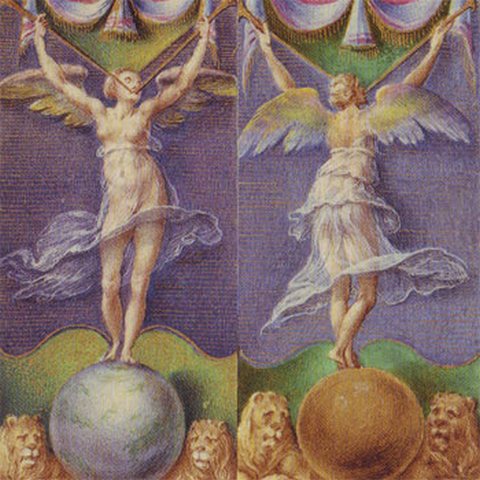
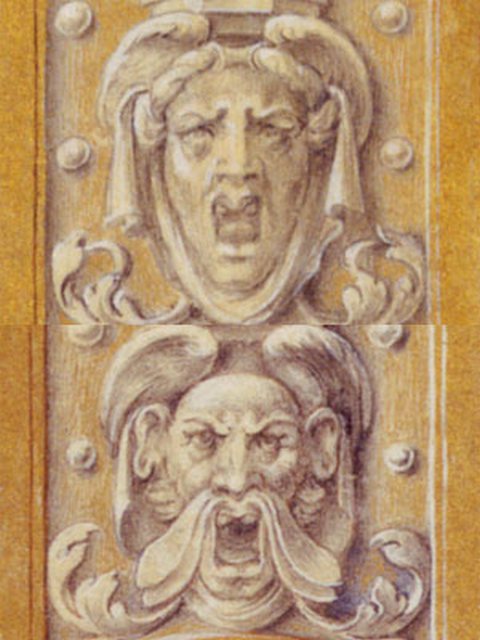
In this manuscript, commissioned by Cardinal Alessandro Farnese, and completed in 1546, Clovio painted twenty-six lavishly-detailed full-page miniatures, and illuminated a few dozen more pages with elaborate border-decorations. The present images reproduce sections of the latter type of painting. The two images above, and the four that follow below, are details which juxtapose sections of both the left and right-hand borders from pairs of facing pages: click on these details to see them in the context of the relevant page-spreads as scanned from my copy of the 2001 facsimile edition of the Hours published by the Croatian Academy of Sciences and Arts, in association with Akademische Druck-u. Verlagsanstalt (ADEVA) of Graz, Austria. The manuscripts’s calligraphic text was written by Francesco Monterchi, secretary to Pier Luigi Farnese, Alessandro’s father.

In his will, Alessandro stipulated that the Hours be kept at the Palazzo Farnese in perpetuity, and that the manuscript should never be sold or given away by his heirs or successors. The first of these conditions had been broken by the turn of the eighteenth century, by which time the Hours had descended to Francesco Farnese, the seventh duke of Parma and Piacenza, who kept the manuscript in the cabinet of the ducal gallery at Parma. Francesco’s son Don Antonio died without issue, and the book then passed, by way of his niece, into the possession of the Bourbon kings of the two Sicilies, who kept it at their court in Naples. Alessandro’s second stipulation was only broken at the very end of the nineteenth century, when it was sold in Vienna by the half-brother of the deposed Bourbon king, Francis II. The Frankfurt-based firm of J. & S. Goldschmidt later aquired the volume, and sold it to John Pierpoint Morgan in 1903, for the sum of Ł22,500. Today, it is housed in the Morgan Library & Museum in New York.

Clovio was greatly esteemed by his contemporaries. Vasari devoted a chapter in the second edition of his Vite to Clovio, praising him as a ‘piccolo e nuovo Michelangelo.’ Vasari described the Farnese Hours at length, claiming that it seemed to him a divine rather than a human production (che ella pare cosa divina e non umana). Other painters sought to meet Clovio: in 1553, Pieter Bruegel the Elder collaborated with him during his sojourn in Rome. And in 1570, Clovio petitioned his patron to let ‘a young man from the island of Candia [Crete]’ stay at the Farnese palace: this was Domenikos Theotokopoulos, El Greco. One of the earliest surviving works of El Greco’s is his portrait of Clovio, in which the older artist is portrayed holding the Farnese Hours…

Clovio’s postumous reputation has suffered, in part, owing to the fact that the best of his work has been kept enclosed between the covers of small books, away from public view. Beyond that, his style has been criticised as hyper-elaborate & over-ornamented, and it has even been suggested that his example ‘contributed largely to the decadence of the charming art of miniature-painting,’ I would have to admit that I find some of his miniatures, more especially the full-page scenes, a little too crowded for my taste, but elsewhere, conversely, some of his page-decorations are among the most beautiful I have seen.

Source www.spamula.net


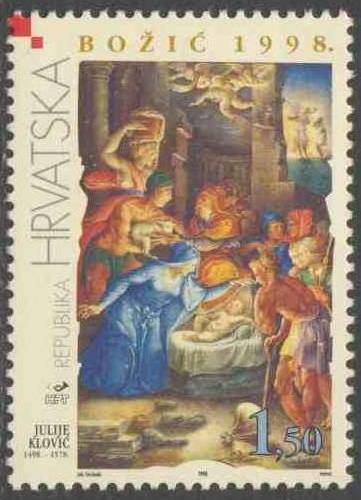
Croatian Post and Julije Klović, wishing you a Merry Christmas!


Additional infromation: Julije Klović (Guilio Clovio de Croatia)

Iulius Clouius Croatus and a mistake of the Kunsthistorisches Museum in Vienna and of the Europeana in the Hague

By Nenad N. Bach and Darko Žubrinić
Published  02/4/2013

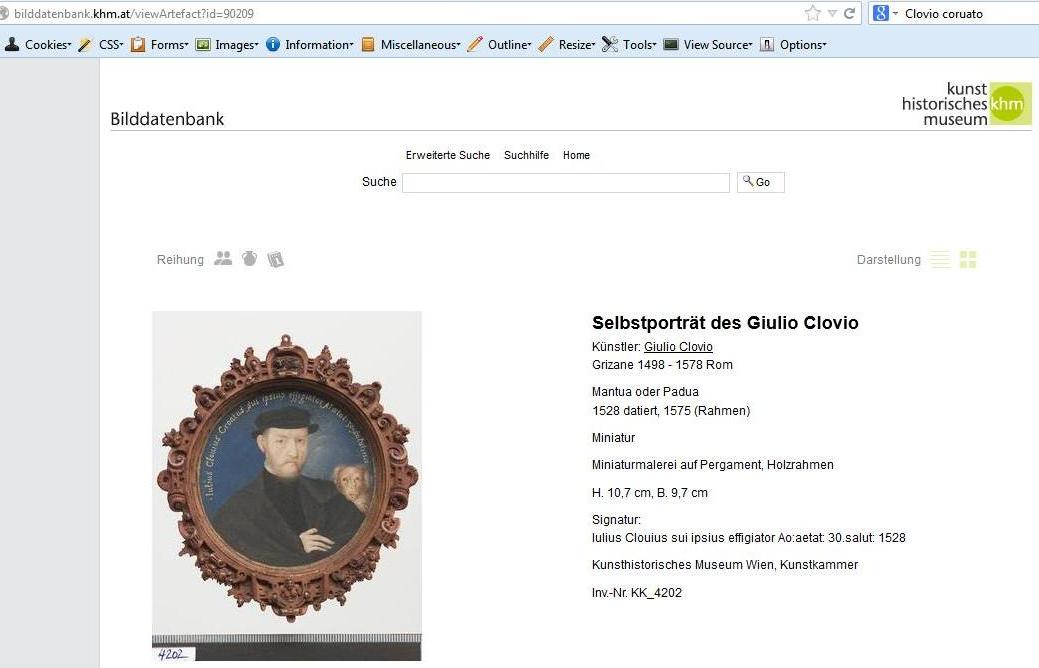
A mistake related to the 1528 Julije Klović's self-portrait: "Croatus" omitted from his name


Selfportrait of young Julije Klović from 1528, kept in the Kunsthistorisches Museum in Vienna.
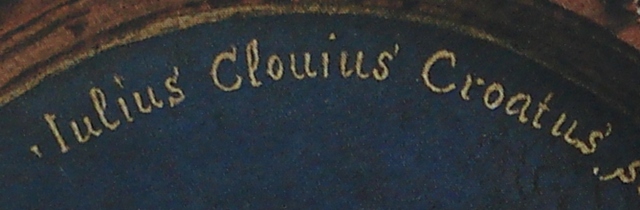
Text arround the upper border:

Iulius Clouius Croatus sui ipsius effigiator Ao:aetat: 30.salut: 1528.


Iulius Clouius Croatus
With sadness we have to point to the following mistake made by the Kunshistoriches Museum in Vienna:

Iulius Clouius [sic!] sui ipsius effigiator Ao:aetat: 30.salut: 1528.

i.e., Croatus has been omitted on the web page of the Kunsthistorisches Museum. E-mail of the museum:
info@khm.at
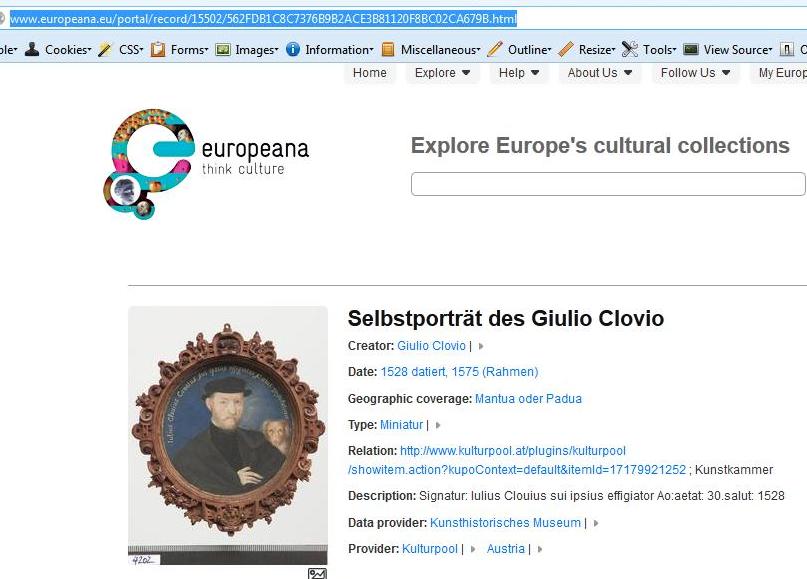
The same mistake can be seen on europeana.eu, referring to Kunshitorisches Museum as the data provider (e-mail of Eropeana is
info@europeana.eu):


Noticed on 21 Jan. 2013, see JPG_kunsthistorishecs_museum, JPG_europeana.eu

The mistake at Kunsthistorisches Museum has been corrected in March 2014,
but at
europeana.eu it is still not corrected (as of April 2014).

Kunsthistorisches Museum in Vienna keeps an early self-portrait of Julije Klović, a famous Croatian Renaissance miniature painter, that is, of Iulius Clouius Croatus 1498-1578, as can be clearly seen in a short description on the upper border of the self-portrait (follow the link in the title to see it). Citing this description in the accompaning web page of this institution, the name of "Croatus" has been omitted. The same mistake can be seen on the Europeana web page http://pro.europeana.eu/. We are asking for explanation and the correction.


Julije Klovic, or Don Giulio Clovio de Croatia (1498-1578), is regarded as the last great representative of the classical European miniature. His works decorate many famous galleries: Uffizi in Florence, Museo di Capodimonte in Naples, Biblioteca Marciana in Venice, Galleria Sabanda in Torino, Bibliothek der Albertina in Vienna, Louvre in Paris, Towneley Public Library and Pierpont Morgan Library in New York (which is in possession of "Officium Virginis", 228 pages, his most famous and the best masterpiece, containing 30 valuable miniatures by his hand), the British Museum and Soane's Museum in London, Windsor Castle (Royal Library), Library of the John Rylands University in Manchester. His pupil was El Greco, who portrayed him in his work "Expelling merchants from the temple" (together with figures of Rafael, Michelangelo and Tizian, appearing on the bottom left of that work), now kept in The Minneapolis Institute of Arts (The Willam Hood Dunwoody Fund).

Tizian, Michelangelo, Julije Klovic, and Rafael; portrait by El Greco (detail) (The Minneapolis Institute of Arts)

Expelling merchants from the temple, El Greco (Klovic with Tizian, Michelangelo and Rafael at the bottom left), The Minneapolis Institute of Arts

Julije Klovic (Giulio Clovio de Croatia), portrait by El Greco

Klovic used to sign himself as

GEORGIVS JVLIVS CLOVIVS CROATA

One of his close friends was Michelangelo Buonarotti.
Klovic's grave is situated near Michelangelo's Moses in the the church of S. Pietro in Vincoli, Rome, and bears an inscription Pictor de Croatia.

Julije Klovic: Madona del Silenzio (National Library, Zagreb, Croatia) Julije Klovic: Babel's tower (1550)

In Klović's The Annunciation in an ornamental broder (kept in The British Museum, London), he signed himself as "Do[n] Giulio Clovio coruato", that is, by clearly indicating his origin (coruato = Horvat = Croat):


Do[n] Giulio Clovio coruato
(i.e., Don Giulio Clovio the Croat)


Iulio clouio de crouacia inuen
Inscribed at the bottom of a print made by Cornelis Cort, after Julije Klovic.
See Rijskmuseum, the Netherlands.

In his works Julije Klović designated his origin as Croata, Croatus, Crovata, Coruato, Corvatinus, Illyricus.


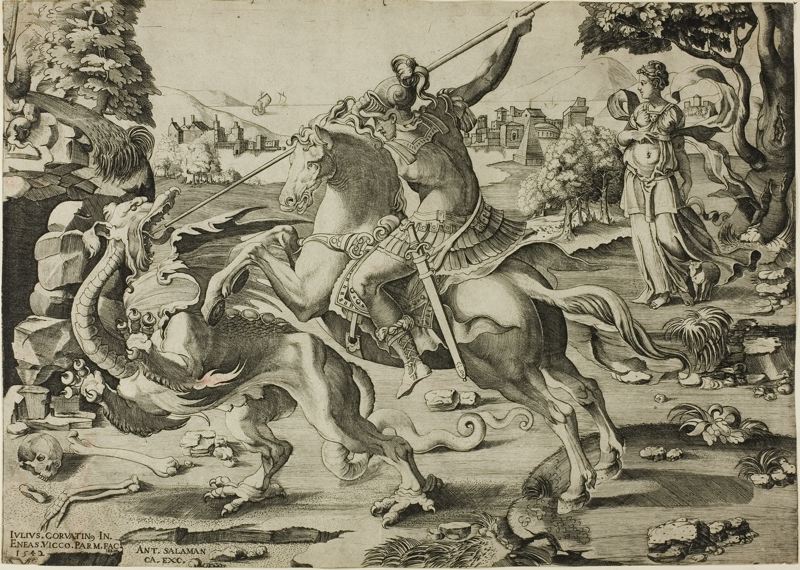
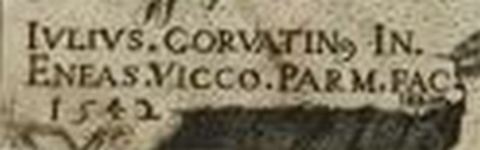
Iulius, Corvatin (that is, Iulius, the Croat), a masterpiece by Julije Klović created in 1542.
He signed himself with his national name on the bottom left. Kept in the British Museum.

Iulius Corvatin (Corvatin = the Croat)

Giorgio Vasari in his monograph Life of Giulio Clovio, published in 1568, wrote the following:

Never has there been nor is there any likelihood that there shall be, for many hundreds of years, a more singular or more excellent illuminator, or we may say painter of small things, than don Giulio Clovio, his having proved to be far superior to all who have ever engaged in painting in this manner.

For more information see Julio Clovio Croata, protector del Greco Foven by Branko Kadic, an article by Marjana Vucic published in American Croatian Review, [Julije Klovic], and [Fontes Clovianae]

Zdravko Dučmelić, el pintor preferido de Borges

By Nenad N. Bach and Darko Žubrinić
Published  11/21/2007

Outstanding Croatian - Argentinean painter


Zdravko Dučmelić, autoportrait


Zdravko Dučmelić (1923-1989), outstanding Croatian artist born in Vinkovci, studied painting in Zagreb, Rome and Madrid (Real Academia de San Fernando), and in 1949 emigrated to Argentina. From 1963 to 1966 he was director (i.e., the dean) of Escuela Superior de Artes de la Universidad Nacional de Cuyo.

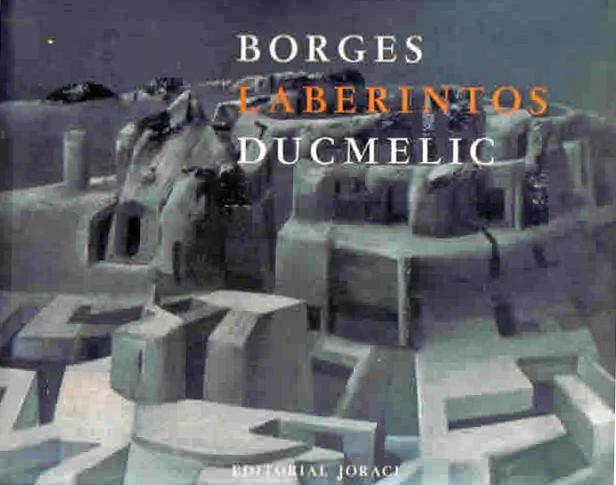
Dučmelić masterfully illustrated a famous book "Laberintos", written by Jorge Luis Borges (Ed. De Arte Gaglianone, Buenos Aires, 1983), with his surreal, quasi-metaphysical works (...el pintor preferido de Borges).

He also made various portraites of Borges that were exhibited in 1987. In 1980 Dučmelić has been invited by Argentienan Ministry of Foreign Affairs (Ministerio de Relaciones Exteriores) to realize expositions of his works in several museums in Japan: in Tokio, Kyoto, Aomori and Kamatura.

He had exhibitions in Panama, Peru (Lima), Chile (Santiago), Mexico, Cuba (Habana), Canada (Ottawa) and China (Bejing). In 1983 he had exhibitions in his homeland, in Zagreb and Rijeka. For more information see El Golem and Arroyo.

An interview with Dučmelić in Croatian has been published in Hrvatska revija: Razgovor sa Z. Ducmelicem. Hrvatska revija. 38 (1988) 4. - 651-668.
One of his works of art has been bought by H. Kissinger (Hrvatska revija. 32 (1982) 1, p. 129.).


Photography

Zoran Filipovic Zoro distinguished Croatian photographer

By Nenad N. Bach and Darko Žubrinić
Published  05/30/2023

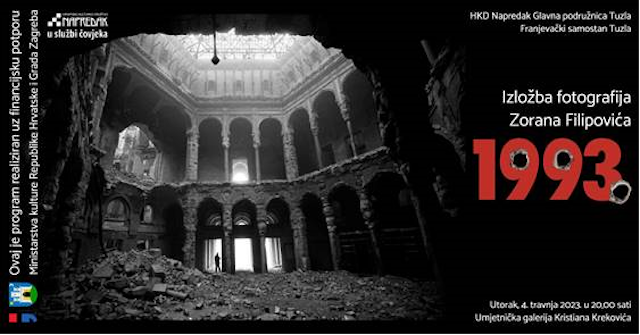
As author, he has published twenty two photo-monographs so far


Zoran Filipović Zoro, Croatian photographer and writer of international reputation


Professional photographer and writer, born in 1959 in Brčko (Bosnia and Herzegovina), Zoran Filipović has lived in Croatia's capital Zagreb since 1978 where, in the last few years, he's been turning more and more towards graphic and product design. As photographer, he has worked and seen his work published in a number of distinguished world magazines, such as Paris Match, Life, Photo, Le Figaro Magazine, Die Zeit, Frankfurter Allgemeine Magazin, Vogue/GQ and others.

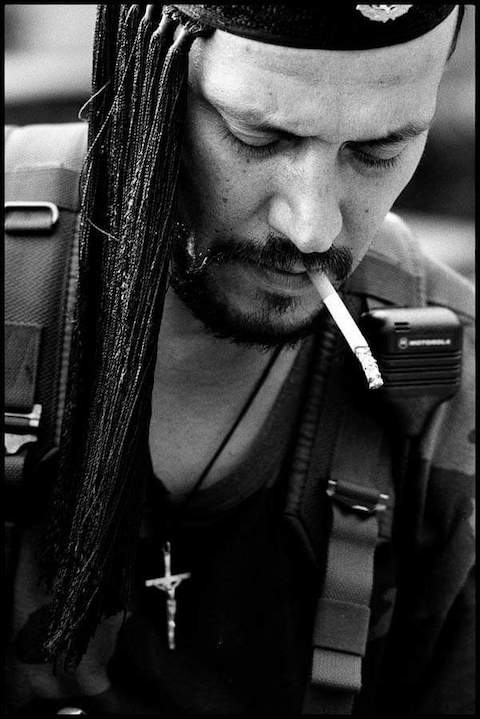
The wider photographic world knows him under the pseudonym ZORO, which he used during his cooperation with the reputed agency Magnum Photos. Many of his photographs created during the war in Croatia and Bosnia and Herzegovina (1991-1995) became world famous, becoming true icons of photographic war coverage. His photographic, literary and design work has earned him several awards, mostly abroad.

He has exhibited in the world's most notable galleries and museums, in metropolis such as New York, Frankfurt, Prague, Stockholm, Copenhagen, Vienna, Bratislava, Valencia, Abu Dhabi, Cairo, Teheran, Mexico City, but also Sarajevo and Zagreb.

As author, he has published sixteen books so far, both at home and abroad, successfully combining his photographic and literary skills. He also co-authored a number of group books. In addition to Croatia, his books have been published in Austria, Germany, France, Slovenia and Bosnia and Herzegovina. He and his work have also been the subject of several documentaries, all made abroad.


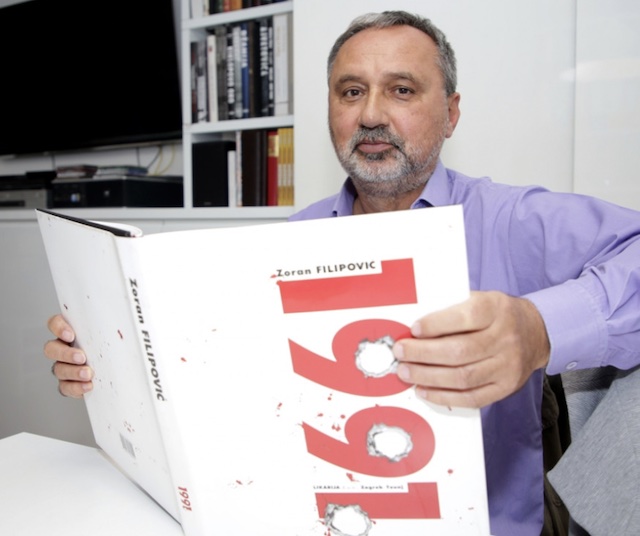
Zoran Filipović with his photo-monograph "1991".


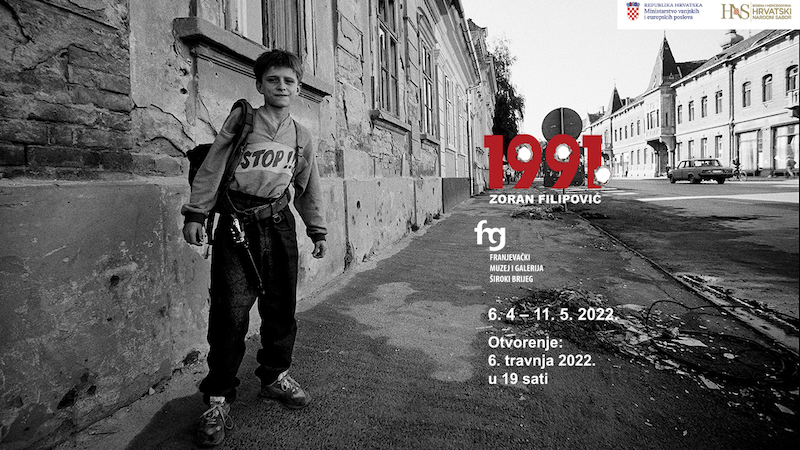
A boy in the city of Vinkovci, going to school, with his bag stuffed with books.
When Zoran Filipović asked him, "Why this knife?", he got the following answer: "They will not get me alive".
See Slike rata (Pictures of War), at 44:12.

Message to those going to war...

Photo by Zoran Filipović


Zoran Filipović
Biografija


  • Rođen je 27. travnja 1959. u Brčkom, Bosna i Hercegovina.
  • Profesionalni je fotograf i pisac, a posljednjih se godina sve više bavi i grafičkim i produkt dizajnom.
  • Svoju profesionalnu karijeru započeo je u magazinu "Start" i tjedniku "Danas".
  • Dosada je objavio dvadeset dvije autorske knjige, u kojima često kombinira svoje fotografsko i književno umijeće, a koautor je i na više skupnih knjiga.
  • Knjige objavljuje u zemlji i inozemstvu.
  • Za svoj je fotografski i književni rad više puta nagrađivan, uglavnom u inozemstvu.
  • Njemačko izdanje njegove knjige Ein Jahr in der HĂślle (Sezona pakla – Sarajevo Anno Domini 1993) proglašeno je u Njemačkoj knjigom mjeseca.
  • Knjiga Entseeltes Land, koju je 1995. objavio jedan od najuglednijih njemačkih nakladnika Herder Verlag iz Freiburga, bila je mjesecima pri vrhu njemačkih bestseler ljestvica.
  • U kazališnoj sezoni 1995/96. bečki Theater der Jugend postavlja kazališnu predstavu u kojoj se koriste dijelovima tekstova iz njegovih knjiga Dnevnik smrti i Sezona pakla.
  • Knjiga Papa u Hrvata dobila je brončanu plaketu SAPPI u konkurenciji najbolje tiskanih knjiga svijeta za 1997., a knjiga Papa u Sarajevu srebrnu plaketu za 1998. godinu.
  • Suradnik je više uglednih svjetskih revija i magazina (œLe Figaro Magazine, Paris Match, Life, Die Zeit, Frankfurter Allgemeine Magazin, Vogue/GQ, Photo i dr.).
  • Tijekom suradnje s glasovitom agencijom Magnum Photos (Pariz, London, New York, Tokio) potpisivao se pseudonimom ZORO, pod kojim je poznat svjetskoj fotografskoj javnosti.
  • Izlagao u najuglednijim svjetskim galerijama i muzejima (Stockholm, Kopenhagen, Beč, Prag, Bratislava, Frankfurt, Perpignan, Valencija, Sarajevo, Abu Dhabi, Kairo, New York, Teheran, Mexico City, Rabat i dr.).
  • O njemu i njegovu radu snimljeno je u inozemstvu više dokumentarnih filmova, npr. Njemačke državne TV kuće ARD.
  • Od 1985. godine je član Hrvatske zajednice samostalnih umjetnika, te Hrvatskog novinarskog društva i International Federation of Journalists.
  • Od 1978. živi i radi u Zagrebu.

Izložbe

U ovoj rubrici donosimo cjelovite prikaze pojedinih fotografskih izložbi autora Zorana Filipovića, koje su, s podjednakim uspjehom, postavljane u vodećim galerijama i muzejima u zemlji i inozemstvu. Prva u nizu bila je izložba "Sjenografije" s kojom se autor po prvi puta predstavio na hrvatskoj likovnoj sceni. Postavljena je travnja mjeseca davne 1985. godine u Galeriji SC u Zagrebu, a izložbu je tada otvorila pokojna Antoaneta Pasinović.

Iza toga je bio niz raznih uspješnih izložbi, kao na primjer izložba "Dnevnik smrti" postavljena prvotno u MUO, Zagreb, 1992. godine, izložba "Kiklopovo oko" postavljena prvotno u Umjetničkom paviljonu u Zagrebu 2006. godine, a izložba "Džamija", koja govori o prelijepoj zagrebačkoj džamiji i životu muslimanske zajednice u Republici Hrvatskoj, svoj je uspješni umjetnički put započela u Kairu, Egipat, davne 1995. godine, da bi nakon njega bila postavljana u gotovo svim prijestolnicama egzotičnog Orijenta; u Abu Dhabiju, Teheranu, Istanbulu, Rabatu,..

Izložba "1991." postavljena je 2016. godine u Gliptoteci HAZU u Zagrebu povodom 25. obljetnice početka rata u RH, a izložba "Terezin" postavljena je u Muzeju Mimara u Zgrebu povodom autorove želje da na neki način obilježi završetak 1. Svjetskog Rata. Sve ove gore spomenute izložbe, ali i mnoge koje ovdje nisu navedene, postavljane su i izlagane u na većim i najvažnijim prijestolnicama svijeta: Beču, Bratislavi, Štokholmu, Kopenhagenu, Frankfurtu, Perpignanu, New Yorku, Mexico Cityju,..

Kolekcije

Fotografski arhiv fotografa Zorana Filipovića čini bogata kolekcija kolor dia i c/b snimaka u količini od preko 150.000 analognih fotografija, te oko 50.000 digitalnih kolor zapisa. Ovaj se bogati arhiv počeo formirati kada je Zoran Filipović otišao na legendarni rock koncert "Live Aid" koji se održavao 13. srpnja 1985. godine na Wembley Stadiumu u Londonu, gdje je svojom upornošću postigao da bude jedan od nekolicine rijetkih svjetskih fotografa koji su imali pravo snimati na ovome grandioznom planetarnom spektaklu koji je u izravnom TV prijenosu pratio cijeli civilizirani svijet.

Te su ga fotografije doslovce preko noći promovirale u svjetski poznatog fotografa za čije su se fotografije doslovce otimali najveći svjetski tiskani mediji. To ga je također etabliralo i na domaćoj fotografskoj sceni, te mu omogućilo rad i objavljivanje fotografija i autorskih tekstova u utjecajnim Vjesnikovim izdanjima - magazinu "Start" i političkom tjedniku "Danas".

Nekoliko godina ranije - 1981. u malome hercegovačkom seocetu Međugorju došlo je do čudesnih ukazanja BDM, što je ovo malo mjesto, preko noći, pretvorilo u jedno od najvećih svjetskih marijanskih hodočasničkih odredišta u koje su počele hrliti stotine tisuća hodočasnika iz doslovce cijeloga svijeta. Njegov rani odlazak u Međugorje rezultirao je ogromnom količinom kolor dia snimaka snimanih kroz desetine godina, sve do današnjih dana.

Rijetko bogatsvo ovoga velikog arhiva čini i ogromna količina fotografskog materijala snimanog od 1989. do 1991. godine na Kosovu. U isto vrijeme nastala je i bogata foto zbirka o MPC - autokefalnoj Makedonskoj pravoslavnoj crkvi. U isto vrijeme, tijekom 1990. godine, u tadašnjoj je državi došlo do demokratskih promjena pa je i cijeli process nastajanja samostalne i suverene Republike Hrvatske također zabilježen filipovićevom fotografskom kamerom.

Početkom srpske agresije na Hrvatsku tijekom 1991. godine započeo je Domovinski rat u koji se Zoran Filipović uključio svim srcem, bombardirajući cijeli svijet svojim spektakularnim fotografijama brutalnog srpskog rata protiv Hrvatske. U to je vrijeme surađivao s glasovitom fotografskom agencijom Magnum Photos (Pariz, London, New York, Tokio) u kojoj je svoj rad, radi osobne sigurnosti, potpisivao pseudonimom ZORO koji je postao planetarni brend za reportažnu ratnu fotografiju.

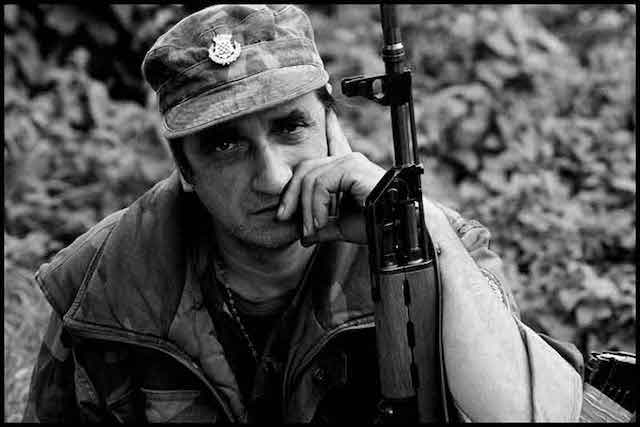
Antun Dugan, Croatian defender in Vukovar in 1991.,
with the traditional Lika cap. Photo by Zoran Filipović.

Kada se rat preselio u susjednu BiH, njegovu rodnu domovinu, i Filipović ga je slijedio da bi svojim sugestivnim fotografijama iz opkoljenog Sarajeva izmamio simpatije i suosjećanje cijeloga svijeta za ovaj napaćeni narod. U opkoljenom Sarajevu je počela nastajati i zbirka fotografija o karizmatskom sarajevskom nadbiskupu kardinalu Vinku Puljiću.

U pet dolazaka pape Ivana Pavla II. u naše prostore - tri u Hrvatsku i dva u BiH, Filipović ga je pratio na tim pohodima kao službeni fotograf. Tim su prigodama nastale i svjetski nagrađivane divot monografije o ovih pet Papinih pohoda Hrvatima.

Osim ovih gore nabrojanih tema, ovaj ogromni arhiv obiluje još i mnogim drugim godinama obrađivanim temama i cjelovitim fotografskim pričama, kao što je priča “Džamija” o prelijepoj zagrebačkoj džamiji, fotografska priča o Plitvičkim jezerima, mnogim hrvatskim gradovima, uključujući i grad Zagreb, te mnoge, mnoge druge fotografske priče.

Bibliografija

U ovoj rubrici vam predstavljamo sve do sada objavljene autorske knjige fotografa i pisca Zorana Filipovića. U svojim autorskim knjiga često kombinira svoje spisateljsko i fotografsko umijeće. U većini ovih knjiga sam je autor i teksta i fotografije, dok se u nekima od njih pojavljuje kao ravnopravni koautor. Svoje autorske knjiga također sam oprema svojim prepoznatljivim grafičkim pečatom - autorskim grafičkim dizajnom i oblikovanjem. Za svoje grafičko umijeće na oblikovanju knjiga nagrađivan je na svjetskim sajmovima i smotrama u kategoriji najljepših knjiga svijeta.

Svoje knjige objavljuje u zemlji i inozemstvu kod najvažnijih i najutjecajnijih nakladnika, kao što je HERDER Verlag, Freiburg, Njemačka i drugi. U svijetu knjiga pojavio se 1988. godine svojom monografskom knjigom prvijencem "Međugorje" u nakladi zagrebačkog GZH i sarajevske Svjetlosti. Ova knjiga prvijenac tiskana je i prodana u rekordnih 40.000 primjeraka.

Njegova sljedeća knjiga "Dan hrvatske smjene - 30.05.1990." tiskana je i prodana 1990. godine u 20.000 primjeraka. Izašla je u izdanju zagrebačkog političkog tjednika Danas. Sljedeća knjiga, izdana te iste godine od strane istoga nakladnika, tjednika Danas, nastala je u suradnji s Fahrudinom Radončićem, tadašnjim novinarom Danas-a, za koju je Radončić pisao teksta, a fotografije u knjizi otpisuje Zoran Filipović. Knjiga je tiskana i prodana u 16.000 primjeraka.

Nakon ovih slijedi serija knjiga o Domovinskom ratu, te o ratu u susjednoj BiH i Sarajevu. Ove su knjige objavljivane kod nautjecajnijih Francuskih, Njemačkih, Austrijskih, te Slovenskih nakladnika i bile su na njihovim best-seler ljestvicama.

Planetarno nagrađivani serijal od pet divot monografija o Svetome Ocu Ivanu Pavlu II. najljepši je niz knjiga o jednoj istoj temi ikada objavljen u Hrvatskoj.

Monografska knjiga "Nikola Tesla - I bi svjetlo!", objavljena i priređena povodom 150 godina od rođenja ovoga velikog hrvatskog genija, nagrađena je 2006. godine Strossmayerovom nagradom HAZU.

Monografska knjiga "Ajvatovica" rezultat je dvanaest godina autorova fotografskog istraživanja ovoga fenomena islamske vjere, na čijoj je realizaciji okupljena sva akademska i intelektualna krema susjedne BiH. Monografska knjiga "1991." zasigurno je, bez premca, najimpresivnija i najdojmljivija knjiga o Domovinskom ratu ikada objavljena kod nas. U vještoj sintezi medija autorskog teksta i medija autorske fotografije, ova knjiga na najdojmljiviji način svjedoči o našoj suvremenoj povjesti u stvaranja Hrvatske države iz pepela Domovinakog rata.


Zoran Filipović - war report by a German TV (1993.)


Zoran Filipović Zoro - Radio Međugorje 2022. (1, 2)


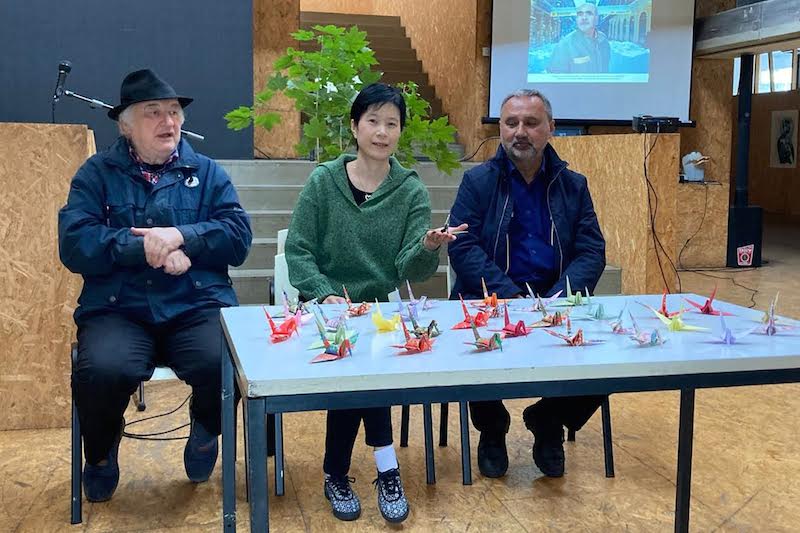
Yoko Nishii with her origami, prepared during the night after her Sarajevo concert, organized
on the occasion of the International Day of Peace (21st September 2022). On the left is Mr. Ibrahim Spahić,
and on the right Mr. Zoran Filipović Zoro, distinguished Croatian photographer and writer.


Croatian Heroes: Pavo Urban defended Dubrovnik with his camera

By Nenad N. Bach and Darko Žubrinić
Published  08/6/2008

Pavo Urban photographed his own tragic death


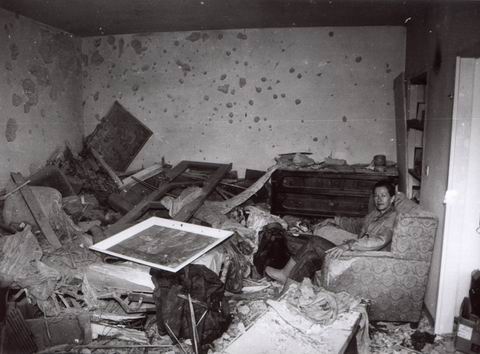
Pavo Urban, August 1st, 1968. - December 6th, 1991, was killed with his photo camera in hands in 1991 during Serbian and Montenegrin shelling and bombing of the city of Dubrovnik.

All the photos are from pavourban.pondi.hr


The island of Lokrum near Dubrovnik in dawn, 1990.


Pilgrimage to Međugorje in 1990.


Prayer for Peace in Međugorje, 1990.


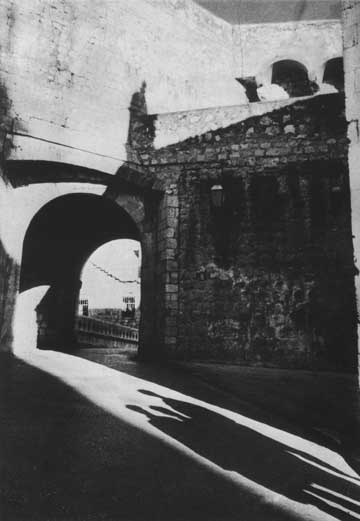
Shadows in Dubrovnik


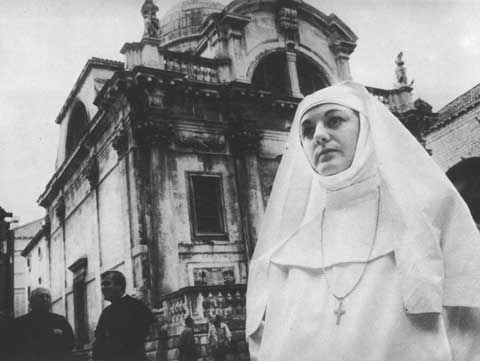
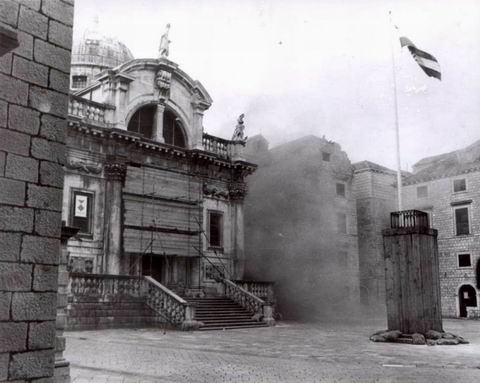
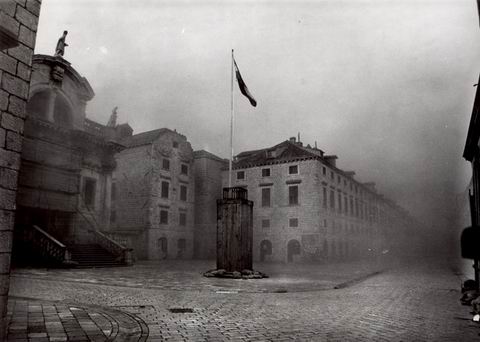
Virtue, 1991; photo on the Stradun street with the Cathedral of St. Vlaho, quite near the place where Pavo Urban took his last photo.


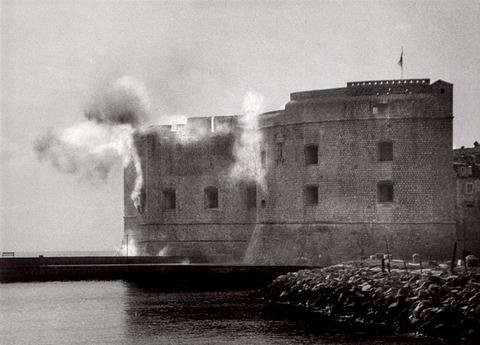
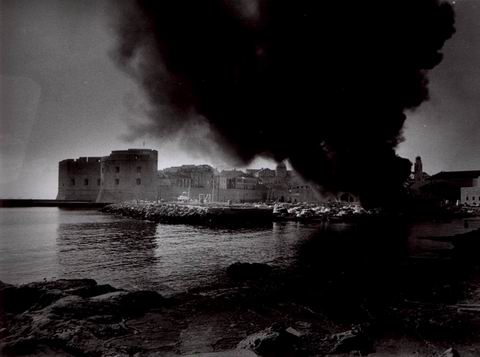
Serbian and Montenegrin shelling and bombing of the city of Dubrovnik in 1991. The City was under protection of UNESCO.


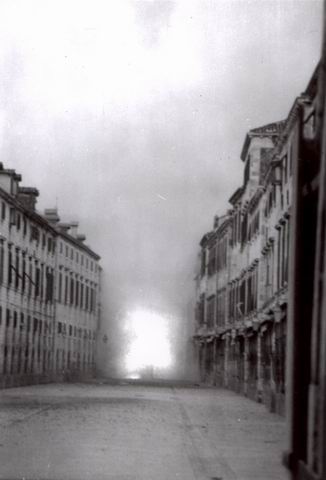
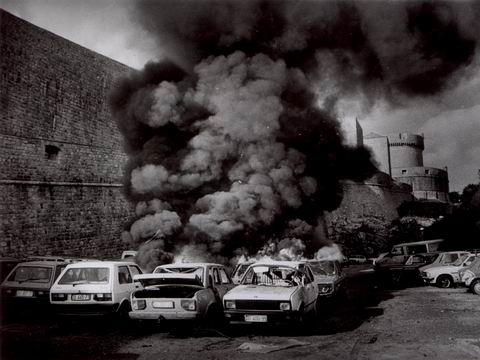
Mushroom of fire from an 1991 explosion on the famous Stradun, the main street in Dubrovnik.


The native City of Pavo Urban in flames.


Near the famous Dubrovnik tower of Minčeta in 1991.


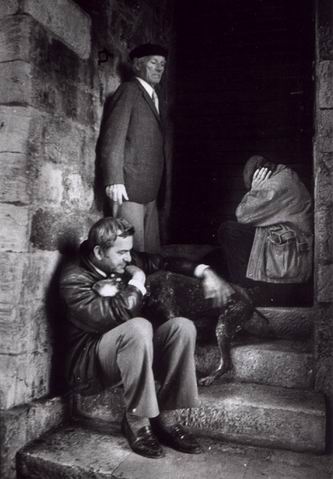
A man with a dog; fear during bursting concert of shelling and bombing.


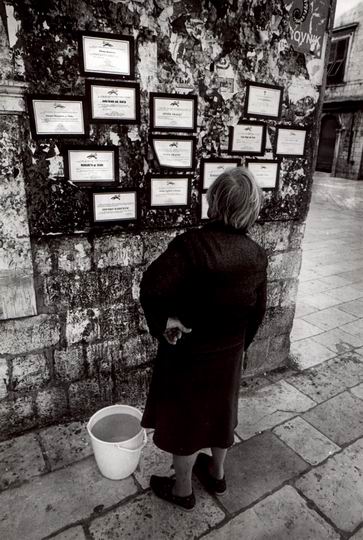
Who is the next? The City was cut from pouring water supply during half a year, and the citizens were saved by centuries old wells.


This is my home. Dubrovnik in 1991.


Shelling of the City on December 6th, 1991 near the famous Orlando Column and the Cathedral of St. Vlaho, not far from the photographer.


The last photo of Pavo Urban, December 6th, 1991. A moment later he was shot dead by shrapnels from Serbian and Montenegrin shelling.


Pavo Urban (Dubrovnik, 1. kolovoza 1968. - 6. prosinca 1991.) studirao je nakon završene srednje pomorske škole na Pomorskom fakultetu u Dubrovniku. Kratko je vrijeme kao pomorac plovio na brodovima Jadrolinije. Fotografijom se počeo baviti u srednjoj školi, a kasnije se uključio u rad fotokluba Marin Getaldić u Dubrovniku. Pred rat bavio se umjetničkom fotografijom, izlagao na izložbama i radio kao fotograf na Dubrovačkim ljetnim igrama i u Kazalištu Marin Držić u Dubrovniku.

Početkom je rata u jesen 1991. godine položio prijamni ispit na Akademiji dramske umjetnosti studij Snimanja u Zagrebu. Potom se vraća u Dubrovnik koji je uskoro opkoljen jedinicama JNA i crnogorskim i srpskim napadačkim hordama. Pavo se prijavio kao dragovoljac još u srpnju 1991. U pripremama za obranu grada aktivan je od početka rujna, a 29. rujna je već na položaju u Župi dubrovačkoj (Buići, Makoše, Postranje). Po padu i okupaciji Župe vraća se u Dubrovnik i dokumentira razaranja grada fotografijom i videom. Snima za Slobodnu Dalmaciju i Dubrovački vjesnik, a dokumentira i za Ministarstvo informiranja RH.

Pavo Urban pao je od minobacačke granate nedaleko Orlandova kipa, a na fotografijama koje je pred pogibiju snimao zabilježen je niz mina koje su u njegovoj neposrednoj blizini padale po Stradunu. Snimao je za vrijeme najžešćeg napada na Dubrovnik, a s mjesta pogibije snimljena i posljednja snimka Kamena prašina nad Gradom. Posmrtno je izašla fotomonografija Pavo Urban (Pavo Urban, urednik Lukša Peko, urednik fotografije Željko Šoletić, Naučna biblioteka - Dubrovnik, Dubrovnik 1992.) s ciklusom fotografija Rat-art koje je započeo snimati početkom rata, te Pavo Urban - posljednje slike (Antun Maračić: Pavo Urban - posljednje slike, META, Zagreb 1997.), a priređen je i veći broj izložaba s njegovim predratnim i ratnim fotografijama.

U Dubrovniku je utemeljena Zaklada Pavo Urban za pomoć djeci, Udruženja obitelji branitelja Domovinskog rata.

Za svoj rad primio je više nagrada i to: 3. nagrada za fotografiju na Dubrovačkom salonu II (1989.), Posebno priznanje Ministarstva kulture Republike Hrvatske (1993.), Posebno priznanje Hrvatskog novinarskog društva za osobite zasluge na području novinarstva u domovinskom ratu (1993.), Posebno priznanje Akademie der Künste, Berlin (1993.), Fritz-Sanger-Preis, Bonn (1993.), Posebno priznanje HDDR Dubrovnik za izuzetne osobne zasluge na području novinarstva u Domovinskom ratu (1993.), Nagrada Laus DDF, Dubrovnik (1995.).

Pavo Urban odlikovan je sljedećim odličjima: Spomenica Domovinskog rata 1991/1992. (1997.), Red Zrinskog i Frankopana s pozlaćenim pleterom (1996.), Odličje Hrvatskih dragovoljaca Domovinskog rata s pozlaćenim pleterom (1996.), Red Danice hrvatske s likom Marka Marulića (1997.).

Source: www.snimanje.adu.hr

Film about Pavo Urban. Source: vinovo.magnify.net


Related stories:
Gordan Lederer, a legendary Croatian cameraman
Siniša Glavašević, writer and reporter from Vukovar

Sculpture

Francesco Laurana - Frane Vranjanin 1420-1502 Croatian Renaissance sculptor and his Lost Princess

By Nenad N. Bach and Darko Žubrinić
Published  01/9/2012

Born around 1420 in Vrana near the city of Zadar in Croatia


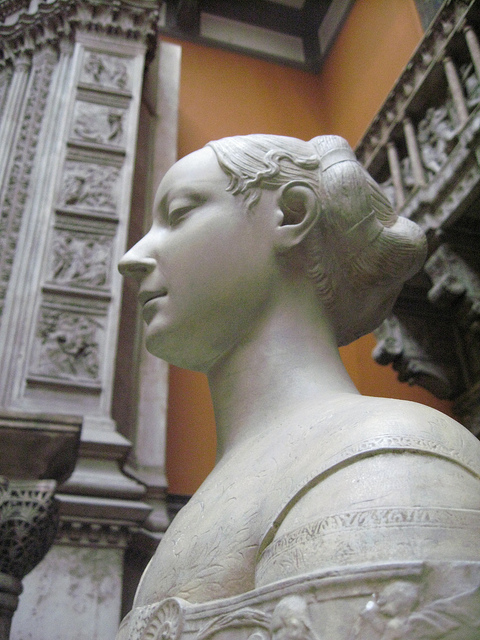
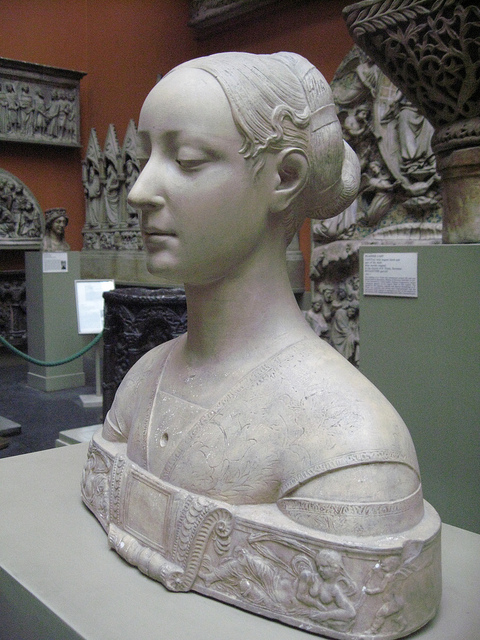
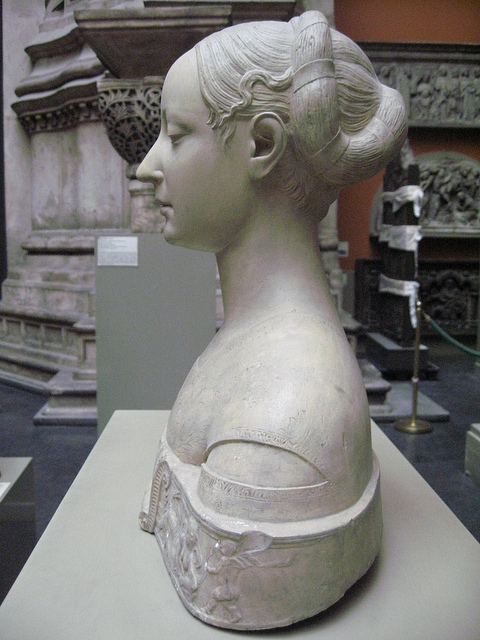
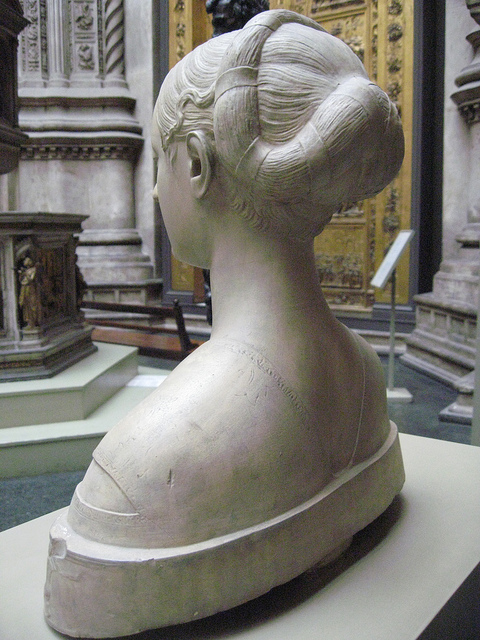
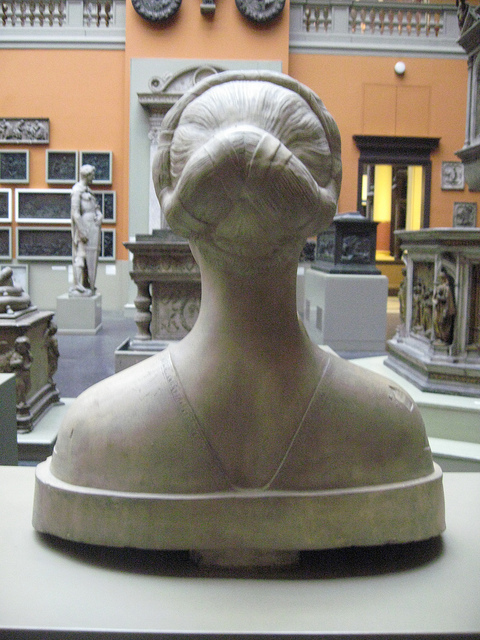
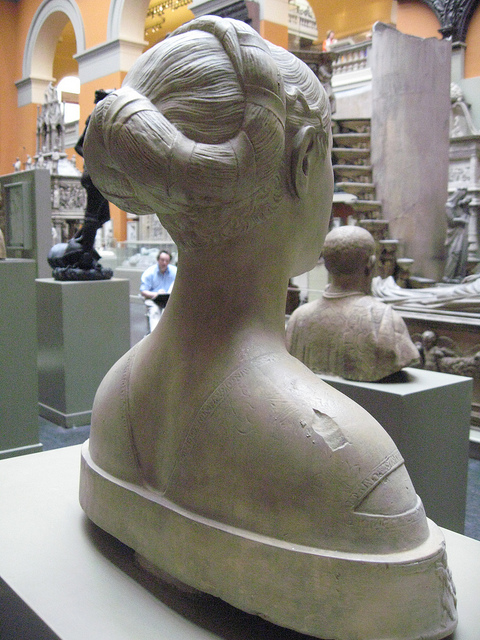
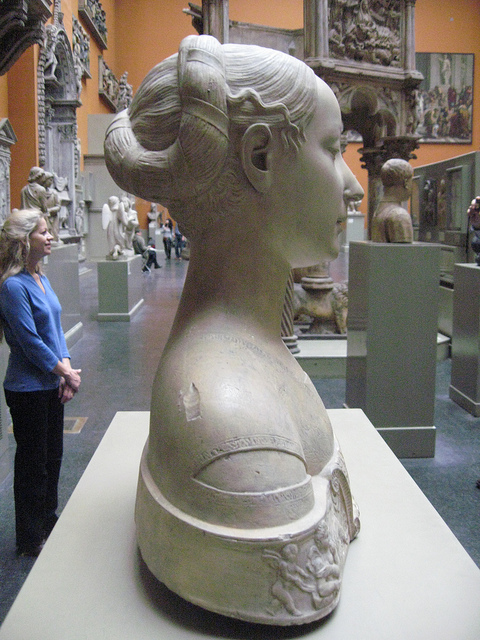
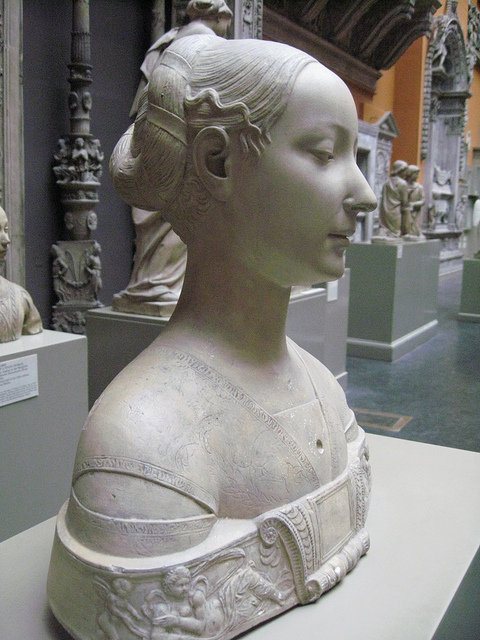
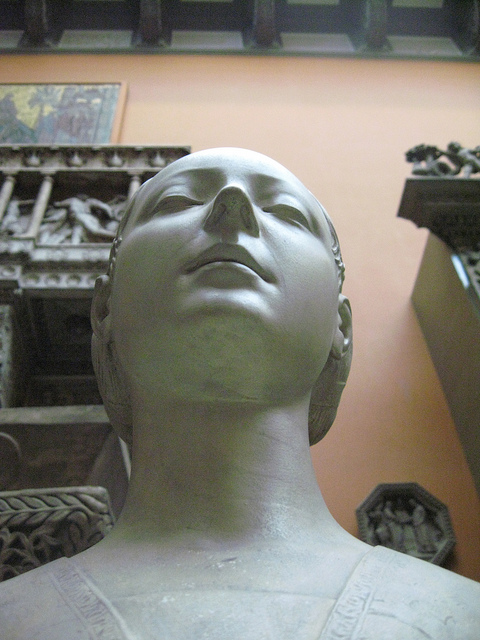
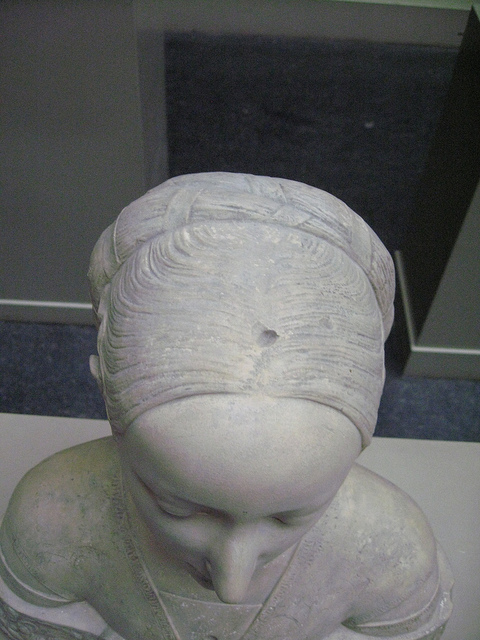
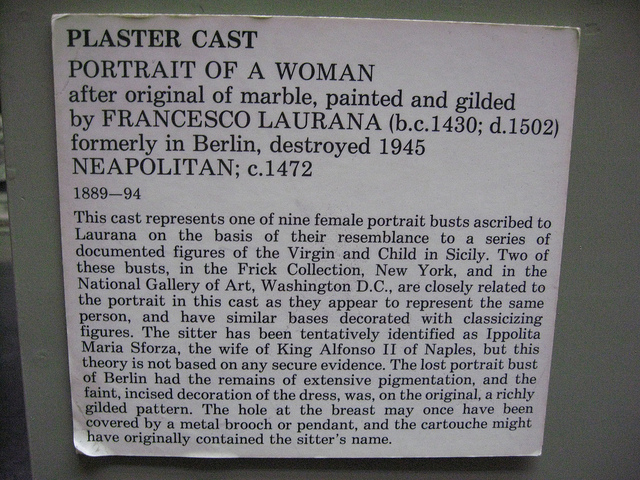
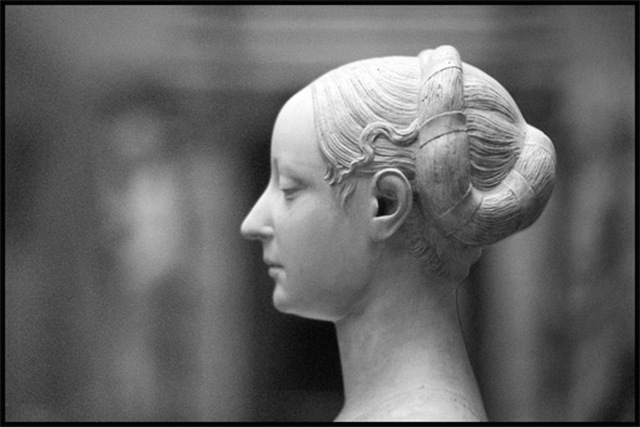
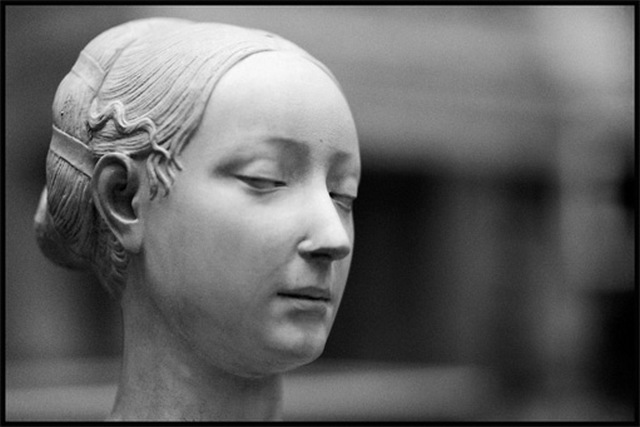
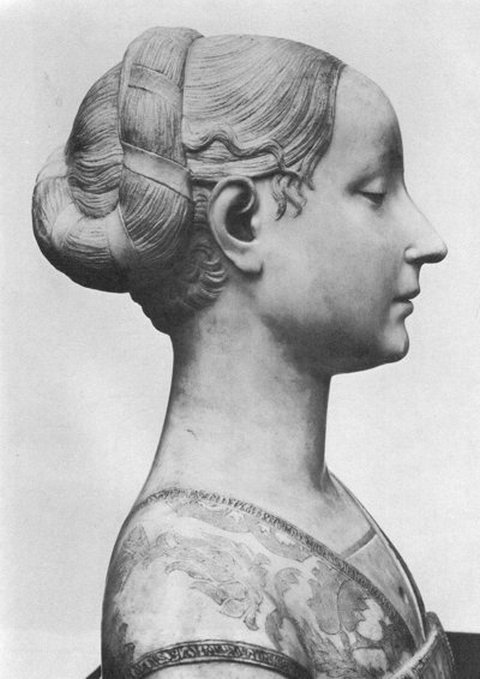
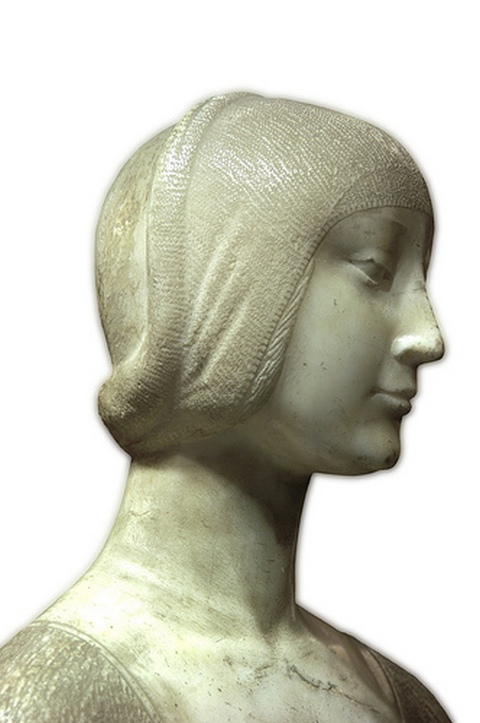
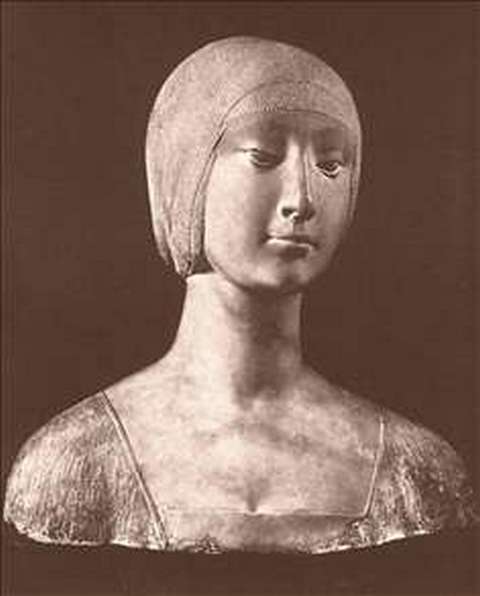
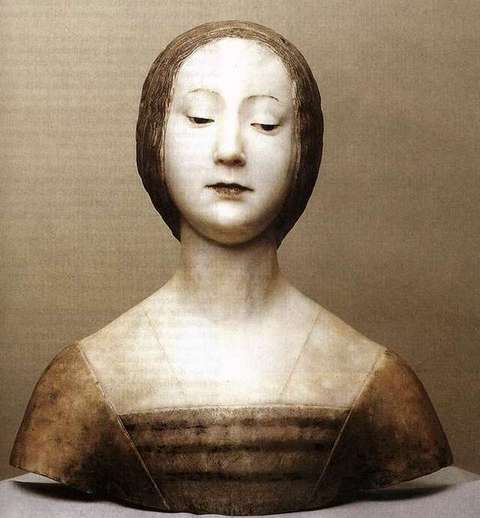
Frane Vranjanin or Francesco Laurana (about 1420-1502), female bust,
plaster cast kept in V&A (Victoria and Albert Museum) in London, Great Britain


“If Laurana were Leonardo (…) what would art historians think about his female busts?” – asked German architect and art history professor Fritz Burger (1877-1916) in his monograph on Croatian renaissance sculptor Frane Vranjanin – known as Francesco Laurana. He was born in Vrana, near Zadar, Croatia. Laurana’s female busts, after they had been finally correctly attributed to him several decades before, by at the turn of 20th century came into the focus of interest of greatest German and French scholars. Peter Tusco, for example, called Laurana “the greatest non-Tuscan and non-Venetian sculptor active in Italy in 15th century” (prof. dr. Ivana Prijatelj).

John Pope Hennesy, one of the foremost authority on Italian renaissance, praised Laurana’s female busts as “some of the most sensitive achievement of the fifteenth century”.
Having lived and worked in Dalmatia, Rome, Naples, Apulia, Sicily and Provence, Laurana did not belong in any of the regional schools. He was actually a link between Italian and French courts of his time.

Source Francesco Laurana and 19th century academies


Source www.flickr.com, as well as the photos below


Photos by Frederick Muller at A&V, London


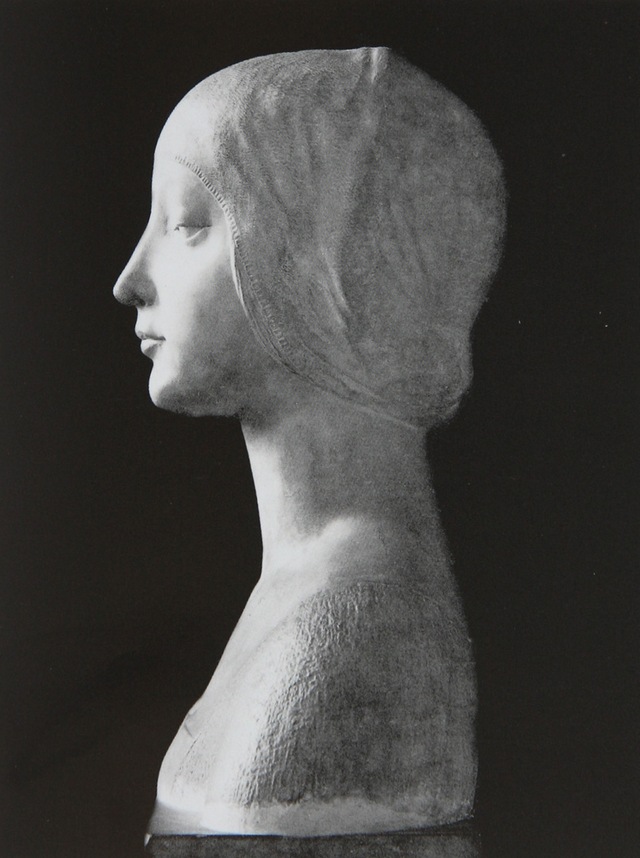
The original bust, destroyed in Berlin during the WWII.


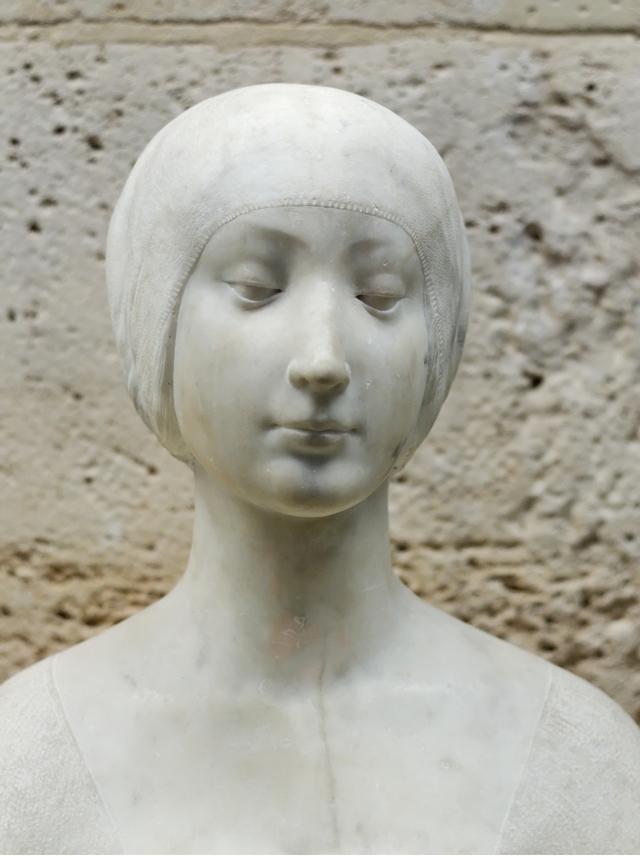
Frane Vranjanin - Francesco Laurana, bust from the Louvre in Paris.

The same bust by Francesco Laurana kept in Louvre


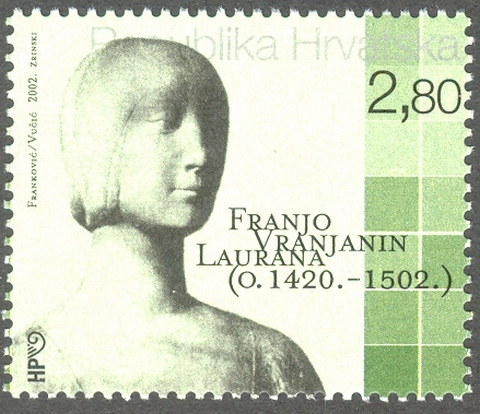
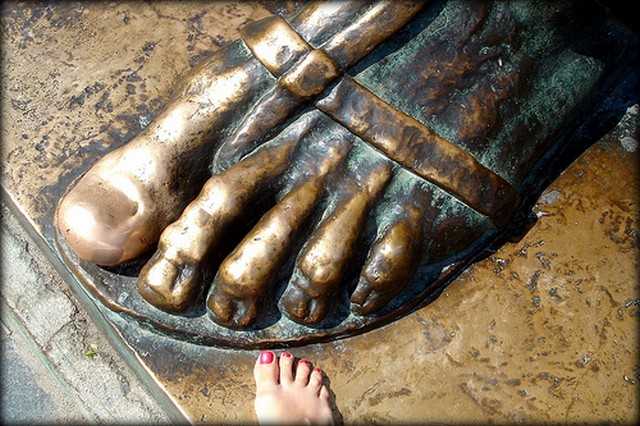
Republic of Croatia commemorated 500 years since the death of Franjo Vranjanin Laurana by issuing this postage stamp in 2002.
HP = Hrvatska pošta = Croatian post


Marke su izdane u arcima od 20 maraka, a izdane su i dvije omotnice prvoga dana (FDC). 2,80 kn - 500. obljetnica smrti Franje Vranjanina Laurane Hrvatski renesansni kipar Franjo zvan Vranjanin, jer je rođen (oko 1420. godine) u mjestu Vrana kraj Zadra, radio je uglavnom u južnoj Italiji i južnoj Francuskoj, gdje je i umro 1502. godine.

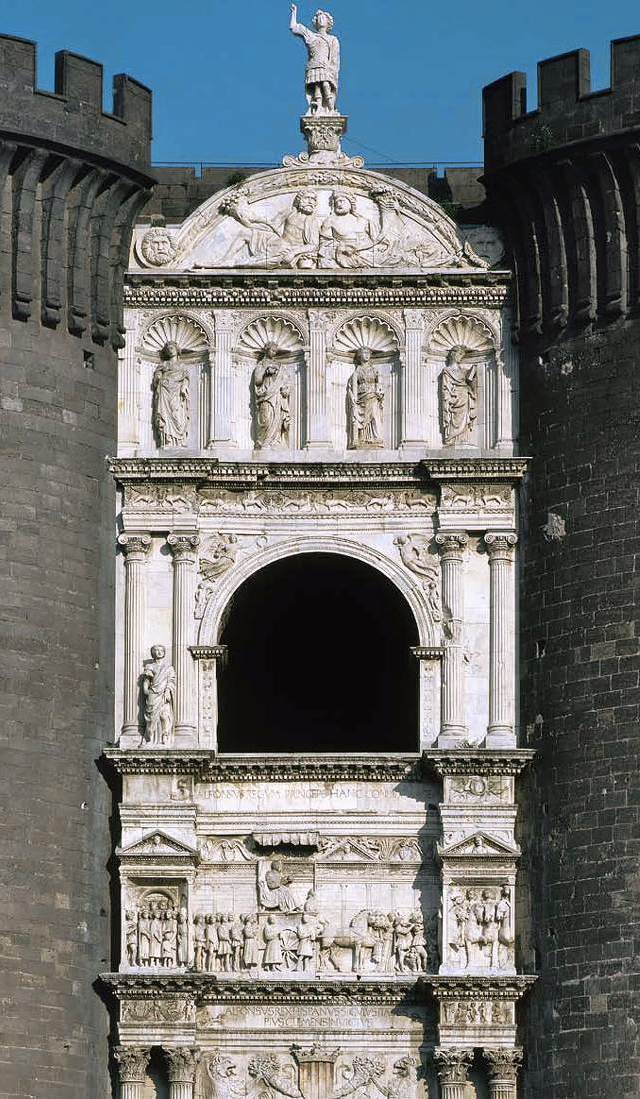
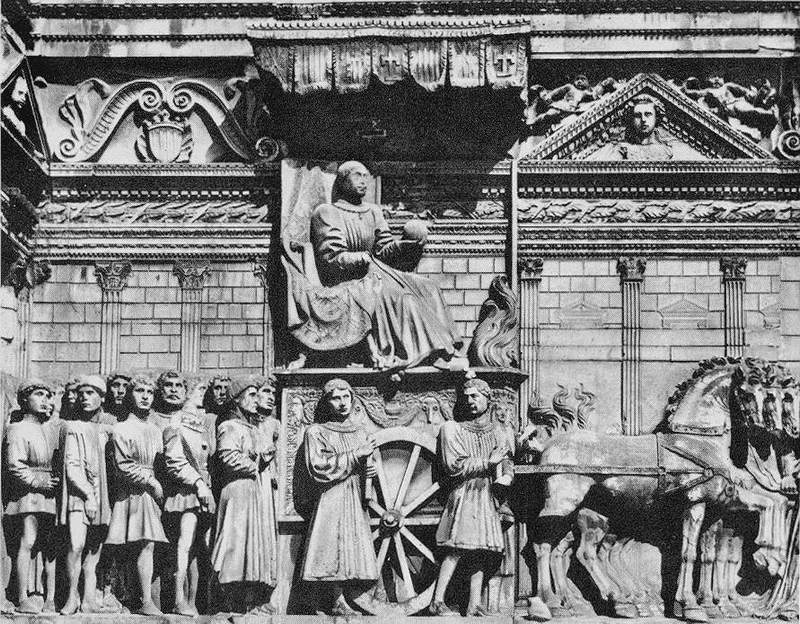
Iako hrvatskoga podrijetla, kao i glasoviti ranorenesansni arhitekt Lucijan Vranjanin, Franjo je upisan u europsku povijest likovnih umjetnosti pod talijanskim imenom Francesco Laurana (=della Vrana). Nema podataka o njegovoj mladosti i školovanju, a prvo što o njemu znamo jest da sudjeluje s grupom istaknutih kipara na izvedbi velikih projekata napuljskog vojvode Alfonsa Aragonskog. Na velikom vojvodinom renesansnom dvoru - tvrđavi u Napulju, s ogromnim i za to doba neuništivim okruglim kulama, Franjo Vranjanin je 1452. godine, zajedno s kiparima G. Sagrero, Petrom iz Milana, Iziaijom iz Pise i drugima, izveo monumentalni kameni slavoluk raskošno opremljen reljefima i skulpturama. Slavoluk uokviruje ulaz u središnje dvorište, a ima u prizemlju veliki luk s po dva stupa sa svake strane, zatim jedno široko polje reljefnih prikaza, pa nad njim polukružno uokvirenu ložu i na vrhu skulpture u nišama i završni obli zabat. Brojni visoki reljefi sa stotinama likova raspoređeni u savršenoj renesansnoj perspektivi, skladnih oblika i proporcija prikazuju prizore iz vojvodina života. Po mišljenju nekih povjesničara umjetnosti (R. Rolfs) Franjo Vranjanin je zamislio slavoluk i izveo najbolje dijelove, dok mu neki drugi autori pripisuju znatno manje. Zatim boravi u Francuskoj (1461-1464), u Provansi i radi na dvoru poznatog humaniste i pokrovitelja umjetnosti kralja Renea, reljefne medalje u tragu ranorenesansnog medaljera Pisanella: s likom kralja Renea i kraljice, dvorske lude i Charlesa Anjou, Louisa XI. i drugih. Nakon toga radio je na Siciliji, u Palermu i Noto (1467-1471), pa ponovno u Napulju kipove Bogorodica i portretna poprsja princeza na aragonskom dvoru. Od 1474. djeluje u Francuskoj, u Marseillesu, Tarasconu i Avignonu, gdje i umire 1502. godine.

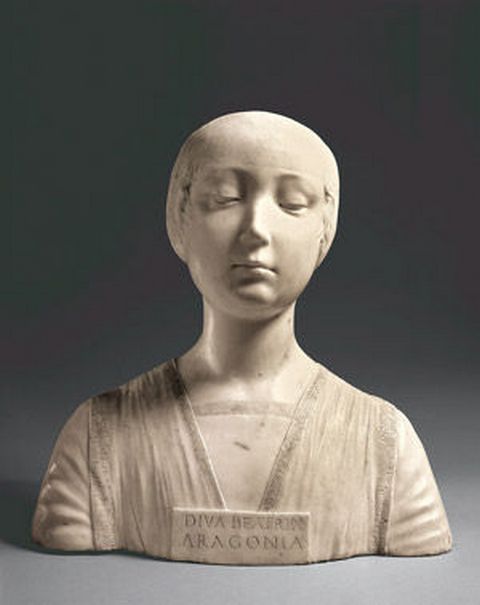
Najznačajnija Vranjaninova djela su portretna mramorna ženska poprsja u kojima je dosegao najviši umjetnički domet, a ona su mu osigurala opće priznanje i najveću i do danas trajnu slavu. U galeriji njegovih ženskih portreta ističu se poprsja princeza Beatrice Aragonske, Eleonore Aragonske, Battiste Sforze i drugih, što se osim u Palermu, nalaze u najpoznatijim svjetskim muzejima Beča, Berlina, Pariza, New Yorka i drugdje. Kipar Francesco Laurana i arhitekt Luciano Laurana, dva brata Vranjanina, nezaobilazna su imena rane renesanse 15. stoljeća, dakle u doba njezina prvog uspona i cvata. Bez njihova se djela i udjela ne može zamisliti ni napisati povijest renesanse u Italiji, a time ni europske renesanse. Svojim talijaniziranim imenima bili su sasvim utopljeni u talijansku umjetnost i tek se u novije doba više priznaje i ističe njihovo dalmatinsko, odnosno hrvatsko podrijetlo. No, još će mnogo trebati raditi, objavljivati studije i knjige na stranim jezicima, dok jednostavna činjenica o dvojci Hrvata, koji su iz istog malog mjesta u Dalmaciji, kraj Zadra, došli u Italiju i tamo ostvarili osebujna i izuzetno vrijedna djela, bude dovoljno poznata i zaista jedinstveno priznata od svih.

Source www.posta.hr


The stamps have been issued in 20-stamp sheets, and two First Day Covers (FDC) have also been issued. 2.80 HRK - 500th Anniversary of the death of Franjo Vranjanin Laurana The Croatian Renaissance sculptor Franjo called Vranjanin, due to the fact that he was born in the small place Vrana near Zadar (round 1420), mostly worked in southern Italy and southern France where he died in 1502.

Though Croatian by origin, like the famous architect Lucijan Vranjanin (1425-1479), Franjo has been entered in the European history of visual arts under the Italian name Francesco Laurana (derived from della Vrana). There are no available data on his youth and schooling, and the first thing we learn about him is that he participated, together with a group of eminent sculptors on the execution of the great projects of Alfonso Aragon, the Duke of Napoli. In 1452, at the Duke's huge Renaissance court - the fortress of Napoli, with its huge, and at that time indestructible round fortresses, Franjo Vranjanin executed, together with the sculptors G.Sagrero, Pietro from Milan, Isaiah from Pisa and others, a monumental stone triumphal arch luxuriously fitted with reliefs and sculptures. The arch forms a frame to the doorway of the central courtyard, and there is a large arch resting on two pillars on both sides on the lower level, then a wide area of relief scenes, and above it a semicircular framed-in loggia and on top sculptures in niches and the closing round gable. Numerous high reliefs with hundreds of figures arranged in perfect Renaissance perspective, with harmonious forms and proportions represent scenes from the Duke's life. According to some art historians (R.Rolfs) it was Franjo Vranjanin who designed the whole arch and executed the best parts, while other authors attributed a lesser part of the work to him. Afterwards Vranjanin lived in France (1461-1464), in Provence, and worked at the court of the well-known humanist and patron of arts, King Renee. He produced relief medallions in the manner of the early-Renaissance medallist Pisanello: the images of the king and queen, the court jester and Charles Anjou, Louis XI and others. After that he went to work in Sicily, in Palermo and Noto (1467-1471) then again in Naples where he sculpted the figures of Mother of God and portrait busts of princesses at the court of Aragon. Since 1474 he worked in France, in Marseilles, Tarascon and Avignon where he died in 1502.

The most important works of Vranjanin are the portrait marble busts where he achieved the highest artistic attainment, and it was these that secured him general appreciation and greatest glory lasting up to our days. In the gallery of his female portraits, outstanding places are taken by the busts of princesses Beatrice of Aragon and Eleanor of Aragon, Battista Sforza and others. These busts can be found in Palermo, but also in the most famous museums of the world, in Vienna, Berlin, New York and elsewhere. His sculptures are characterized by a clear contour and smooth surface, and extremely simplified shapes, without any superfluous naturalistic details favoured by the Gothic sculpture before his time. The heads, like marble eggs, are posed on the perfect cylinder of the neck that grows up from the softly rounded shoulders. By these characteristics Vranjanin is the only artist among the early-Renaissance sculptors who has come closest to the ideal of pure stereometric form, and this makes him related to some aspirations of contemporary abstract sculpture. Light glides quietly along the perfectly smoothed marble and softly blends into transparent shadows. There is no movement nor restless surface, no contrast play (and powerful clashes) of light and shadow typical of the former Gothic art that would again become the main feature of Baroque sculpture. Vranjanin's sculptures can be compared to the equally perfect, ideally shaped figures on the frescos and on the paintings of the famous Piero della Francesca, who worked at the same time in central Italy (Arezzo, Urbino). The sculptor Francesco Laurana and architect Luciano Laurana, two brothers Vranjanin, are unavoidable names of the early Renaissance of the 15th century, i.e. at the time of its first rise and flourish. Without their work and their share in the art one could not imagine nor write the history of the Renaissance in Itraly, and consequently the history of European Renaissance. Their Italianized names have made them immersed in Italian art and it is only recently that their Dalmatian, i.e. Croatian origin is acknowledged and emphasized. But there is much work ahead, many studies and books to be published in foreign languages for the simple truth about the two Croats who have started from the same small place near Zadar and gone to Italy to produce distinctive and exceptionally valuable masterpieces, to be made known and really universally acknowledged by everybody. We have to mention that the greatest project of Lucijan Vranjanin is the palace of the Duke Francesco Montefeltro in Urbino with the famous Renaissance atrium and loggias open to the landscape. This commemorative stamp of the Croatian Post will contribute to the mentioned aim of acknowledgment and appreciation of the Croatian contribution to the Italian and French Renaissance. Such activities should be systematically continued in order to encourage memories of names and evaluate works of art of many artists of Croatian origin - in Italy usually referred to as "Schiavoni" (Slavs) who have paid a permanent and irreplaceable contribution to the culture and art of the Italian and French art, the Hungarian art present at the court of King Mathew Corvinus, and generally to the whole of European Renaissance art.

Source www.posta.hr


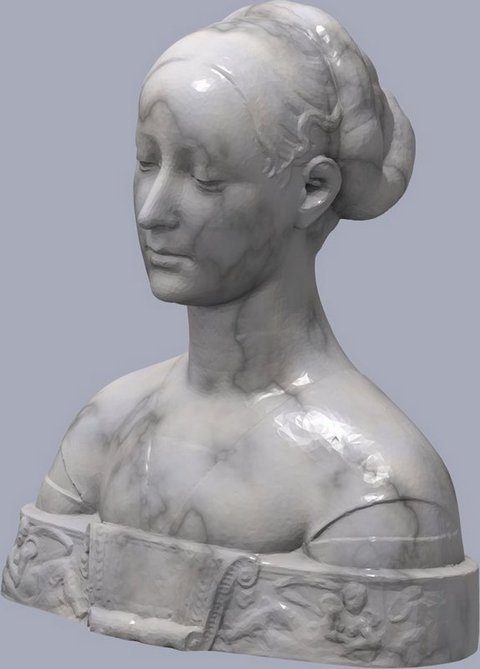
Frane of Vrana - Francesco Laurana: Ipolita Maria Sforza


Franjo Vranjanin: Isabella of Aragonia


Francesco Laurana: bust of Battista Sforza


Francesco Laurana: Bust of a lady, Kunsthistorisches Museum, Vienna, Austria


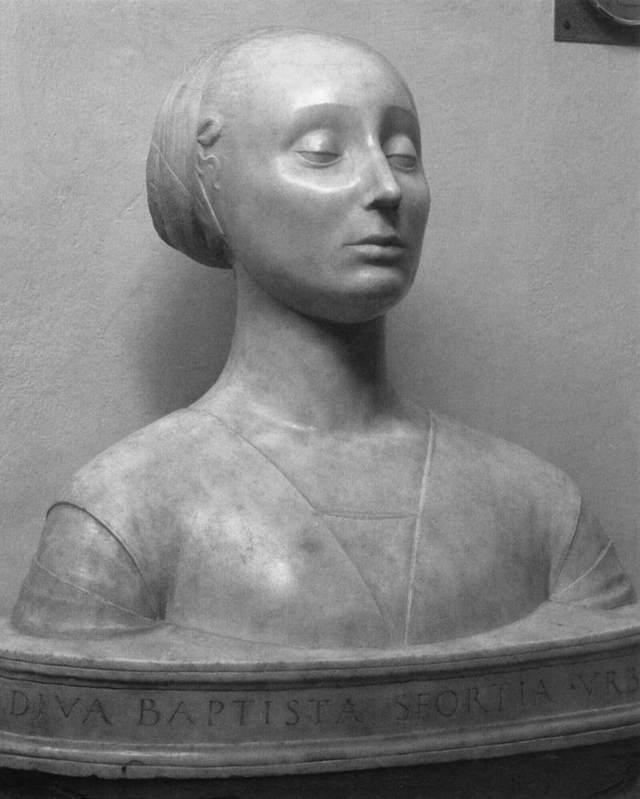
Francesco Laurana - Franjo Vranjanin: Portrait Bust of Beatrice of Aragon, ca. 1474–75. Inscribed on tablet: DIVA BEATRIX / ARAGONIA
The Frick Collection, New York. Source www.alaintruong.com.


Franjo Vranjanin - Francesco Laurana: Triumphal Arch of Alfonso I, Castelnuovo, Naples, Italy


Franjo Vranjanin - Francesco Laurana: Alfonso of Aragon in Triumph with his Court, Castelnuovo, Naples, Italy;
a detail from the lower part on the preceding photo.


Vrana not far from the Lake of Vrana (Vransko jezero), near the city of Zadar, Croatia,
where Frane Vranjanin - Franceso Laurana was born. Photos courtesy of Julija Vojković, Zagreb.

Ivan Meštrović Croatian sculptor and his Chicago Indians

By Nenad N. Bach and Darko Žubrinić
Published   01/31/2010

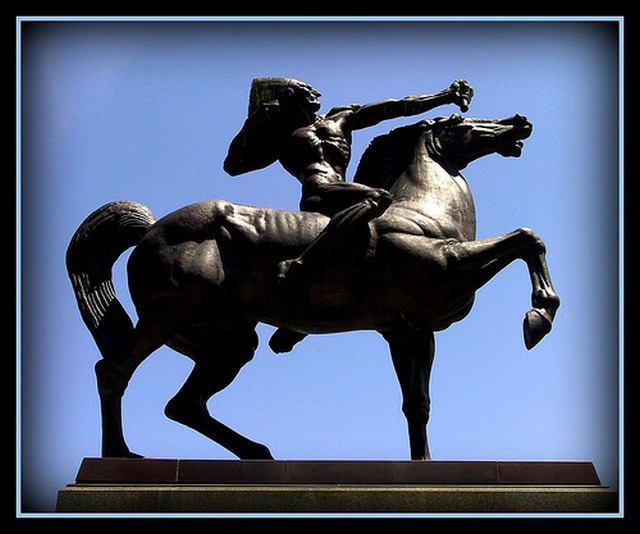
Equestrian statues 6 m high weighing 8 tons each at the entrance of Grant Park Chicago


Ivan Meštrović, distinguished Croatian sculptor


One of two Chicago Indians by Ivan Meštrović. They have been carved in Croatia's capital Zagreb.
Photo by Rumi Meštrović, alias Janet Duroc.


Ivan Mestrovic's mounted warriors, erected in 1928 at the Congress Plaza entrance to Grant park, are known as "The Spearman" and "The Bowman".

In 1924 Mestrovic came to the United States for the first time. He had a most successful exhibit of 132 pieces, with a catalogue by Christian Briton, at the Brooklyn Museum in New York. In 1925 the Furgeson Institute commissioned the Chicago Indians.

Sculptor Ivan Mestrovic intended his monumental figures to commemorate the Native American and symbolize the struggle to settle this country. The figures are lean and muscular, tensed for the actions of hurling a spear and releasing an arrow. Mestrovic has heightened the forcefulness of these gestures by making viewers use their imaginations to supply the missing weapons. Although they are modeled in-the-round, the equestrians are viewed to their most monumental effect as relief silhouettes against the sky.

Source Janet Duroc, www.flickr.com

For more information see www.croatianhistory.net


Split In Your Pocket - Grgur Ninski (Gregory of Nin), Croatian bishop from 10th century

Photo by Rumi Meštrović, source www.flickr.com


NEW OBSERVATIONS ON IVAN MEŠTROVIĆ*

DEAN A. PORTER

- - - -

Journal of Croatian Studies, XXIV, 1983, – Annual Review of the Croatian Academy of America, Inc. New York, N.Y., Electronic edition by Studia Croatica, by permission. All rights reserved by the Croatian Academy of America.

- - - -

To better perceive and comprehend the nature and significance of Meštrović's Notre Dame work, it is necessary to have an understanding of the man and his art from his previous years. A brief chronological review of certain aspects that pertain to his earlier career and mention of a few of the major monuments he produced during that time will provide a background from which to begin. Critical issues and questions, however, will be raised in the process, which, I believe, will suggest that a new approach be taken to Meštrović, one that will lead to a more realistic assessment of his work and of his position in modern art.

The artist's talents were recognized early in his life and his art training started while he was still a child in Croatia. He moved to Vienna in 1900 at the age of 17 and soon after was accepted by the Academy of Art where he first studied under Edmund Hellmer and Hans Bitterlich and later under the architect Otto Wagner. He was attracted immediately to the ideologies of the Secessionist movement that was developing in Vienna at the time. His thirst for experiences other than those fostered by the Academy drew the young Croatian to work among its artists.

By the time he was twenty, Meštrović appears to have thoroughly integrated himself within the movement. He exhibited with its artists in their annual shows of 1902, 1905, 1907, 1908, 1909, and 1910.[1] Egon Schiele mentions him along with other Secessionists when he wrote to the critic Arthur Roessler in 1910 pleading: "Why can't there be a large international exhibition in the Künstlerhaus? — I have said this to Klimt — for example, each artist has his own large room or his own apartment — Rodin, Van Gogh, Gauguin, Minne, Klimt, Toorop, Stuck, Liebermann, Slevogt, Corinth, Meštrović, etc. Only painting and sculpture. What a sensation for Vienna! — a catastrophe!"[2] Meštrović appears to have maintained some contact with the Secessionists for years, at least through 1941 when he received a birthday congratulatory message from them.

Meštrović's artistic personality was a most complex one and reflected a number of influences. Two of them, the strong, rich traditions of his Croatian heritage, so filled the literature of his people and the chantings of the Guslar, and the Word, as expressed in the Bible, profoundly affected his art throughout his career. His admiration for Auguste Rodin whom he met in 1904, is well known, perhaps to a greater extent than is known of Rodin's appreciation of Meštrović. Rodin, who considered the artist the "greatest phenomenon amongst the sculptors of the world", posed for his portrait while visiting Meštrović's studio in Rome at the beginning of World War I in 1914. In later years, Rodin served primarily as a guiding inspiration for the artist and less as an artistic influence. And, finally, Meštrović's association with the Secessionists must have been a major factor in his development. The architect Otto Wagner, and the painter Gustav Klimt, a founder and first president of the Secessionist movement, seem to have been especially influential, while the influences of Egon Schiele, who joined the movement a few years after Meštrović did, and other members of the group, were felt to a lesser degree.

While historians and critics discuss Meštrović's involvement with Secession, no one, to my knowledge, has determined its extent and whether or not there were any direct influences with specific examples, and if so, from whom?[3]

He enjoyed early success with both critics and the public. By 1910, and at the age of twenty-seven, he was an accomplished and recognized sculptor. His Well of Life of 1905 was exhibited in plaster form in 1905 in the Secession Building and cast in bronze in 1910.

It was later placed in front of the National Theatre in Zagreb. The Source of Life, dating from 1906, was placed in the City Park in Drniš in 1958. His international reputation was established during these early years through exhibition of his projected Kosovo Temple monument sculptures, a project that unfortunately, may never be realized.[4]

The Well of Life (fig. 1) is characteristic of his early work. Discussions, more often than not, have spoken of the influences of Rodin and Impressionism, at least in terms of the sculpture's stylistic qualities. Many of Meštrović's early sculptures bear the impact, to varying degrees, of Rodin's style. The figures in the Well of Life, all thirsting for the life giving waters, are marvelously interwoven, their forms orchestrated around the small well, their surfaces a delight in their tactile quality. Meštrović certainly had the work of Rodin in mind when creating his sculptural group.[5] However, the composition itself suggests that he was not only familar with, but was influenced by Hans Canon's ceiling painting called The Circle of Life, painted in circa 1884-85, that is now in the Naturhistorishes Museum in Vienna.[6] Although Meštrović did not borrow figures from Canon, the circular arrangement of figures of various ages are similary placed like the interlocking links of a chain.

A relationship of Meštrović's sculpture to painting is also evident with the Source of Life (1906). Two pairs of nude figures flanking a row of young children with hands holding a large breast, are reminiscent of Josef Engeihart's Fireplace of 1899, now in the Osterreischisches Museum für Angewandte Kunst.[7] The subject of Engelhart's Fireplace is that of the fall of Adam and Eve. Eve is shown reaching across to Adam, her hind extended above the fireplace opening and under the sinister looking serpent which twines in the tree of knowledge. Although the themes are different, there is a strong sculptural affinity between Meštrović and Engelhart's groupings.

It is also necessary to closely examine Meštrović's relationship to another painter of Vienna Secession, Gustav Klimt. The energetic line and compositional devices that Meštrović used in his early drawings so closely resemble Klimt's drawing technique as to suggest a closer relationship between the two artists than has been believed to date. A sculpture of an old woman that Meštrović exhibited in the International Exhibition at Rome in 1911 [8] and a drawing that Klimt executed (variously dated ca. 1905/1909) of an old woman[9] are so much alike in appearance as to suggest that the two artists may have been working together and sharing the same model.

The influence of Otto Wagner, one of Meštrović's teachers, has also been stressed. One only has to compare Wagner's architectural monuments, specifically the First Villa Wagner, in Hutteldorf, near Vienna,[10] of 1886-8 with Meštrović's summer home in Split of 1930, or Wagner's Church of St. Leopold in Steinhof of 1903 to 1907 [11] with Meštrović's Račić Family Memorial Chapel in Cavtat of 1919 to 1921 to recognize similar elements of design. The general configuration of Meštrović's architecture, to be discussed later, is freely adapted from Wagner's architectural ideas.

Between 1904 and 1911, the artist devoted himself to a series of sculptures, drawings, and models for the Kosovo Temple project mentioned above. It is unfortunate that the project as a whole was never completed for it would have come down as one of the significant achievements of Vienna Secession. Meštrović had envisioned the project as involving architect, sculptor, painter, and decorative artist and was frustrated with its incompletion. He would experience similar frustrations repeatedly throughout his career.

The sculptures that were completed, however, of Serbian and Croatian heroes, mourning women and children, a great sphinx, and two colonnades of caryatids, provided important material for several significant exhibitions in Vienna, Munich, Dresden, Venice, Paris, Zagreb, Rome and London, which were generally well received by critics and the public. Today these marvelous sculptures lie scattered in dimly illuminated galleries, private collections and, occasionally, in dark valuts. The Victor in Kalemegdan Park, Belgrade, completed in 1913 but not installed until 1930, is another instance when Meštrović must have felt frustrated. The sculpture which commemorates the Serbian victory of 1912 over the Turks at the battle of Kumanovo is important for several reasons. Like so many of Meštrović's original plans, the figure, brandishing a sword and holding an eagle, was intended to be one of a very complex grouping. Like so many of his projects, The Victor could not have been completed according to Meštrović's more ambitious plans.'

Therefore, when attempts are made to evaluate Meštrović's sculptural programs as they were originally planned, reference to the artist's working drawings are necessary. To date, no drawings for The Victor monument have surfaced and judgment must be based on the solitary spartan figure. The figure by itself however, illustrates Meštrović's continuing obsession with the stylistic ideologies of Vienna Secession.

In 1915 Mestrović became a political refugee. World Wars and his political aspirations frequently caused him to abandon his well appointed studios, an extraordinary task when you consider the equipment needed when an artist works in wood, stone and bronze. After trips to Rome and Paris, he settled in London where he had the most important display of his sculpture. His one-man show in London's stately Victoria and Albert Museum is considered to have been the first one-man show by a living artist in this prestigious museum. The exhibition consisted mostly of Meštrović sculptures for the Kosovo project and it was met with mixed response from the critics. Ernest H. R. Collings wrote: "However, from its varied appeal to many tastes and in consequence of the differences of opinion which the work excited, a volume of comment arose". Apparently those of the academic mind found Meštrović too advanced while young revolutionaries found his work not advanced enough.[12]

His trip to England brought Meštrović into contact with the daughter of Ivo Račić, Maria. Meštrović and Maria became close friends. When three members of the family contracted the epidemic influenza in 1919, Maria, on her deathbed, asked her mother to have Meštrovic: " ... build a tomb and console me with the thought that death is but a shadow." [13]

The Račić Family Memorial Chapel (1919-1921) represents Meštrović at his best as an artist. If the artistic style of Vienna Secession can be described as an art directed to the essential genuine and functional values of many, rather than those of a few, and as a synthesis of architecture, sculpture, painting and decorative elements, then few twentieth century architectures exemplify the style as well.

The Račić Family Memorial has escaped the scrutiny of scholars working on Vienna Secession. The reason for this may be more evident than has been previously believed. Vienna Secession essentially comes to an end with the deaths of Wagner, Schiele and Klimt in 1918. Meštrović, for all practical purposes, had begun to move away from Vienna Secession as early as 1915 when he went to London. Yet, the chapel retains strong architectural ties, particularly to the work of Otto Wagner. The sculptural program, however, particularly the altars of St. Roche, the Crucified Christ and the Virgin and Child, mark a stylistic change in Meštrović's work.

The octagonally planned structure is marvelous in its simplicity. The exterior of whitish-gray ashlar stone is modestly decorated ... the cornice carved with ornamental palmettes and a ram's head, and the bronze doors, depicting the saints of the southern Slays, are flanked by tall, slender, graceful, angelic caryatids who stand at attention with hands crossed on their chests, as if in peaceful repose.

The solemn dignity and restraint of the exterior sculptural and architectural program is continued within. A dome and lantern cap a central space that is flanked by lateral arms containing three altars. On the sidewalls of the altars to St. Roche and the Crucified Christ portraits of the Raćić family are carved in low relief. The Virgin and Child are altared at the eastern end of the church where they reflect the brilliant rays of su at dusk (fig. 3).

The prevailing feeling of the space and sculptural program is religiously significant. It is peaceful, quiet and tranquil. Meštrović's treatment of the Virgin and Child is an example of Meštrović's early exploration of the relationship of the Mother and her Son. In 1917, Meštrović created several Madonna and Child images in stone, bronze and wood. A more rigid frontality and hieratic attitude, and his attention to long gracefully flowing forms seen in the Asbaugh Madonna (fig. 6) reflects his involvement with Vienna Secession. In the Račić Madonna and Child, Meštrović is more concerned with portraying a warmer relationship between the pair. The Christ Child's attitude is one of blessing, with His hands outstretched as if to welcome the deceased. Finally, the stylistic exaggerations evident in his earlier sculptures are replaced by more naturalistic proportions and treatment of drapery.

In keeping with the prevailing mood of the memorial chapel, Meštrović demonstrated a dramatic change in the treatment of the Crunfied Christ. In 1917, he carved a Christ, now in the Holy Cross Chapel in Split (fig. 4) whose tortured body is elongated and painfully distorted. Flesh is stretched so taut that it functions like a diaphanous veil over the protruding bony substructure of Christ's body. Two years later, at Cavtat, the figure of Christ is carved with more classical proportions and is relaxed in eternal sleep (fig. 5). A comparison of the upper torso of the two sculptures reveals how fervently Meštrović worked to retain a consistent feeling throughhout the chapel and its decorative programs.

Meštrović's mastery at Cavtat can be best described by his ability to express the basic human tendency for emotion. The Victor is a political monument, that was meant to signify and glorify a battle concluding five hundred years of Turkish domination. The Račić Family Memorial is a religious monument and in Meštrović's mind he had to develop a sacred space. He accomplished this through a series of preliminary studies and working drawings ,(fig. 2). Of all of his monuments, Cavtat was perhaps the most studied, the most completed as to its original plans and the most successful.

In 1924, Meštrović made his first trip to the United States where he exhibited his work in prestigious one-man shows in Brooklyn, Buffalo, Detroit and Chicago. Important works were purchased by all four museums. While in Chicago, he was commissioned by the B. F. Ferguson Fund to do a public monument for that city of an American hero, possibly of Washington or Lincoln. Noting that the two presidents had been immortalized through sculpture many times, he suggested that Chicago honor the American Indian and cowboy, and submitted a model of each for consideration.[14]

On April 15, 1926, Potter Palmer, president of the fund, wrote to Meštrović: "The scale model of the Indian mounted upon a horse is hereby accepted by the Board of Trustees of the Ferguson Fund, and the trustees suggest that the figure of the cowboy in the other model be replaced by a figure, preferably in the nude, of an Indian in action, suitably balanced and designed in harmony with the Indian which you put out in the acceptable model." [15]

On the following day, Meštrović responded, agreeing to replace the cowboy with the figure of an Indian. At the completion of the project, Meštrović was paid $150,000 [16] (fig. 8 & 9).

The level of funding indicates the respect and status Meštrović enjoyed as a sculptor by the art critics and people of Chicago. It is possible that a portion of these funds was directed toward future projects such as Gregory of Nin, located today outside the Golden Gate of Diocletian's Palace in Split, a gift by Meštrović to the city.[17]

It is interesting to note at this point that the Indians are characterized by rather severe distortion and stylization of the anatomical features, not too unlike his treatment of The Victor for Kalemegdan Park. They show a reversion to his Vienna Secession style during the same period he was beginning to create a handsome series of female nudes which have been related to the works of Maillol, Bourdelle and Michelangelo.

It is impossible to discuss all of Meštrović's major monuments in this article nor is it necessary. The 1930s saw the completion of the Monument of Gratitude to France (1930) in Belgrade, the Tomb of the Unknown Soldier located in Avala near Belgrade (1935-38), the memorial Church of Our Lady in Biskupija (1936-38), and the Mausoleum of the Meštrović Family in Otavice (1934).

Two monuments in Split, the Meštrović Family Home (1930-36), now the Meštrović Gallery, and the Meštrović Chapel of the Holy Cross (1937-39), are fine examples of the artist's concern for proper settings for his sculptures and, like the Račić Family Chapel, display his ability to combine his multiple talents within a single project.

The Meštrović Home is an example of architecture in the Secessionist style and the quintessence of the classical spirit. Its location is superb. Situated high on a hill, accessible only through a stone gate and up many, many steps, it is surrounded by magnificent gardens and overlooks the beautiful Adriatic. Clearly, Meštrović built this home not only for the needs of his family but also for the execution and display of his sculpture.

Between 1937 and 1939, Meštrović converted a medieval structure, located a few hundred yards from his summer home, into a family chapel of the Holy Cross. Although having little value as an architectural monument, the structure provides an ideal setting for thirty wood reliefs that depict the life and passion of Christ. The carvings were done between 1917 and 1954, and like his home, were made a gift to the Croatian people.

The reliefs, uneven in their quality, offer the Meštrović scholar an unusual opportunity of observing the artist's stylistic evolution over a thirty-seven year period of time. Clearly, Meštrović was a master of carving in shallow relief and it is in this area of sculpture where he surpasses his contemporaries. Each panel presents a different religious message—clearly and strongly expressed.

As Dorothy Adlow stated in 1951: "His richness lies in the fact that his works are charged with emotional content."[18] The only sculpture in the round in the chapel, The Crucifixion (fig. 4), mounted on the eastern wall, is an especially powerful image. In its impact on the viewer it may be compared to Mathias Grünewald's altarpiece in Isenheim.

Meštrović left his native country permanently at the outbreak of World War II and lived in Italy and Switzerland. He arrived in America in 1947 and taught first at Syracuse University before moving to the University of Notre Dame in 1955 where he remained until his death in 1962.

I regret I did not personally know the "Maestro" as he was fondly known. He died four years before I arrived at Notre Dame in 1966. The studio which had been especially constructed for Meštrović had already passed through the hands of two other sculptors. The studio, a long and narrow, partitioned space, had the crane which had moved his ambitious projects, still in place gathering dust. The attic of O'Shaughnessy Hall, the Arts and Letters College, still contained huge crated sculptures which had been brought from Syracuse.

The "Maestro's" magnetic presence continued to be felt long after his death. When Meštrović arrived in 1955, he was 72 years old and not in particularly good health. Yet in the short span of seven years, Meštrović had become a legend. Many knew him during these years—philosopher, linguist, priest and laborer—and all freely shared their memories as they told of their personal experiences. One professor emeritus recently wrote: "My guess is that if one Notre Dame professor from the 20th century is remembered a thousand years from now, it will be Ivan Meštrović." [19]

Meštrović had been searching for an appropriate place to spend his last years when he told Notre Dame's president, Reverend Theodore M. Hesburgh, C.S.C.: "I am an American citizen and intend to stay in America, but I would like to give my remaining years doing religious art in a place that will appreciate it." [20]

Meštrović brought the arts into focus during his years at Notre Dame. He introduced art of a quality that had not been seen on the campus in the 113 years of the university's existence. He opened many of his crates from Syracuse and placed sculptures in chapels, residence halls, and classroom buildings. The Virgin and Child (fig. 7), created in 1947, perhaps the most beautiful of these sculptures from his Syracuse period, was placed at the entrance of the College of Arts and Letters, where it stood for twenty-five years before being moved to the Ivan Meštrović Gallery in 1980.

Meštrović realized one of his greatest dreams, a permanent place for his Rome Pietŕ (fig. 10 & 11) when it was placed in Sacred Heart Church at Notre Dame. The Pietŕ, carved during his years of exile between 1942 and 1946, had been on display and in storage at The Metropolitan Museum of Art since his one-man show there in 1947. In order to accommodate the huge eight ton Carrara marble sculpture, the walls of a side chapel in the church had to be removed and the floor reinforced. Meštrović had agreed to lend the Pietŕ to the university for an indefinite period and after its installation and the walls replaced, he turned to one of his colleagues, Professor Robert Leader, and in his typical dry humor stated: "Now that is what I call a temporary loan".[21]

In his new studio he enjoyed a prolific and successful career. Churches, nursing homes, the Mayo Clinic, and other public buildings soon had Meštrović sculptures which would become the subject of visitor attention. Essentially, his last work was religious and inspired principally by work done in Croatia. Perhaps the most successful and well known piece that he did at Notre Dame is the bronze Christ and the Samaritan Woman at Jacob's Well (fig. 12), completed in 1957. He had first explored the subject in 1927 for the wood relief in the chapel at Split. The compositions for the two works are essentially the same even though they were done thirty years apart.

Only minor changes are evident in the Notre Dame work, such as in the position of the Samaritan woman's head and in the more relaxed attitude of the figure of Christ. The stylistic changes are more obvious. Drapery of the Split relief of 1927 is almost diaphanous in appearance. Garments cling to the forms and are inscribed with graceful, sinuous patterns. The 1957 figures are seen with heavy folds, gathered in a casual manner over their limbs. More important, however, is Meštrović's creation of a sense of communication that exists between the two figures. By 1957, Meštrović appears to have become more concerned with the spiritual impact of his figures than with style. It is this strong feeling of communication between Christ and the Samaritan that attracts and involves the viewer.

Because it became increasingly difficult in his later years for the "Maestro" to physically handle large blocks of marble or walnut, he worked primarily with plaster while at Notre Dame. Several of his works were not cast into bronze until after his death. Among these were the 1956-58 Madonna and Child in the courtyard of Lewis Hall and a superb 1947 plaster portrait of his wife Olga.

In 1960, he suffered a stroke which partially affected his eyesight and in 1961, he suffered the cruelest of blows when he learned of the death of his son Tvrtko. Quietly, he drew the curtains to his home in South Bend and poured out his grief through his hands. Ivan Meštrović' s great strength is best reflected by this series of plaster sculptures done at that time: An Old Father in Despair at the Death of His Son; A Father Taking 'Leave of His Son in Fierce Embrace; A Mother with a Gentle Kiss Takes Leave of Her Dead Daughter and the Last Self Portrait, are expressions of his anguish. Simple, direct and powerful, they are personal statements, perhaps never intended for public viewing. Madame Meštrović has stated: "No one will ever understand them".[22]

Meštrović's last public monument was inspired by Petar Petrović Njegoš, the Montenegrin poet and prince bishop, and given to the people of Montenegro (Crna Gora) in 1958. In a sense, it represents the problems Meštrović faced throughout his career. The project was initially discussed during the early 1920s and several working drawings and a model were completed for it. Meštrović created a full-scale plaster for the work and sent it to one of his former students in Split who carved the over life-sized Petar Petrović Njegoš in greyish-green granite. Njegoš location is impressive, and awesome. It rests at the end a simple, narrow road that winds precariously up the steep cliffs. The monument undoubtedly was inspired by Meštrović's architectural monuments, drawings, and models from the early 1930s. After going through a "triumphal" gate into an open atrium area, the visitor passes between large architectural figures dressed in native costume and moves on into a square chamber that is almost solemn in effect. The sculptured image of the prince bishop is seated on a low seat with his legs crossed, one hand raised to his head, the other to his heart, and his head bent forward, as if lost in thought. Behind Njegoš is a great eagle with its wings spread, serving as a kind of guardian.

The sculpture is monumental in concept. It is traditional in style like the rest of the work Meštrović produced after World War II. During his last years, he worked independently, preferring not to follow the more contemporary styles that were developing in the 1940s and 1950s. The portrait of Njegoš is perhaps not as skillfully carved as it might have been if Meštrović had laid chisel to the granite, but its effect is as dramatic as the "Maestro" would have wished.

Meštrović was a people's sculptor. He came from the people and spent his life working for them, constantly searching for an image that would best express the human condition. On January 16, 1962, he went to his studio for the last time. That evening he died quietly of a heart attack in St. Joseph Hospital in South Bend. As he had prophesised, he worked on his last day.

Ivan Meštrović became a legend in his own time. His work is the principal work in four museums (Split, Zagreb, Vrpolje, and Drniš) and the gallery at Notre Dame. His work has been exhibited in some the world's most prestigious museums. He has been written about in numerous monograph, catalogues, and articles, and has been honoured with many degrees and awards.

It is difficult, therefore, to understand the present lack of interest in Meštrović. His name is rarely included in contemporary writings on twentieth century sculpture, even in the most general surveys. He is similarly neglected by surveyors of the Vienna Secession movement. The problem of Meštrović's position in twentieth century art continues to be a problem. Perhaps, the time has finally come for art historians to resolve it.

Author's note: I am indebted to Mrs. Sarah Coffman, Ivan Meštrović archivist at Notre Dame, for her assistance with this publication.

Illustrations:

Fig. 1, 2, 3, 4, 5, 6, 7, 8 and 12 Meštrović's Archives, University of Notre Dame.

Fig. 9 Meštrović family collection. Fig. 10 Photo: Bruce Harlan. Fig. 11 Photo Vasari Rome.

* This paper, in part, deals with the contents of a lecture I gave at Columbia University on November 4, 1982 in which a broad overview of the artist's accomplishments was presented with an emphasis on the work he did from the time he arrived at the University of Notre Dame until the day he died, January 16, 1962.

[1] Duško Kečkemet. Ivan Meštrović 1883-1962. Centennial Exhibition, October 5, 1983 — February 6, 1984 Zagreb, Muzejski Prostor, 1983. The exhibition catalogue contains an up to date chronology of Meštrović s activities through 1982.

[2] Christian von Nebahay. Egon-Schiele 1890-1918 Leben briefe Gedichte, "Documents and Korrespondenz 1910" No. 144, p. 139, Salzburg and Vienna, Residenz Verlag, 1979.

[3] Duško Kečkemet in his two major publications on Meštrović (Ivan Meštrović, New York, McGraw Hill, 1964, and Ivan Meštrović 1883-1962, Centennial Exhibition, October 5, 1983 — February 6, 1984) offers the best understanding of Meštrović's involvement in Vienna Secession. Kečkemet introduces several important issues that undoubtedly affected the young Meštrović, as well as his relationship with several artists generally associated with Vienna Secession. Most interesting is the relationship which existed between Meštrović and the Austrian born sculptor Franz Metzner. Kečkement s work is an ideal point of departure for a more in-depth study of Meštrović in Vienna.

[4] Individual sculptures, architectural drawings in the Meštrović Gallery in Split, and the model still exist.

[5] There is no wish to minimize Rodin's impact on Meštrović or others working in sculpture during the first two decades of the twentieth century. Meštrović, like his colleagues, absorbed influences from various sources, incorporating them into his own artistic language.

[6] Reproduced, Peter Vergo, Art in Vienna 1898.1918, London, Phaidon Press, 1975, p. 54, ill. 47.

[7] Reproduced, Nicolas Powell, The Sacred Spring The Arts in Vienna 1898-1918, Geneva, Cosmopress, 1974, p. 178.

[8] Reproduced L'Arte Mondiale a Roma nel 1911. Bergamo, Instituto Italiano d'arti Grafiche-Editore, 1913. The location of the sculpture is unknown.

[9] Reproduced, Alfred Werner, Gustav Klimt 100 Drawings, New York, Dover Publications, Inc., 1972, fig. 31.

[10] Reproduced, Peter Vergo, op. cit., p. 92, ill. 72.

[11] Reproduced, ibid, p. 107, ill. 88.

[12] Ivan Meštrović A Monograph, essay by Ernest H. R. Collings, Meštrović in England, London, Williams and Norgate, 1919, p. 49.

[13] Laurence Schmeckebier, Ivan Meštrović Sculptor and Patriot, Syracuse University Press, 1959, p. 30.

[14] Meštrović Archives, University of Notre Dame.
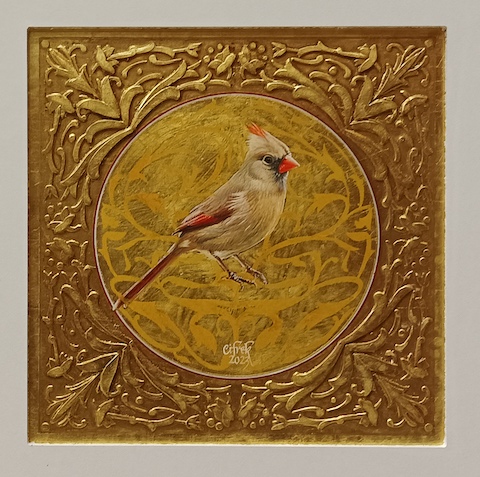
[15] Ibid.

[16] Ibid.

[17] This suggestion is made through speculation. To date, Meštrović's means of financing his projects have not been studied, nor have his papers containing such information been made available.
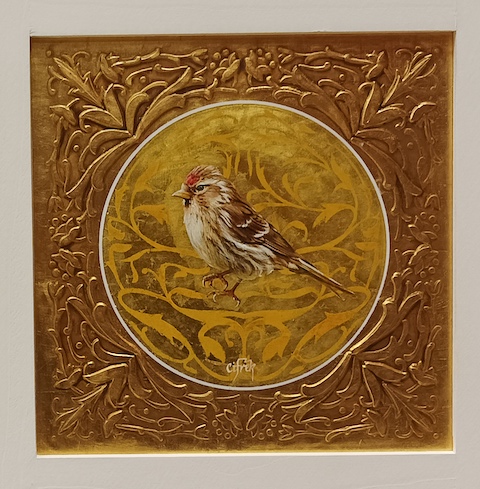
[18] Schmeckebier, op. cit., p. 43.
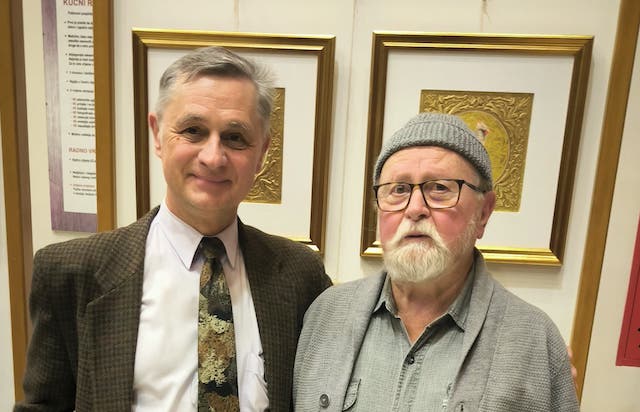
[19] Edward Fischer, "While the Light was Good," Notre Dame Magazine, December 1982, vol. 11, no. 5, p. 35.

[20] Interview with Rev. Theodore M. Hesburgh, C.S.C., 1974.

[21] Interview with Professor Robert Leader, 1974.

[22] Interview with Mrs. Ivan Meštrović, 1974.

Source of the above article www.studiacroatica.org.


Woman at the Well
Sculpture by Ivan Mestrovic at the Univerisity of Notre Dame